تجربه زیسته کارکنان و مشتریان از توانمندسازی مشتریمحور در بانک ملت ایران: یک مطالعه پدیدارشناختی
کلمات کلیدی:
توانمندسازی مشتریمحور, تجربه زیسته, پدیدارشناسی, روش کلایزری, بانک ملت, توسعه حرفهایچکیده
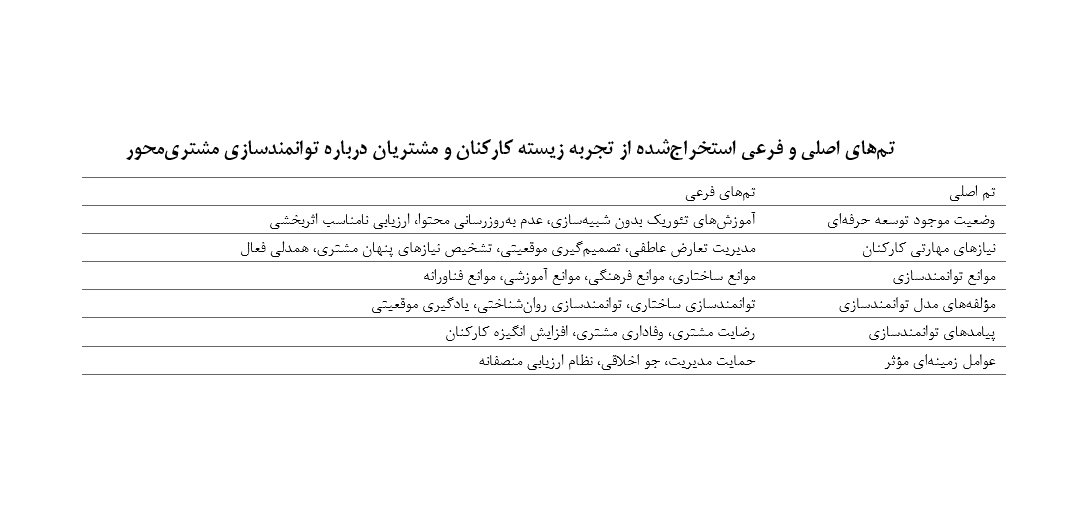
هدف این پژوهش، تبیین و کشف تجربه زیسته کارکنان و مشتریان از پدیده توانمندسازی مشتریمحور در بانک ملت ایران و شناسایی ساختار بنیادین این تجربه بود. این پژوهش با رویکرد کیفی و روش پدیدارشناسی توصیفی انجام شد. مشارکتکنندگان شامل 22 نفر از ذینفعان بانک ملت (14 کارمند و 8 مشتری) بودند که با روش نمونهگیری هدفمند و با حداکثر تنوع انتخاب شدند. دادهها از طریق مصاحبههای نیمهساختاریافته عمیق گردآوری شد و تحلیل آنها بر اساس روش هفتمرحلهای کالایزی انجام گرفت. برای افزایش اعتبار یافتهها از راهبردهای ممبرچک، بازبینی همکاران، توصیف غنی دادهها و ثبت کامل فرایند پژوهش استفاده شد. تحلیل دادهها منجر به استخراج 421 عبارت مهم، 18 تم فرعی و 6 تم اصلی شامل وضعیت موجود توسعه حرفهای، نیازهای مهارتی کارکنان، موانع توانمندسازی، مؤلفههای توانمندسازی، پیامدهای توانمندسازی و عوامل زمینهای شد. یافتهها نشان داد که شکاف معناداری میان دانش نظری مشتریمحوری و توانایی عملی کارکنان برای اجرای آن وجود دارد. مهمترین موانع شناساییشده شامل ساختارهای سلسلهمراتبی، نبود تفویض اختیار، کمبود مهارتهای عاطفی ـ موقعیتی و ضعف یادگیری موقعیتی بودند. همچنین توانمندسازی ساختاری و روانشناختی با افزایش رضایت مشتری، وفاداری مشتریان و انگیزش کارکنان همراه بود. ساختار بنیادین تجربه زیسته مشارکتکنندگان بهصورت «تضاد بین دانش نظری مشتریمحوری و ناتوانی عملی در اجرای آن» تبیین شد. نتایج نشان داد که توانمندسازی مشتریمحور در بانک ملت تحت تأثیر عوامل ساختاری، فرهنگی، آموزشی و مهارتی قرار دارد و دانش نظری بهتنهایی برای تحقق رفتارهای مشتریمحور کافی نیست. کاهش سطوح بروکراسی، تفویض اختیار واقعی، توسعه مهارتهای نرم و بازطراحی نظامهای آموزشی مبتنی بر شبیهسازی و یادگیری موقعیتی میتواند به کاهش شکاف دانش ـ عمل و ارتقای کیفیت خدمات بانکی منجر شود.
دانلودها
مراجع
1. Uddin MJ, Som HM, Hashim RA, Rahman T. Effect of Leadership Behaviors and Job Satisfaction on Organizational Citizenship Behavior of Private Commercial Banks in Bangladesh: A Conceptual Framework. International Journal of Academic Research in Business and Social Sciences. 2024;14(4). doi: 10.6007/ijarbss/v14-i4/21071.
2. Zoubi FA, Alzoubi AA. Leadership Towards Innovation and Organizations Performance: Encouraging Employees Empowerment. International Journal of Theory of Organization and Practice (Ijtop). 2023;3(1):94-110. doi: 10.54489/ijtop.v3i1.246.
3. Orenuga D, Worlu RE, Olabode O, Nsikan J, Ariyo A, Okon MG, et al. Empowering Bank Employees for Improved Job Performance: An Evaluation of Emerging Strategies. Sa Journal of Human Resource Management. 2024;22. doi: 10.4102/sajhrm.v22i0.2464.
4. Soeharso SY, Raihanah M. The Effect of Psychological Empowerment on Individual Readiness for Change With Perceived Organizational Support as a Moderator Factor: Case in Indonesian Employees of Banking Industry. International Journal of Applied Business and International Management. 2023;8(2):14-25. doi: 10.32535/ijabim.v8i2.2469.
5. Muneer S, Singh A, Choudhary MH, Alshammari AS. The Mediating Role of Psychological Empowerment on the Relationship Between Digital Transformation, Innovative Work Behavior, and Organizational Financial Performance. Behavioral Sciences. 2024;15(1):5. doi: 10.3390/bs15010005.
6. Diniz RGM. Impact of Innovative Work Behaviour and Digitalization on Organization Performance: Empirical Evidence From Brazil. International Journal of Science and Business. 2024;33(1):1-17. doi: 10.58970/ijsb.2311.
7. Yang L, Zhou Y. Physical environment and its impact on customer perceptions of service quality in retail banking. International Journal of Bank Marketing. 2025;43(2):210-28.
8. Taghipourian MJ. The role of emotional branding on brand equity in the banking sector: Is customer experience a mediator? Dynamic Management and Business Analysis. 2026:1-17.
9. Yan X, Li Y, Nie F, Li R. Bank Customer Segmentation and Marketing Strategies Based on Improved DBSCAN Algorithm. Applied Sciences. 2025;15(6).
10. Maziriri ET, Rukuni TF, Nyagadza B, Bepe T. The customer's quest to manage funds digitally: Exploring the factors that influence the intention to use and the ongoing use of mobile banking apps. Computers in Human Behavior Reports. 2026;21:100907. doi: 10.1016/j.chbr.2025.100907.
11. Shaikh AA, Glavee-Geo R, Karjaluoto H, Hinson RE. Mobile Money as a Driver of Digital Financial Inclusion. Technological Forecasting and Social Change. 2023;186:122158. doi: 10.1016/j.techfore.2022.122158.
12. Sakaya AJ. Fear of COVID-19 and Green Bank Service Purchase Intention: The mediating Effect of Customer Empowerment and Customers’ Perceived Value of Digital Service Transactions. Arab Gulf Journal of Scientific Research. 2023;41(4):486-507. doi: 10.1108/agjsr-08-2022-0137.
13. Agusti A, Edriani D, Ilyas A. Financial Empowerment for Women: Closing the Gender Wealth Gap. Equator Journal of Management and Entrepreneurship (Ejme). 2024;12(3):251-9. doi: 10.26418/ejme.v12i3.78781.
14. Aisyah S, Almuzayyad. Social and Economic Transformation of Women Through Microfinance. Peradaban Journal of Economic and Business. 2024;3(1):91-103. doi: 10.59001/pjeb.v3i1.158.
15. Muhammedi S, Pangestu RA, Ilyas Helmi Bin Mohd Y, Akem U. The Role of Productive Women in Alleviating Poverty Through Strengthening Islamic Social Finance: A Study of Micro Waqf Banks in Indonesia. International Economic and Finance Review. 2024;3(1):88-104. doi: 10.56897/iefr.v3i1.53.
16. Nawawi ZM, Soemitra A, Dalimunthe M. Women's Economic Empowerment Through Sharia Micro-Finance Institutions in Indonesia: A Qualitative Research. Iqtishadia Jurnal Kajian Ekonomi Dan Bisnis Islam. 2022;15(2):255. doi: 10.21043/iqtishadia.v15i2.15902.
17. Soemitra A, Kusmilawaty K, Rahma TIF. The Role of Micro Waqf Bank in Women’s Micro-Business Empowerment Through Islamic Social Finance: Mixed-Method Evidence From Mawaridussalam Indonesia. Economies. 2022;10(7):157. doi: 10.3390/economies10070157.
18. Piyanggara D, Puspitasari N, Suparman S. The Role and Constraints of Group Sharia Financing in the Economic Empowerment of Women Customers. Journal of Management Research and Studies. 2023;1(2):144-55. doi: 10.61665/jmrs.v1i2.34.
19. Amaliah I, Aspiranti T, Riani W. Optimization of Ummah Economic Empowerment Through Institutional Strengthening of Waqf Micro Banks. Kne Social Sciences. 2023. doi: 10.18502/kss.v8i18.14235.
20. Amin ARN, Ibrahim D, Abdullah B. Community Empowerment Acceleration Model to Increase the Role of Micro Waqf Bank Aulia Cendekia in Sharia Economic Development. Istinbath. 2023;22(2):195-206. doi: 10.20414/ijhi.v22i2.626.
21. Terminanto AA, Hamid A, Amalia E. Sharia Microfinance Models: A Grameen Bank Approach for Sustainable Construction and Welfare Enhancement. El Dinar Jurnal Keuangan Dan Perbankan Syariah. 2024;12(1):1-24. doi: 10.18860/ed.v12i1.23722.
22. Anwar MK, Ridlwan AA, Wakhidah N. The Role of Baitul Maal Wat Tamwil in Empowering Msmes in Indonesia: A Study of Indonesian Islamic Microfinance Institutions. International Journal of Professional Business Review. 2023;8(4):e0913. doi: 10.26668/businessreview/2023.v8i4.913.
23. Fauzi M, Junaedi J, Mahmudin. Does Micro Waqf Bank Avoid Loan Sharks Practice? Keeping on Indigent Productive Business. International Economic and Finance Review. 2023;2(1):1-29. doi: 10.56897/iefr.v2i1.23.
24. Fauzi M, Haji-Othman Y, Pakkanna M. The Strategy of Micro Waqf Banks for Job Creation on Micro-Scale Enterprises in Indonesia. International Journal of Academic Research in Business and Social Sciences. 2023;13(6). doi: 10.6007/ijarbss/v13-i6/17407.
25. Habibi A, Utami P, Muzammil R, Nasor M. The Policy Role of Bank Syariah Indonesia for MSMEs Sector in Community Economic Empowerment. Jurnal Kewirausahaan Dan Bisnis. 2023;28(1):15. doi: 10.20961/jkb.v28i1.67178.
26. Kerse Y. The Effect of Customer Empowerment on Corporate Reputation Perception. İnsan Ve Toplum Bilimleri Araştırmaları Dergisi. 2023;12(3):2128-41. doi: 10.15869/itobiad.1322091.
27. Rochana E, Sari YR, Mahmud I, Sidemen IG. Community Empowerment-Based Garbage Bank Management System in Bandar Lampung (Case Study of Emak.ID Garbage Bank). 2024. doi: 10.4108/eai.2-11-2023.2343304.
28. Yudithadewi D, Hartanto ST, Parikesit BS, Widyandaru RZ. Analysing Social Entrepreneurship Innovation Through Sustainability Compass. 2022. doi: 10.11594/nstp.2022.2608.
29. Sahi GK, Roy SK, Singh T. Fostering Engagement Among Emotionally Exhausted Frontline Employees in Financial Services Sector. Journal of Service Theory and Practice. 2022;32(3):400-31. doi: 10.1108/jstp-08-2021-0175.
دانلودها
گاهشمار انتشار
- ارسال
- بازنگری
- پذیرش
شماره
نوع مقاله
مجوز
حق نشر 2025 Shahram Mirzaei (Author); MUsa Rezvani Chaman Zamin (Corresponding author); Sayedeh Fatemeh Moghimi, Sayedeh Laya Mortazavi (Author)

این پروژه تحت مجوز بین المللی Creative Commons Attribution-NonCommercial 4.0 می باشد.