واکاوی شیوههای ارتقای هویت دینی و ملی دانشجویان: از بازشناسی مبانی نظری تا آموزش مؤلفههای هویتساز در آموزش عالی ایران
DOI:
https://doi.org/10.61838/jsied.482کلمات کلیدی:
هویت ملی, هویت دینی, مؤلفههای هویتساز, علوم انسانیچکیده
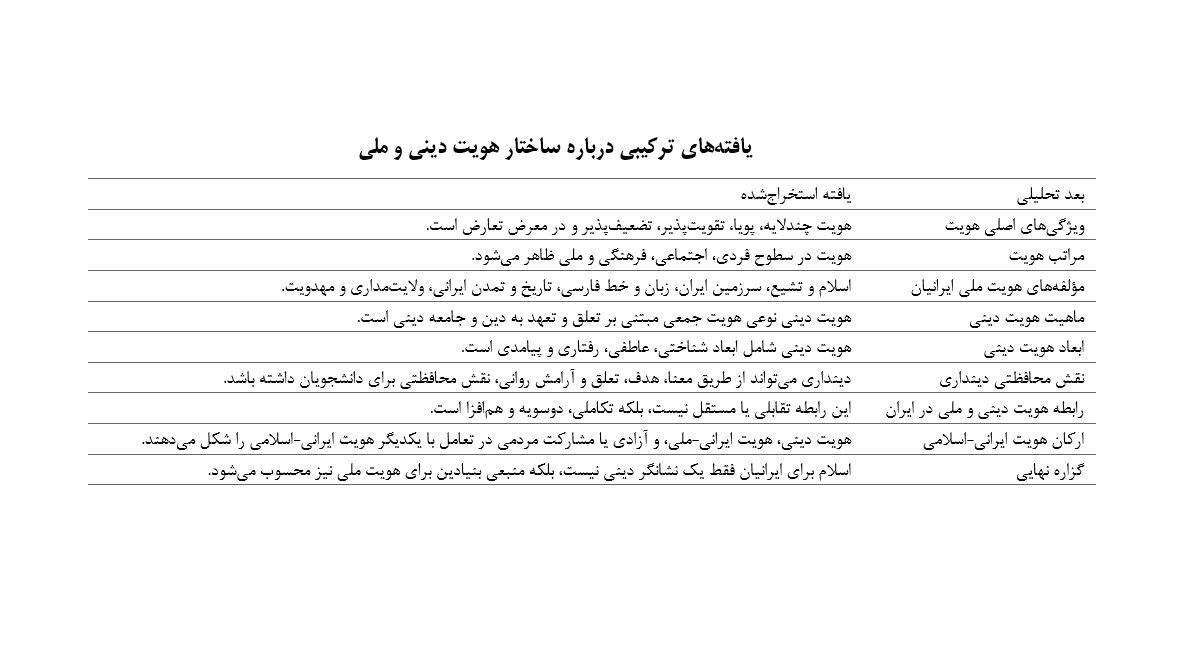
هدف این پژوهش تبیین رابطه دوسویه هویت دینی و ملی و شناسایی مؤلفههای کلیدی هویتساز با تمرکز بر کاربست آنها در نظام آموزش عالی ایران است. این مطالعه با رویکرد کیفی و بهکارگیری روش تحلیلی-اسنادی انجام شد. دادهها از طریق جستجوی نظاممند در پایگاههای علمی داخلی و بینالمللی گردآوری گردید و پس از غربالگری، 60 مقاله و 20 کتاب تخصصی انتخاب شد. تحلیل دادهها با استفاده از تحلیل محتوای کیفی قیاسی صورت گرفت که شامل استخراج مقولهها، طبقهبندی مفاهیم و سنتز یافتهها برای ارائه یک چارچوب مفهومی منسجم بود. نتایج نشان داد که هویت دینی و ملی در بستر جامعه ایران رابطهای همافزا و تکاملی دارند. تحلیلها منجر به استخراج یازده مؤلفه هویتساز شامل علوم انسانی هویتمدار، تربیت دینی فعال، تفکر منطقی و فلسفی، تقویت ابعاد شناختی و عاطفی، الگوسازی، و پیوند با منابع معنابخش شد. همچنین مشخص گردید که تقویت هر یک از این مؤلفهها بهطور معناداری به انسجام هویتی، افزایش تعلق اجتماعی و ارتقای سلامت روان دانشجویان منجر میشود. یافتهها حاکی از آن است که تقویت همزمان ابعاد دینی و ملی هویت از طریق یک رویکرد یکپارچه در آموزش عالی، میتواند زمینهساز شکلگیری نسلی هویتمدار، کنشگر و مقاوم در برابر چالشهای فرهنگی جهانی باشد.
مراجع
1. Vignoles VL, Jaser Z, Taylor MJ, Ntontis E. Identity Motives. The Cambridge Handbook of Identity: Cambridge University Press; 2021. p. 69-92.
2. Giddens A. Modernity and Self-Identity: Self and Society in the Late Modern Age: Polity Press; 2022.
3. Burke PJ, Stets JE. Identity Theory. 2nd ed: Oxford University Press; 2023.
4. Maehler DB, Hernandez-Torrano D. Identity Development Research: A Systematic Review of Reviews. Self and Identity. 2025;24(8):907-42.
5. Ghorbani M, Mousavi SF. Analysis of Erikson's Theory in Iranian Youth Studies. Developmental Psychology: Iranian Psychologists. 2022;18(3):45-67.
6. Crocetti E, Albarello F, Meeus W, Rubini M. Identity Formation in Adolescence and Young Adulthood. European Review of Social Psychology. 2023;34(1):1-37. doi: 10.1080/10463283.2022.2107926.
7. Mitchell LL, Lodi-Smith J, Baranski EN. A Conceptual Review of Identity Integration across Adulthood. Identity. 2021;21(3):200-18. doi: 10.1080/15283488.2021.1917530.
8. McAdams DP, McLean KC. Narrative Identity. Current Directions in Psychological Science. 2024;33(1):3-9. doi: 10.1177/09637214231208142.
9. Adams M, van Houte M. The Reflexive Self in Late Modernity. The Routledge International Handbook of Interactionism: Routledge; 2021. p. 157-69.
10. Goffman E. The Presentation of Self in Everyday Life: Anchor Books; 2021.
11. Stryker S, Burke PJ. The Past, Present, and Future of an Identity Theory. Social Psychology Quarterly. 2022;85(2):105-24. doi: 10.1177/01902725221084728.
12. Fong P, Cruwys T, Haslam C, Haslam SA. Neighbourhood Identification and Mental Health: How Social Identity Processes Buffer the Effects of Neighbourhood Disadvantage. Social Science & Medicine. 2022;292:114574. doi: 10.1016/j.socscimed.2021.114574.
13. Cutler J. Social Identity and Belongingness: College Students' Happiness, Life Satisfaction, and Personal Growth. 2025.
14. Carneiro J. Identity as a College Student Predicts Life Satisfaction and Personal Growth. 2025.
15. Gfellner BM, Cordoba AI, Cordero Hermida MF. Cultural and Sex Differences in Emerging Adults: Identity Uncertainty, Psychological Symptoms and Adjustment at University. Lifespan Development and Mental Health. 2025;1(2):1-18. doi: 10.70322/LDMH.2025.10004.
16. Salehi Amiri SR, Mohammadi M. Theoretical Foundations and the Process of Cultural Identity Formation in Iran: Institute for Culture, Art, and Communication; 2022.
17. Salimi H. A Constructivist Approach to National Identity in Iran. Quarterly Journal of National Studies. 2021;22(86):3-19.
18. Farrokhi M, Ghalibaf FZ. Policy-Making of National Identity Components of Youth in the Upstream Documents of the Islamic Republic of Iran. Quarterly Journal of National Studies. 2024;25(99):111-34.
19. Ghasemzadeh D. Examining the Relationship between National and Religious Identity of Students. Quarterly Journal of National Studies. 2020.
20. Moayedfar S, Shahvaran A. Examining the Relationship between National and Religious Identity among the Zoroastrian Community of Iran. National Studies. 2021.
21. Babaei Fard A, Piri H, Soleimannejad M, Monti M. A Meta-Analysis of Studies on Religiosity and National Identity in Iran. Cultural Sociology Research. 2019;10(1):1-21.
22. Papacharissi Z. Affective Publics: Sentiment, Technology, and Politics. 2nd ed: Oxford University Press; 2023.
23. Taybi M. Youth and Cultural Identity in the Era of Globalization. Afak for Sciences Journal. 2023;8(3):407-16.
24. Asih IW, Tantri SN, Prima SR. Global and Local Cultural Contestation in the Digital Age: Indonesian Gen Z's Responses to Foreign Cultures and National Identity. Proceedings of the 6th Open Society Conference (OSC 2024): Atlantis Press; 2024. p. 123-35.
25. Taheri-Zangeneh M, Rezaeian A. The Divergent Effects of Domestic and Foreign Social Media on the National Identity of Iranian Youth. Communication Studies. 2025;32(1):67-92.
26. Shaham-Maymon G, Brenner N, Yaacov P, Miodownik D. Urban Identity versus National Identity in the Global City: Evidence from Six European Cities. European Journal of Political Research. 2025;64(2):580-98. doi: 10.1111/1475-6765.12700.
27. Ross A. Young Europeans' Geopolitical Identities: A Poststructural Analysis. Societies. 2024;14(10):195. doi: 10.3390/soc14100195.
28. Xu J. The Relationship between Global Competence and National Identity of the ISEC Program Students in China: University of Montana; 2024.
29. Statistical Center of I. Results of the 2021 General Census of Population and Housing. Tehran: Statistical Center of Iran, 2023.
30. Moshkini A. The Youth Demographic Storm and the Future of Social Cohesion in Iran. Population and Policy Review. 2023;7(1):55-78.
31. Amin S. Anomie and the Identity Crisis of Youth in the Age of Globalization. Quarterly Journal of Social Issues. 2024;19(1):112-30.
32. Moshkini A. Futures Studies of Youth Identity Crisis on the Horizon of Iran 2031. Iranian Futures Studies. 2023;5(2):78-105.
33. Khalili A. National Identity, Social Capital, and the Challenge of Cultural Penetration. Strategic Studies of Culture. 2021;4(2):89-114.
34. Heshmati M, Babaei Fard A, Niazi M. Futures Studies of Religious Identity in Iran Using the Causal Layered Analysis Approach. Strategic Scientific Quarterly. 2025.
35. Johannes FC. Religiosity as a Buffer against Depression and Stress among College Students in Minahasa, Indonesia. Christian Journal for Global Health. 2025. doi: 10.15566/cjgh.v12i2.915.
36. Bosma EJ. The Impact of Religiosity on Students' Experience at the University of South Dakota: University of South Dakota; 2024.
37. Krok D. Religiousness Measured by the Four Basic Dimensions of Religiousness Scale (4BDRS) among Polish Believers: Measurement Quality, Personality and Wellbeing Correlates. Journal of Religion and Health. 2025;64:4585-615. doi: 10.1007/s10943-025-02450.
38. Villani D, Eissa S, Zambelli M, Di Natale AF. Religiously Grounded Character and Its Association with Subjective Wellbeing in Emerging Adults: A Latent Profile Analysis. Religions. 2025;16(2):106. doi: 10.3390/rel16020106.
39. Siddiqi B. Islam and Social Changes among University-Going Urban Youth in Bangladesh. Contemporary Islam. 2024;18(2):317-36. doi: 10.1007/s11562-024-00559-8.
40. Aslan E, Yildiz E. Muslim Religiosity in the Digital Transformation: How Young People Deal with Images of Islam in the Media: Springer; 2024.
41. Njine A, Anthoney S. The Influence of Religious Beliefs on Identity Formation and Sense of Purpose among University Students in Thailand. International Journal of Adolescence and Youth. 2024;29(1):112-28.
42. Ebrahimi G. The Dual Challenge of Higher Education in Iran: Specialization versus Cultural Heritage. Iranian Journal of Higher Education Policy. 2023;9(4):78-99.
43. Lotf-Abadi H. University as an Arena of Secondary Socialization: A Developmental Psychology Perspective. Educational Psychology Quarterly. 2022;18(3):45-67.
44. Paya A. Islamization and Politicization of Social Sciences in Iranian Schools (2013-2013). Philosophy of Social Sciences. 2024;54(3):215-40. doi: 10.1177/00483931241234567.
45. Rezaeian H. The Relationship between Critical Thinking and Religious Identity in Students. 2020.
46. Asmari Bordeh Zard Y, Hallaji Sani A. The Relationship of Religious and National Identity with Depression and Quality of Life in Lower Secondary Public School Students of Bukan. Quarterly Journal of Educational Psychology. 2020.
47. Zarei M, Ahmadi S, Rezaei A. The Relationship of Religiosity and Self-Knowledge with Identity Formation. Psychology and Religion. 2023;16(3):55-72.
48. The Handbook of Identity Theory and Research. 2nd ed: Springer; 2022.
49. Crenshaw KW. On Intersectionality: Essential Writings: The New Press; 2022.
50. Decety J, Sommerville JA. The Developmental Neuroscience of Moral Cognition. Annual Review of Developmental Psychology. 2022;4:137-59. doi: 10.1146/annurev-devpsych-120920-023340.
51. Ferguson N, McKeown S. Political, Cultural, or Religious: How Do People Construe Religious Identity in Postconflict Societies? Personality and Social Psychology Bulletin. 2025;51(3):1-15. doi: 10.1177/01461672251313831.
52. Karimi Y, Rahimi M. Bibliometric Analysis of Identity Studies in Iranian Scientific Journals (2011-2021). Scientometrics Review. 2023;10(2):1-26.
53. Advancing Identity Theory, Measurement, and Research: Springer; 2024.
دانلودها
گاهشمار انتشار
شماره
نوع مقاله
مجوز
حق نشر 2026 Mohammad Ali Eslami (Corresponding author)

این پروژه تحت مجوز بین المللی Creative Commons Attribution-NonCommercial 4.0 می باشد.