Identifying the Components and Developing a Transformative School Model for Iranian Primary Schools: A Qualitative Study
Keywords:
Transformative school, elementary schools, educational structure, content analysis, elementary education, educational transformationAbstract
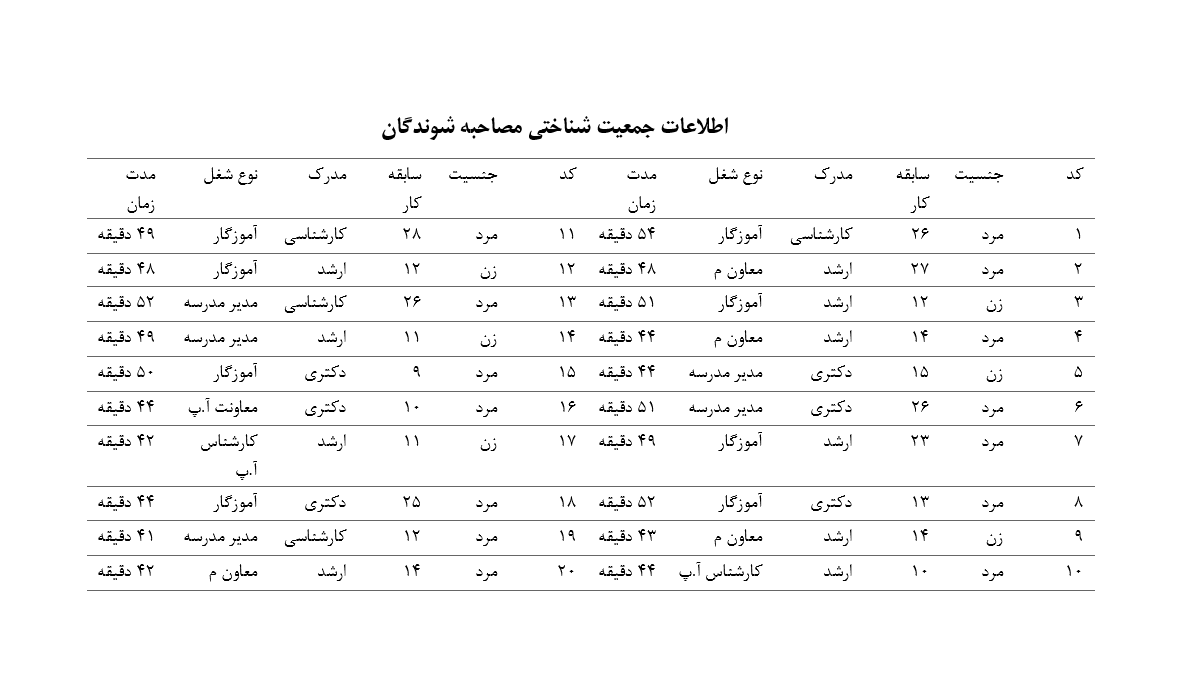
This study aimed to identify the essential components and develop an integrated, context-sensitive model of a transformative school for Iranian primary education. This qualitative study employed thematic analysis. The participants were 20 primary school principals, vice-principals, teachers, and experts from the Department of Primary Education, selected through purposive sampling during the summer of 2025 until data saturation was achieved. Data were collected through semi-structured interviews and analyzed following Braun and Clarke’s six-phase thematic analysis procedure. Maximum-variation sampling, member checking, expert review, detailed documentation of the research process, and an audit trail were used to enhance the trustworthiness of the findings. The analysis identified eight principal themes constituting the transformative school model: an optimal physical and environmental school structure, an optimal physical classroom structure, instructional facilities, welfare facilities, an administrative and participatory structure, sports, artistic, and extracurricular activities, optimal teaching and learning methods, and teachers’ professional competencies. The resulting model indicated that a transformative school is founded on the systematic interaction of flexible, safe, and developmentally appropriate learning spaces; adequate educational and technological infrastructure; desirable welfare, health, and sanitation conditions; and participatory management. Diverse sports, artistic, cultural, scientific, and skills-based activities were also integral to the model. Furthermore, active, inquiry-based, problem-based, experiential, collaborative, and project-based teaching approaches, together with teachers’ subject-specific, pedagogical, communicative, technological, assessment-related, socio-emotional, and professional competencies, emerged as mutually reinforcing requirements for transformative primary schooling. Transformation in primary schools is a multidimensional phenomenon that cannot be achieved through isolated modifications to technology, physical infrastructure, or teaching methods. Instead, it requires synergy among the learning environment, educational and welfare facilities, participatory administration, curricular and extracurricular programs, innovative teaching practices, and teachers’ professional competencies. Accordingly, the proposed model provides a locally grounded framework that may inform the planning, policymaking, implementation, and evaluation of transformative initiatives in Iranian primary schools.
References
1. Carter E, Onwuegbuzie A, Singal N, van der Velde L. Perceptions of teaching quality in Rwandan secondary schools: A contextual analysis. International Journal of Educational Research. 2021;109:101843. doi: 10.1016/j.ijer.2021.101843.
2. Chae-Yeon L, Sun-Young R. Remodeling Korean elementary schools for future education: Focusing on recognition and acceptance of flexible learning spaces in standard design schools. Journal of the Architectural Institute of Korea. 2024;40(6):35-44. doi: 10.5659/JAIK.2024.40.6.35.
3. Badmos KA, Alumona CJ, Adegoke BOA. Mismatch between classroom furniture dimensions and anthropometric measures of public primary school children in Ibadan, Nigeria. Ergonomics SA. 2022;33(1). doi: 10.4314/esa.v33i1.2.
4. Aerts R, Van Calster H, Ozen M, Benchrih R, Heyman S, Swerts E, et al. Green space at school and attention in primary school children in Belgium: A stratified matched case-control study. Urban Forestry & Urban Greening. 2025;105:128680. doi: 10.1016/j.ufug.2025.128680.
5. Zhou Y, Li X, Wijaya TT. Determinants of behavioral intention and use of interactive whiteboard by K-12 teachers in remote and rural areas. Frontiers in Psychology. 2022;13:934423. doi: 10.3389/fpsyg.2022.934423.
6. Dorris C, Winter K, O'Hare L, Lwoga ET. A systematic review of mobile device use in the primary school classroom and impact on pupil literacy and numeracy attainment. Campbell Systematic Reviews. 2024;20(2):e1417. doi: 10.1002/cl2.1417.
7. Miao F, Cukurova M. AI competency framework for teachers. UNESCO, 2024.
8. Claro M, Castro-Grau C, Ochoa JM, Hinostroza JE, Cabello P. Systematic review of quantitative research on digital competences of in-service school teachers. Computers & Education. 2024;215:105030. doi: 10.1016/j.compedu.2024.105030.
9. Estaji M, Banitalebi Z, Brown GTL. The key competencies and components of teacher assessment literacy in digital environments: A scoping review. Teaching and Teacher Education. 2024;141:104497. doi: 10.1016/j.tate.2024.104497.
10. Ferrero M, Vadillo MA, León SP. Is project-based learning effective among kindergarten and elementary students? A systematic review. PLOS ONE. 2021;16(4):e0249627. doi: 10.1371/journal.pone.0249627.
11. Deunk MI, Smale-Jacobse AE, de Boer H, Doolaard S, Bosker RJ. Effective differentiation practices: A systematic review and meta-analysis of studies on the cognitive effects of differentiation practices in primary education. Educational Research Review. 2018;24:31-54. doi: 10.1016/j.edurev.2018.02.002.
12. Aldrup K, Carstensen B, Klusmann U. Is empathy the key to effective teaching? A systematic review of its association with teacher-student interactions and student outcomes. Educational Psychology Review. 2022;34:1177-216. doi: 10.1007/s10648-021-09649-y.
13. Berti S, Grazia V, Molinari L. Active student participation in whole-school interventions in secondary school: A systematic literature review. Educational Psychology Review. 2023;35:52. doi: 10.1007/s10648-023-09773-x.
14. Andriani DE, Dania R, Suyud S, Raharja S, Kristyningsih DM. The profile of principals' instructional leadership in primary schools with high, moderate, and low achievement. Jurnal Prima Edukasia. 2022;10(2):159-70. doi: 10.21831/jpe.v10i2.48302.
15. Bellibaş MŞ, Gümüş S, Kılınç AÇ. Principals supporting teacher leadership: The effects of learning-centered leadership on teacher leadership practices with the mediating role of teacher agency. European Journal of Education. 2020;55(2):200-16. doi: 10.1111/ejed.12387.
16. Abonyi UK. Effects of teachers' participation in decision-making on organisational commitment in Ghanaian basic schools. Papers in Education and Development. 2024;42(1):148-67. doi: 10.56279/ped.v42i1.8.
17. Alharthy AAH, Marni NB. Training impact on the human resources performance. Journal of Southwest Jiaotong University. 2020;55(3):1-6. doi: 10.35741/issn.0258-2724.55.3.12.
18. Abraham M, Kaliannan M, Mohan AV, Thomas S. A review of SMEs recruitment and selection dilemma: Finding a fit. The Journal of Developing Areas. 2015;49(5):335-42. doi: 10.1353/jda.2015.0058.
Downloads
Publication Timeline
- Submitted
- Revised
- Accepted
Issue
Section
License
Copyright (c) 2025 Sahar Samari (Author); Shahab Moradi (Corresponding author); Aliakbar Dolati (Author)

This work is licensed under a Creative Commons Attribution-NonCommercial 4.0 International License.