نقش ساختار سازمانی در تبیین رابطه بین جبران خدمات و سلامت اداری: رویکردی کمی
DOI:
https://doi.org/10.61838/jsied.362کلمات کلیدی:
جبران خدمات, ساختار سازمانی, سلامت اداری, شایستهسالاریچکیده
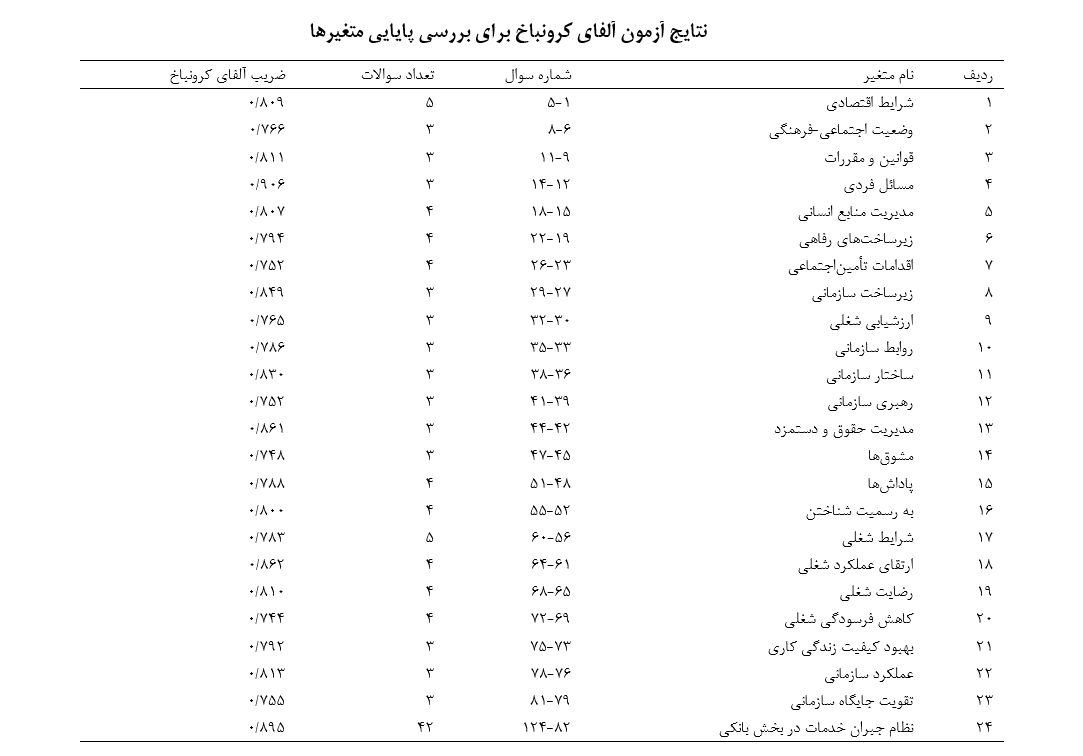
پژوهش حاضر با هدف بررسی نقش میانجی ساختار سازمانی در رابطه بین جبران خدمات و سلامت اداری انجام شده است. این مطالعه از نوع کاربردی و کمی با رویکرد پیمایشی-مقطعی بود. جامعه آماری شامل کارکنان بانک کشاورزی استان کرمان (۵۹۰ نفر) بود و حجم نمونه ۳۸۶ نفر تعیین شد. دادهها با استفاده از پرسشنامههای استاندارد و محققساخته جمعآوری و با نرمافزارهای SPSS 26 و Smart PLS 3 تحلیل شدند. پایایی ابزارها با آزمون آلفای کرونباخ و اعتبار آنها با روایی محتوا بررسی گردید. مدلسازی معادلات ساختاری برای تحلیل روابط بین متغیرها مورد استفاده قرار گرفت. نتایج نشان داد که ساختار سازمانی نقش میانجی معناداری در تقویت ارتباط بین جبران خدمات و سلامت اداری ایفا میکند. شاخصهای آماری شامل بار عاملی، ضریب تعیین (R²)، ضریب پیشبینی (Q²) و شاخص نیکویی برازش (GOF) بیانگر برازش قوی مدل و اعتبار بالای سازهها بود. همچنین، جبران خدمات مالی و غیرمالی به طور مستقیم بر سلامت اداری تأثیر گذاشته و با توجه به نقش میانجی ساختار سازمانی، این اثر تقویت میشود. یافتهها نشان میدهد که توجه به ساختار سازمانی و مولفههای کلیدی جبران خدمات میتواند پیامدهای مثبتی برای ارتقای سلامت اداری در نظام بانکی داشته باشد و مدیران میتوانند با بهبود نظام جبران خدمات و تقویت ساختار سازمانی، عملکرد سازمانی و رضایت کارکنان را ارتقا دهند.
مراجع
Abdollahi S, Ghorbani Namvar F. Identifying and Prioritizing Factors Affecting the Compensation System in Bank Mellat, Tabriz County. Scientific Quarterly of Management Research and Development. 2023;1(1):3-28.
Ahadzadeh S, Daneshfard K, Memarzadeh Tehran G. Designing a Government Employee Compensation Model and Its Comparative Analysis Across Different Types of Governmental Organizations. Human Resource Management Researches. 2021;13(3):115-67.
Ahmadi Y, Jalalian G, editors. Investigating the Compensation System in Education. 11th International Conference on Management Research and Human Sciences in Iran; 2022; Tehran.
Bouali A, editor Compensation. 4th National Conference on Management, Psychology, and Behavioral Sciences; 2023; Tehran.
Andriani NY. The Effect of Compensation on Employee Loyalty. JURNAL EMA. 2023;1(01):33-40.
Aman-Ullah A, Aziz A, Ibrahim H, Mehmood W, Aman-Ullah A. The role of compensation in shaping employee's behaviour: a mediation study through job satisfaction during the Covid-19 pandemic. Revista de Gestão. 2023;30(2):221-36. doi: 10.1108/REGE-04-2021-0068.
Gašić D, Berber N, Slavić A. Effects of the Compensation System and Socio-demographic Factors on the Attitudes of Employees in the Republic of Serbia. Management: Journal of Sustainable Business and Management Solutions in Emerging Economies. 2023. doi: 10.7595/management.fon.2022.0016.
Hendriks M, Burger M, Commandeur H. The influence of CEO compensation on employee engagement. Review of Managerial Science. 2023;17(2):607-33. doi: 10.1007/s11846-022-00538-4.
Jeha H, Knio M, Bellos G. The Impact of Compensation Practices on Employees' Engagement and Motivation in Times of COVID-19. COVID-19: Tackling Global Pandemics through Scientific and Social Tools2022. p. 131-49.
Chiaburu D, Oh IS, Stoverink AC, Park H, Bradley C, Barros-Rivera BA. Happy to help, happy to change? A meta-analysis of major predictors of affiliative and change-oriented organizational citizenship behaviors. Journal of Vocational Behavior. 2021:103664.
Tang AD, Chang ML, Wang TH, Lai CH. How to create genuine happiness for flight attendants: Effects of internal marketing and work-family interface. Journal of Air Transport Management. 2020;87:101860. doi: 10.1016/j.jairtraman.2020.101860.
Khan MA, Farooqi MR, Ahmad MF, Haque S, Alkhuraydili A. Influence of Compensation, Performance Feedback on Employee Retention in Indian Retail Sector. Sage Open. 2024;14(2). doi: 10.1177/21582440241236615.
Pan A, Wu Q, Li J. External fairness of executive compensation, institutional investor and M&A premium. Nankai Business Review International. 2022;13(1):79-99. doi: 10.1108/NBRI-05-2021-0035.
Souza ARDS, Vasconcelos IFFGD. Meritocracy and competency-based people management model: utopia or organizational reality? Cadernos EBAPE BR. 2021;19:190-202. doi: 10.1590/1679-395120190100.
Fernández DP, Ryan MK, Begeny CT. Support (and rejection) of meritocracy as a self‐enhancement identity strategy: A qualitative study of university students' perceptions about meritocracy in higher education. European Journal of Social Psychology. 2023;53(4):595-611. doi: 10.1002/ejsp.2925.
Maleki MH, Zadeh EJ, Ferdowsi A. Prioritizing the challenges of compensation methods for doctors and nurses in Iranian public hospitals. Depiction of Health. 2024;15(1):99-113. doi: 10.34172/doh.2024.08.
Putra AR. Improving Employee Performance through the Implementation of Total Quality Management and the Effectiveness of the Remuneration System. International Journal of Service Science, Management, Engineering, and Technology. 2022;2(2):1-5.
Tarigan SA, Assaly A, Gunawan E, Harnjo E. The Impact Of Work Environment And Compensation Toward Employee Performance. Jurnal Mantik. 2022;6(1):89-97.
Hosseini S, Mahdi M, Hajipour A, Ozmi A. Discovery and Enumeration of Mechanisms for Succession Planning System Implementation in Governmental Organizations. Public Management Researches. 2023;16(59):1-24.
Janahmadi Gol M, Rezaeifar H, Hakimipour H. Meta-Analysis of Factors Affecting Succession Planning Management in Governmental Organizations. Public Management Researches. 2023;16(60):191-218.
Mohammad Baqeri M, Etebarian Khorasgani A, Taghipour F. Presenting a Compensation Model with an Organizational Attachment Approach (Case Study: Bank Melli Iran). Behavioral Studies in Management. 2022;13(29).
Jackson NC, Dunn-Jensen LM. Leadership succession planning for today's digital transformation economy: Key factors to build for competency and innovation. Business Horizons. 2021;64(2):273-84. doi: 10.1016/j.bushor.2020.11.008.
Tafsir M, Husain NH, Shaari R. Measuring the Role of Compensation as an Intermediary Variable in Measuring the Relationship between Management Talent and Employee Effectiveness. BASKARA: Journal of Business and Entrepreneurship. 2023;6(1). doi: 10.54268/baskara.v6i1.18684.
Habibie HMH, Rusli M. Analysis of the Leasing Company's Leadership and Compensation on Employee Performance. Riwayat: Educational Journal of History and Humanities. 2023;6(3):1262-70.
Hidayati L, Zulher Z. The The Effect of Leadership and Compensation on Employee Performance with Motivation as Moderating Variables at the Pangeran Hotel Pekanbaru. IJEBD International Journal Of Entrepreneurship And Business Development. 2022;5(1):82-91. doi: 10.29138/ijebd.v5i1.1601.
Azimi H, Bayat R. Investigating the Impact of Knowledge Management and Human Resource Management Activities on Innovation in Technology and Growth Centers. Productivity Management. 2023;17(64):249-77.
Ali Doust Gahfarokhi E, Haji Hasani M, Eyvazi H. Analysis and Modeling of the Compensation System in Employee Retention in the General Department of Sports and Youth of Zanjan Province. Organizational Behavior Management in Sport Studies. 2021;8(3):11-24.
Hwang WJ, Park EH. Developing a structural equation model from Grandey's emotional regulation model to measure nurses' emotional labor, job satisfaction, and job performance. Applied Nursing Research. 2022;64:151557. doi: 10.1016/j.apnr.2021.151557.
Omotehinse AO, De Tomi G. Managing the challenges of obtaining a social license to operate in the pre-mining phase: A focus on the oil sands communities in Ondo State, Nigeria. World Development Perspectives. 2020;18:100200. doi: 10.1016/j.wdp.2020.100200.
دانلودها
گاهشمار انتشار
- ارسال
- بازنگری
- پذیرش
شماره
نوع مقاله
مجوز
حق نشر 2025 Mahsa Shokohsaljughi (Author); Sanjar Salajeghe (Corresponding author); Zahra Anjomshoae (Author)

این پروژه تحت مجوز بین المللی Creative Commons Attribution-NonCommercial 4.0 می باشد.