مدلیابی نقش رهبری آموزشی مدیران در پیشرفت تحصیلی دانشجویان با میانجیگری خودکارآمدی تدریس معلمان و درگیری تحصیلی دانشجویان
کلمات کلیدی:
رهبری آموزشی, خودکارآمدی تدریس, درگیری تحصیلی, پیشرفت تحصیلی, مدلیابی معادلات ساختاریچکیده
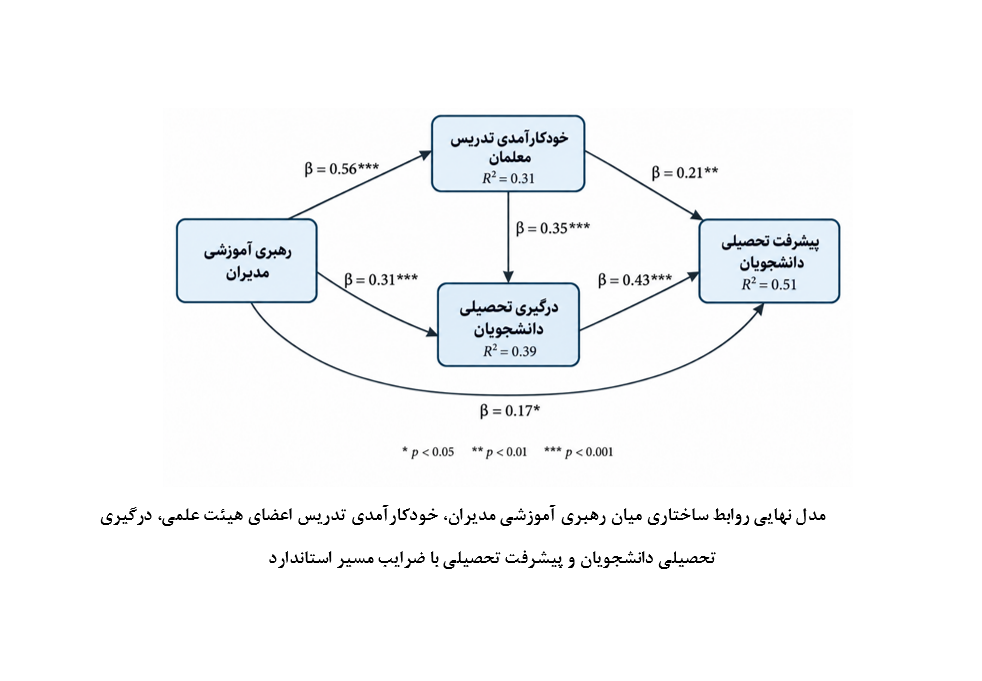
هدف پژوهش حاضر مدلیابی نقش رهبری آموزشی مدیران در پیشرفت تحصیلی دانشجویان با میانجیگری خودکارآمدی تدریس اعضای هیئت علمی و درگیری تحصیلی دانشجویان بود. پژوهش حاضر از نظر هدف کاربردی و از نظر روش، توصیفی ـ همبستگی از نوع مدلیابی معادلات ساختاری بود. جامعه پژوهش شامل دانشجویان و اعضای هیئت علمی دانشگاه خاتم در سال تحصیلی 1404-1405 بود که در نهایت دادههای 320 دانشجو همراه با اطلاعات استادان مرتبط با دروس منتخب تحلیل شد. دادهها با استفاده از ابزار سنجش رهبری آموزشی، مقیاس خودکارآمدی تدریس، مقیاس درگیری تحصیلی و معدل تحصیلی دانشجویان گردآوری شد. برای تحلیل دادهها از آمار توصیفی، ضریب همبستگی پیرسون، تحلیل عاملی تأییدی و مدلیابی معادلات ساختاری استفاده شد و معناداری اثرات غیرمستقیم با روش بوتاسترپ 5000 بازنمونهگیری بررسی شد. نتایج نشان داد رهبری آموزشی مدیران اثر مثبت و معناداری بر خودکارآمدی تدریس داشت (β = 0.56, p < 0.001) و بهطور مستقیم نیز درگیری تحصیلی را پیشبینی کرد (β = 0.31, p < 0.001). خودکارآمدی تدریس اثر مثبت و معناداری بر درگیری تحصیلی (β = 0.35, p < 0.001) و پیشرفت تحصیلی (β = 0.21, p = 0.001) داشت. درگیری تحصیلی قویترین اثر مستقیم را بر پیشرفت تحصیلی نشان داد (β = 0.43, p < 0.001) و اثر مستقیم رهبری آموزشی بر پیشرفت تحصیلی نیز معنادار بود (β = 0.17, p = 0.011). اثر غیرمستقیم رهبری آموزشی بر پیشرفت تحصیلی از طریق خودکارآمدی تدریس (β = 0.118)، از طریق درگیری تحصیلی (β = 0.133) و از طریق مسیر زنجیرهای خودکارآمدی تدریس و درگیری تحصیلی (β = 0.084) معنادار بود. مدل 51 درصد از واریانس پیشرفت تحصیلی را تبیین کرد. رهبری آموزشی مدیران میتواند هم بهطور مستقیم و هم از طریق تقویت خودکارآمدی تدریس اعضای هیئت علمی و افزایش درگیری تحصیلی دانشجویان، به بهبود پیشرفت تحصیلی منجر شود؛ بنابراین، ارتقای کیفیت رهبری آموزشی و حمایت از توانمندیهای تدریس و مشارکت فعال دانشجویان میتواند بهعنوان راهبردی مؤثر برای بهبود پیامدهای آموزشی دانشگاهها مورد توجه قرار گیرد.
مراجع
1. Kemethofer D, Helm C, Warwas J. Does Educational Leadership Enhance Instructional Quality and Student Achievement? The Case of Austrian Primary School Leaders. International Journal of Leadership in Education. 2025;28(3):461-85. doi: 10.1080/13603124.2021.2021294.
2. Özdoğru M, Sarier Y, Korucuoğlu T. How Leadership and School Climate Influence Student Achievement: Evidence from a Comparative Meta-Analysis. Educational Process: International Journal. 2025;15:e2025156. doi: 10.22521/edupij.2025.15.156.
3. Norman E, Masruri A, Wahid J, Hasbian Y. Managing Teacher Competence Improvement through Leadership, Professional Development, and Digital Innovation: A Systematic Literature Review. Journal of Educational Management Research. 2025;4(6):2135-70.
4. Fiantini I, Rifa'i M. School Principals' Leadership Strategies in Enhancing Inclusive Teachers' Competencies to Optimize Child Development. Journal of Educational Management Research. 2026;5(1):639-54. doi: 10.61987/jemr.v5i1.1734.
5. Kostogriz A, Manton C, Wilkinson J, Bright D, Fielding R, Gamble N, et al. Leadership as conversion: How school leaders enable teacher capabilities for responsive education in diverse schools. International Journal of Leadership in Education. 2026. doi: 10.1080/13603124.2026.2654866.
6. Ping H, Zhang Y. The Impact of Principals' Transformational Leadership on Multidimensionality of Teacher Job Performance: SEM Evidence from Chinese Schools. Journal of Asian Research Association for Educational Management. 2025;12(2):45-62.
7. Wang G. Exploring the Effects of Empowering Leadership on Teachers’ Career Calling in China: The Mediating Role of Psychological Empowerment. Chinese Education and Society. 2025;58(3-4). doi: 10.1080/10611932.2025.2541589.
8. Siregar J, Widodo W, Permana R, Sriyono H, Saputro A. Evoking Teachers' Innovative Work Behavior: Perspective of Digital Leadership, Creativity, and Proactive Personality through Work Engagement. European Journal of Educational Research. 2026;15(1):323-39. doi: 10.12973/eu-jer.15.1.323.
9. Zahed Babolan A, Hosseinzadeh R, Hanifi Kalashani S. The Role of Teachers' Attitudes and School Culture in Predicting Elementary School Teachers' Self-Efficacy. Educational Leadership Research. 2025;9(34):223-46.
10. Sahrudin S. Implementation of Islamic Leadership Values by School Principals in Enhancing Teacher Competence in Public Junior High Schools in Indramayu. Eduprof: Islamic Education Journal. 2025;7(1):140-61. doi: 10.47453/eduprof.v7i1.348.
11. Assefa Y, Alhur AA, Tilwani SA, Spahiu I, Majeed H. The Influence of Teacher Leadership on Student Self-Determination in Higher Education: The Moderating Role of Institutional Support and Classroom Climate. Social Sciences & Humanities Open. 2025;12:102166. doi: 10.1016/j.ssaho.2025.102166.
12. Xi Y, Yang G, Zhang X. How Supervisor–Student Interactions Matter for Leadership Education: Insights From the ‘Shimen’ Ecosystem. European Journal of Education. 2026;61(2). doi: 10.1111/ejed.70573.
13. Sariakin S, Yeni M, Usman MB, Mare AS, Munzir M, Saleh M. Fostering a productive educational environment: The roles of leadership, management practices, and teacher motivation. Frontiers in Education. 2025;10.
14. Karimian Poor G, Hosseini S, Amrollahi Biouki M, Ghaed Rahmati M. The relationship between teacher leadership style and academic enthusiasm in students: The mediating role of school climate and academic self-efficacy. Applied Educational Leadership. 2024;5(3):234-46.
15. Otieno RA. Mental health and academic performance among university undergraduate students: Depression and anxiety. Artificial Intelligence, Digital Learning, and Leadership: Redefining Higher Education: IGI Global; 2025. p. 253-68.
16. Neves MdLG. Exploring the Relationship between Ethical Leadership, Teacher Motivation and Commitment in Portuguese Public Schools. Frontiers in Education. 2025;10:1456685. doi: 10.3389/feduc.2024.1456685.
17. Mesbahi S, Einollahi Rezabegloo A, Fathi E. The Effect of School Principals' Ethical Leadership on Teachers' Organizational Commitment in Public Schools of Ardabil Province. Management and Development of Education and Learning. 2025;4(2).
18. Ozodova M. The Effect of Collectivist Culture on Teachers’ Wellbeing: Mediating Role of Social Justice Leadership. International Journal of Educational Management. 2025;39(4):898-915.
19. Polatcan M, Bellibaş MŞ, Apaydın Ç. Cultural and Psychological Dynamics in School Leadership: The Moderating Role of Trust in the Relationship Between Teachers' Cultural Values and Their Expectations for Paternalistic Leadership. European Journal of Education. 2025;60(1). doi: 10.1111/ejed.70002.
20. Ma H, Ismail L. Empowering Language teacher educators: the impact of training, emotions, leadership, and infrastructure on digital pedagogy and the facilitation of future teachers' competence. Education and Information Technologies. 2025:1-27. doi: 10.1007/s10639-025-13700-8.
21. Ahmadifar R, Mohammadi Gheshlagh P, Abdi S, Khakzad F, Sarbakhshrad A. Designing a Leadership Competency Model for Generation Z Students in Upper Secondary Schools of Kurdistan Province. Interdisciplinary Studies in Education. 2025;4(2):109-32.
22. Rajabian Dehzireh M, Moradi R, Taheri H. Developing the Components and Elements and Determining the Validity of the Talent Identification and Academic Guidance Model for Students in Alborz Schools. Applied Educational Leadership. 2025;6(1):171-91.
23. Sattarovich AU. Psychological Foundations of the Formation of Leadership and Willpower Qualities in the Personality of Students of Military Education. PJP. 2025;2(4):8. doi: 10.47134/pjp.v2i4.4590.
دانلودها
گاهشمار انتشار
- ارسال
- بازنگری
- پذیرش
شماره
نوع مقاله
مجوز
حق نشر 2025 Reyhaneh Seyfi (Author); Fatemeh Madanipour (Corresponding author); Vahid Manzari Tavakoli (Author)

این پروژه تحت مجوز بین المللی Creative Commons Attribution-NonCommercial 4.0 می باشد.