نشانگرهای عنصر اهداف در برنامه درسی توانمندساز در راستای اشتغالزایی دانشآموختگان آموزش عالی کشور و سنجش میزان توجه به آنها
DOI:
https://doi.org/10.61838/jsied.259کلمات کلیدی:
برنامه درسی توانمندساز, اشتغال زایی, عنصر اهدافچکیده
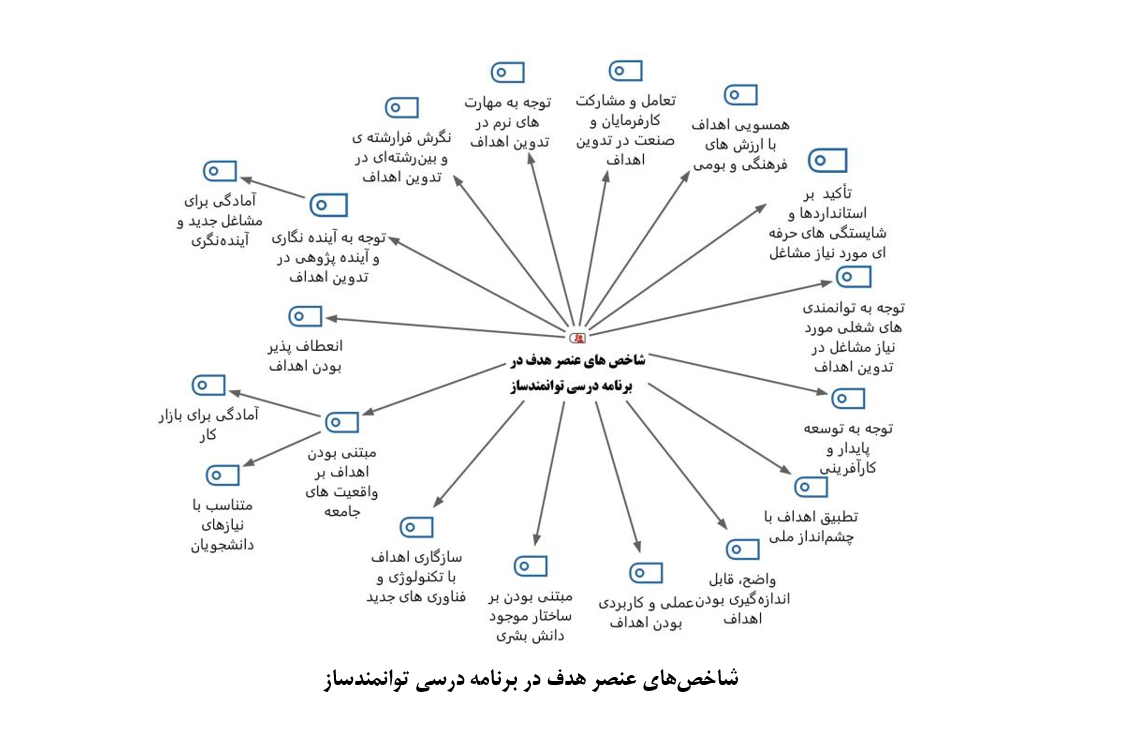
این پژوهش با هدف شناسایی نظاممند نشانگرهای عنصر اهداف در برنامه درسی توانمندساز و ارزیابی میزان توجه به این نشانگرها در رشتههای علوم تربیتی و روانشناسی در راستای افزایش اشتغالپذیری دانشآموختگان انجام شد. پژوهش حاضر از نظر هدف کاربردی و از نظر ماهیت عملگرایانه است و با رویکرد ترکیبی اکتشافی متوالی از نوع ابزارسازی انجام شد. در بخش کیفی، از روش پدیدارشناسی با مصاحبههای نیمهساختاریافته و گروه کانونی با ۲۳ نفر از خبرگان و متخصصان استفاده گردید. بخش کمی به روش توصیفی-پیمایشی و با جامعه آماری شامل دانشجویان مقطع کارشناسی سه دانشگاه کشور انجام شد و ۲۷۵ نفر با نمونهگیری تصادفی طبقهای نسبی انتخاب شدند. دادههای کیفی با تحلیل مضمون و دادههای کمی با آمار توصیفی و آزمونهای استنباطی t تکنمونهای و مانوا تجزیه و تحلیل شد. نتایج بخش کیفی نشان داد ۱۵ نشانگر اصلی برای عنصر اهداف وجود دارد، از جمله تعامل و مشارکت کارفرمایان و صنعت، توجه به مهارتهای نرم، نگرش فرارشتهای، آیندهپژوهی، انعطافپذیری، مبتنی بودن بر واقعیتهای جامعه، همسویی با فناوریهای نوین، عملی و کاربردی بودن، وضوح و قابلیت اندازهگیری، و همراستایی با ارزشهای فرهنگی و چشمانداز ملی. نتایج کمی نشان داد میانگین توجه به همه نشانگرها بالاتر از حد ملاک (۳) است اما مطلوبیت کلی متوسط بوده و تفاوت معناداری میان رشتههای علوم تربیتی و روانشناسی مشاهده نشد. با توجه به شناسایی جامع نشانگرهای عنصر اهداف، بازنگری و اصلاح برنامههای درسی علوم انسانی ضروری است تا آموزش عالی بتواند به ارتقای اشتغالپذیری، تقویت ارتباط با صنعت و توسعه مهارتهای موردنیاز بازار کار کمک کند.
مراجع
Schoots-Snijder AJM, Tigelaar DE, Admiraal W. Curriculum Guidelines for the Development of Student Agency in Secondary Education: A Systematic Review. The Curriculum Journal. 2025. doi: 10.1002/curj.318.
Adriansen HK, Madsen LM, Saarinen T, Waters J. Exploring the peculiar relationship between higher education quality and internationalization: a discourse analytical and spatial reading of four European university strategies. Nordic Journal of Studies in Educational Policy. 2025:1-15. doi: 10.1080/20020317.2025.2462061.
Tong P. Fostering Career Competence: The Role of Employment-Oriented Curriculum in Higher Education. Education Insights. 2024;1(2):34-40. doi: 10.70088/vv363k74.
Mahmood W, Akram M, Asghar A, Pervez N, Kanwal S, Benlahcene A, et al. Total Quality Management (Tqm) As A Predictor: An Empirical Study Of Tqm And Job Satisfaction Toward School Performance In Pakistan. Migration Letters. 2024;21(9):930-9.
Bagherianfar M. Designing indicators of empowering curriculum elements in order to increase the employability of undergraduate humanities graduates. Institute for Higher Education Research and Planning, 2024.
Salehi Omran E, Einkhah F. Developing the Employability of University Graduates: International Experiences and Modelling. Karafan Journal. 2023;20(2):41-63. doi: 10.48301/kssa.2021.286093.1529.
Zahiri F, Safari M, Godarzi H, Bayani A. Designing and validating the four elements of the curriculum model based on aesthetics and art components in the second secondary school. Jayps. 2022;3(3):280-303. doi: 10.61838/kman.jayps.3.3.22.
Askari A. An Analysis of the Concept of Punishment in the Criminal Justice System: A Journey from Criminal Justice to Restorative Justice. 2022.
Shahidi S, Hosseini Khah A, AliAsgari M, Seikkula_leino J. International Models of Educational Entrepreneurship in Higher Education and a Native Model for Iran. Journal of Higher Education Curriculum Studies. 2021;12(23):131-71.
Bagherian far M, Nasr Esfahani AR, Ahanchian MR. Identification the Indices of Desirable goals regarding the Humanity Courses for Universities and the Extent of attention to. University Textbooks; Research and Writting. 2021;24(47):225-54. doi: 10.30487/rwab.2021.130841.1405.
Jafari Rad R. Refugee Rights in Light of the European Union's Readmission Agreements with Third Countries. 2020.
Babadi Akashe Z, Nasr A, Nili Ahmad Abadi M. Identifying and Prioritizing Goals and Learning Activities to Internship in Psychology. University Textbooks; Research and Writting. 2020;23(45):205-24. doi: 10.30487/rwab.2020.108593.1346.
Porta CM, Disch J, Grumdahl N. Nursing disruption for achieving sustainable development goals by 2030. Nursing Administration Quarterly. 2019;43(4). doi: 10.1097/NAQ.0000000000000363.
Okolie UC, Nwosu HE, Mlanga S. Graduate employability: How the higher education institutions can meet the demand of the labour market. Higher education, skills and work-based learning. 2019;9(4):620-36. doi: 10.1108/HESWBL-09-2018-0089.
Islam A. Improving Educational quality through curriculum development: An empirical investigation using stakeholder feedback Data. Journal of Education. 2019;199(2):69-82. doi: 10.1177/0022057419848370.
Gamson DA, Eckert SA, Anderson J. Standards, instructional objectives and curriculum design: A complex relationship. Phi Delta Kappan. 2019;100(6):8-12. doi: 10.1177/0031721719834022.
Amini M, Rahimi H, Khodabakhshi HR. The evaluation of quality of curriculum elements in education field. DSME. 2018;5(2):1-12.
Sen S, Umemoto K, Koh A, Zambonelli V. Diversity and social justice in planning education: A synthesis of topics, pedagogical approaches, and educational goals in planning syllabi. Journal of Planning Education and Research. 2017;37(3):347-58. doi: 10.1177/0739456X16657393.
Rahmanpour M, Hosseini MQ, Nasr Isfahani AR. The extent of adherence to scientific principles in formulating the objectives of graduate curriculum: A case study of Isfahan University. Research in Curriculum Planning. 2017;54(3):35-49.
Dent J, Harden RM, Hunt D. A practical guide for medical teachers: Elsevier health sciences; 2017.
Zeller MP, Sherbino J, Whitman L, Skeate R, Arnold DM. Design and implementation of a competency-based transfusion medicine training program in canada. Transfusion medicine reviews. 2016;30(1):30-6. doi: 10.1016/j.tmrv.2015.11.001.
Woolridge RW, Parks R. What's in and what's out: Defining an industry-aligned IS curriculum using job advertisements. Journal of Higher Education Theory and Practice. 2016;16(2):105-19.
Shahbazi A. The Protection of Undocumented Migrants in International Law. 2016.
Rezvani R, Haghshenas B. Evaluating Curriculum alignment of English for Specific Purposes Bachelor of Arts Textbooks and the Relevant Official Curriculum Standards. Journal of New Approaches in Educational Administration. 2015;5(20):95-110.
Musavi S, Nili M, Nasr A, Masud M. Describing the Innovation Indicators in Goals of Art Curricula and their Application in Isfahan Art University. Journal of higher education curriculum studies. 2015;6(11):85-120.
Zhang H. Design and Implementation of Higher Education Student Counseling and Career Guidance Platform Based on Big Data Technology. Applied Mathematics and Nonlinear Sciences. 2025;10(1). doi: 10.2478/amns-2025-0276.
Wu W, Wu Y, Song G, Zhang L, Song H. Choosing to teach: Career aspirations among student teachers in Chinese normal universities and colleges. Teaching and Teacher Education. 2025;155:104880. doi: 10.1016/j.tate.2024.104880.
Soomro A, Khan MH, Umar M, Khan S, Ali O. AI-Driven Academic Advising in Higher Education: Leveraging Intelligent Systems to Personalize Student Support, Improve Retention, and Optimize Career Pathways. CRSSS. 2025;3(2):229-48. doi: 10.59075/vy3v7k17.
Moore M. Career Readiness: Preparing Social Work Students for Entry Into the Workforce. Journal of Baccalaureate Social Work. 2025;29(1):99-106. doi: 10.1891/jbsw-20220222-5r.
Maree JG. Longitudinal Career Construction Counselling for a Black Female Student Experiencing Career Indecision. South African Journal of Higher Education. 2025;39(1). doi: 10.20853/39-1-6007.
Lukman S, Koswara A, Sani A. The Role of Public Relations Education and Students’ Self-Efficacy on Career Aspiration. Profesi Humas. 2025;9(2):283-304. doi: 10.24198/prh.v9i2.59571.
Kounkroo N. Developing 21st century life skills and career competencies among university students: a case study of Buddhist University in Thailand. Insights in Modern Education (I-ME). 2025;2(1):1-7. doi: 10.1002/asi.24750.
Ko M, Eum K, Lee J, Jun Ej, Kwon YJ. The Impact of a Career-Related Character Education Program on the Maturity of High School Students’ Career Attitudes. Korean Assoc Learner-Centered Curric Instr. 2025;25(3):35-48. doi: 10.22251/jlcci.2025.25.3.35.
Kanbar R. Pharmacy Students’ Initial Career Choices Versus Subsequent Career Paths: A Cross-Sectional Study. BMC Medical Education. 2025;25(1). doi: 10.1186/s12909-024-06366-2.
Wang P, Zheng Y, Zhang M, Yin K, Geng F, Zheng F, et al. Methods for Measuring Career Readiness of High School Students: Based on Multidimensional Item Response Theory and Text Mining. Humanities and Social Sciences Communications. 2024;11(1). doi: 10.1057/s41599-024-03436-0.
دانلودها
گاهشمار انتشار
- ارسال
- بازنگری
- پذیرش
شماره
نوع مقاله
مجوز
حق نشر 2026 Mostafa Bagherian Far (Corresponding author); Seyed Hedayatallh Davarpanah, Ali Akbar Dolati (Author)

این پروژه تحت مجوز بین المللی Creative Commons Attribution-NonCommercial 4.0 می باشد.