بررسی تحول مفاهیم تربیتی در بستر فناوریهای نوین (هوش مصنوعی) و آسیبشناسی پداگوژی تربیتی در نظام سنتی تعلیم و تربیت
DOI:
https://doi.org/10.61838/jsied.469کلمات کلیدی:
تحول مفاهیم تربیتی, نظام سنتی تعلیم و تربیت, هوش مصنوعی, آسیبشناسی, پداگوژی تربیتیچکیده
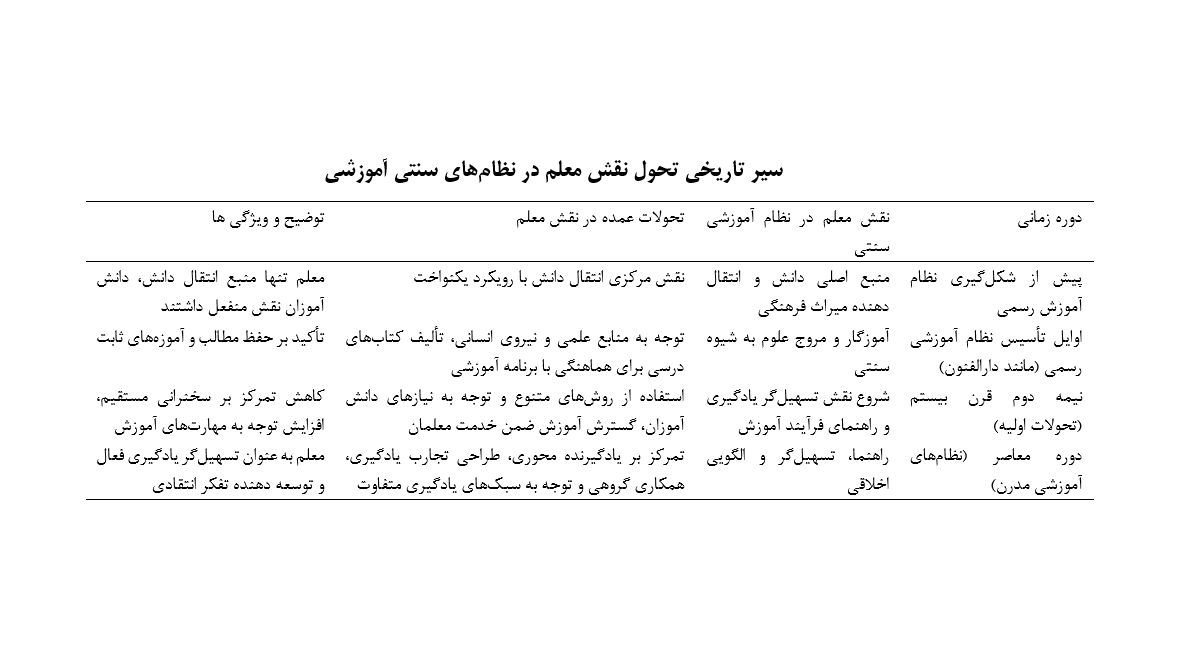
هدف پژوهش حاضر بررسی چگونگی تحول مفاهیم بنیادین تربیتی در پرتو فناوریهای نوین بهویژه هوش مصنوعی و تحلیل انتقادی کاستیهای پداگوژی سنتی بهمنظور ارائه چارچوبی نوین برای نظام آموزشی معاصر است. این پژوهش با رویکرد کیفی و در چارچوب پارادایم تفسیری–انتقادی انجام شد و از سه روش اصلی شامل تحلیل مفهومی، تحلیل انتقادی و استنتاج نظری بهره گرفت. جامعه پژوهش شامل منابع نظری، فلسفی و پژوهشهای علمی داخلی و بینالمللی در حوزه تعلیم و تربیت سنتی و فناورمحور بود که بهصورت هدفمند انتخاب شدند. دادهها از طریق مطالعه اسنادی و کتابخانهای گردآوری و با استفاده از تحلیل محتوای کیفی، کدگذاری مفهومی و مقایسه تطبیقی میان نظام سنتی و آموزش مبتنی بر هوش مصنوعی تحلیل شدند تا امکان بازتعریف مفاهیم کلیدی تربیتی فراهم گردد. نتایج نشان داد که مفاهیم سنتی آموزش نظیر نقش معلم، یادگیری، روش تدریس و ارزشیابی در ساختار اقتدارمحور و انتقالمحور شکل گرفته و در پاسخگویی به نیازهای یادگیری قرن بیستویکم با محدودیت مواجهاند. در مقابل، هوش مصنوعی با فراهمسازی یادگیری شخصیسازیشده، تحلیل دادههای آموزشی و تعامل چندبعدی، زمینه تحول نقش معلم از انتقالدهنده دانش به تسهیلگر یادگیری را فراهم میکند. همچنین گذار از آموزش حافظهمحور به یادگیری فعال، تطبیقی و یادگیرندهمحور بهعنوان پیامد اصلی ورود فناوریهای هوشمند شناسایی شد و ناکارآمدی ساختارهای سنتی در پرورش خلاقیت، تفکر انتقادی و خودتنظیمی یادگیری مورد تأیید قرار گرفت. یافتهها بر ضرورت شکلگیری پداگوژی هوشمند مبتنی بر تلفیق سنجیده ارزشهای تربیتی سنتی با ظرفیتهای تحلیلی و فناورانه هوش مصنوعی تأکید دارد؛ رویکردی که ضمن حفظ ابعاد انسانی و فرهنگی آموزش، امکان تحقق یادگیری عمیق، انعطافپذیر و عدالتمحور را در نظام آموزشی آینده فراهم میسازد.
دانلودها
مراجع
Najafi R. Foundations of education and critique of educational systems. Tehran: SAMT; 2017.
Mazaheri M. Critique of school education in Iran. Tehran: Naqd-e Amouzeshi Publication; 2020.
Selwyn N. Education and technology. 3rd ed: Bloomsbury; 2022.
Williamson B. The social life of AI in education: MIT Press; 2023.
Oecd. Digital education outlook 2023: OECD Publishing; 2023.
Rezaei A. Interactive education and evaluation with digital technologies. Tehran: Education Research Institute; 2023.
Jafari N. E-learning and modern teaching methods. Tehran: Negah Publication; 2021.
Abedi R. Challenges of the traditional structure of education and the teacher's role in the transformation of the educational system. Modern Education Monthly. 2021;78:15-29.
Karimi M. Educational evaluation and the development of critical thinking. Tehran: University of Tehran; 2018.
Zhao Y. An education crisis is a terrible thing to waste: How radical changes can spark student excitement and success: Teachers College Press; 2020.
Fathi M. The role of information technology in the transformation of the educational system. Tehran: University Publication; 2019.
Wang Y, Zhang D. Smart learning environments and the role of educators. Journal of Educational Technology & Society. 2018;21(2):25-38.
Chassignol M, Khoroshavin A, Klimova A. AI in personalized learning: Current trends. Computers & Education. 2021;163:104110.
Hwang GJ, Xie H, Wah BW, Gašević D. Vision, challenges, roles and research issues of Artificial Intelligence in Education. Computers and Education: Artificial Intelligence. 2020;1:100001.
Heydari M. Application of artificial intelligence in educational evaluation. Isfahan: Research Institute of Educational Sciences; 2022.
Salari H. The teacher's role in technology-based education. Tehran: Elmi Publications; 2020.
Yue M, Jong MS, Ng DTK. Understanding K–12 Teachers’ Technological Pedagogical Content Knowledge Readiness and Attitudes Toward Artificial Intelligence Education. Education and Information Technologies. 2024;29(15):19505-36. doi: 10.1007/s10639-024-12621-2.
Yousefian F, Kazemi L. Negative effects of technology on the education process. Journal of Educational Psychology. 2022;5:65.
Mirzaei A. Educational challenges of modern technologies. Tehran: Education Research Institute; 2020.
Holmes W, Porayska-Pomsta K, Holstein K, Sutherland E, Baker T, Shum SB, et al. Ethical AI in classrooms. International Journal of Artificial Intelligence in Education. 2022;32(3):504-26.
Mohammadi M, Razavi S. Artificial intelligence and digital transformation in Iranian education. Tehran: Cultural Studies Research Institute Publications; 2023.
Alizadeh H. Challenges of artificial intelligence in the Iranian educational system. Quarterly Journal of Educational Studies. 2022;12(3):45-67.
Jafari N. Critique and rethinking of traditional evaluation methods in education. Tehran: Roshd Publications; 2019.
Nikfar H. Digital pedagogy and its impact on educational processes. Quarterly Journal of New Technologies in Education. 2020;15(3):40-5.
Kashefi H, Ghasemi F. Interactive learning and its challenges in digital pedagogy. Quarterly Journal of Educational Research. 2019;21(4):60-5.
Taheri F. The role of agency in effective learning. Journal of Educational Studies. 2019;12(3):105-25.
Kumari K, Al-Hawary SIS, Natarajan R, Vasudevan A. The Algorithmic Adjuvant: Synthesizing Human Pedagogy and Artificial Intelligence in the Modern ESL Classroom With Insights From Uzbekistan. Ais. 2025;6(3):246-52. doi: 10.62754/ais.v6i3.217.
Kotsis KΤ. Artificial Intelligence for Physics Education in STEM Classrooms: A Narrative Review Within a Pedagogy Technology Policy Framework. Sch Jo Phs Ed. 2025;6(3):204-11. doi: 10.37251/sjpe.v6i3.2148.
Gurion ARC, Mateo DEV, Ganiban RA, Villarama J. Artificial Intelligence Integration in Pedagogy and Its Influence on Learning Styles. Blockch Crypt Futur Res. 2025;1(2). doi: 10.70211/bafr.v1i2.216.
Torkashvand S, Keshavarz S, Salehi A, Mirzamohammadi MH. Providing a theoretical model of educational justice in the formal and public education system based on Farabi's epistemological foundations of justice. Applied Issues of Islamic Education. 2020;3(4):7-34.
Sharifi E. Modern outputs of smart educational systems. Mashhad: Toos University Publication; 2021.
Rahmani A, Hosseini F. Challenges of digital pedagogy and strategies to face them. Quarterly Journal of Research in Education. 2020;19(2):45-52.
Moradi H. Educational challenges arising from modern technologies. Education and Technology Journal. 2021;7:23.
Ofem UJ, Orim FS, Edam-Agbor IB, Amanso EOI, Eni E, Ukatu JO, et al. Teachers’ Preparedness for the Utilization of Artificial Intelligence in Classroom Assessment: The Contributory Effects of Attitude Toward Technology, Technological Readiness, and Pedagogical Beliefs With Perceived Ease of Use and Perceived Usefulness as Mediators. Frontiers in Education. 2025;10. doi: 10.3389/feduc.2025.1568306.
Moore KS, Zhang B, Lee I. An Exploratory Analysis of in-Service Middle School Teachers’ Teaching Practices When Introducing Artificial Intelligence Concepts and the Emergence of Culturally Responsive Pedagogy. 2025. doi: 10.31219/osf.io/7fwsu_v1.
Tafuri F, Romano G, Latino F. Artificial Intelligence in the Improvement of the Athlete's Anatomical-Physiological Parameters: Transdisciplinary Pedagogical Models. Journal of Inclusive Methodology and Technology in Learning and Teaching. 2025;5(1).
Keshavarz S, Abdollahi S, Safarpour B, editors. Pathology of religious education2024.
Freire P. Pedagogy of the oppressed: Herder and Herder; 1970.
Khani H. Motivation in education. Tehran: University Publication; 2016.
Mousavi F. Chatbots and smart assistants in educational environments. Journal of Educational Sciences and Technology. 2021;18(2):50-60.
Mousavi S. Principles and modern methods of teaching. Tehran: University Publication; 2016.
Mishra P, Koehler MJ. Technological pedagogical content knowledge: A framework for teacher knowledge. Teachers College Record. 2006;108(6):1017-54.
Black P, Wiliam D. Assessment and classroom learning. Assessment in Education: Principles, Policy & Practice. 1998;5(1):7-74.
Luckin R, Holmes W, Griffiths M, Forcier LB. Intelligence unleashed: An argument for AI in education: Pearson Education; 2016.
Holmes W, Bialik M, Fadel C. Artificial intelligence in education: Promises and implications for teaching and learning: Center for Curriculum Redesign; 2019.
Bransford JD, Brown AL, Cocking RR. How people learn: Brain, mind, experience, and school: National Academy Press; 2000.
Mahmoudi A, Nasiri R, Karimi S. Comparative education in the context of artificial intelligence: Opportunities and challenges. Quarterly Journal of Research in Curriculum Planning. 2021;18(3):50-65.
دانلودها
گاهشمار انتشار
- ارسال
- بازنگری
- پذیرش
شماره
نوع مقاله
مجوز
حق نشر 2025 keyvan Sheykhi (Author); Seyed Mahdi Sajjadi (Corresponding author); Esmaeil Azimi (Author)

این پروژه تحت مجوز بین المللی Creative Commons Attribution-NonCommercial 4.0 می باشد.