طراحی و ارزشیابی برنامه درسی نوآورانه برای دستیابی به تنوع، برابری و شمول در نظام آموزش عالی ایران
DOI:
https://doi.org/10.61838/jsied.485کلمات کلیدی:
برنامه درسی نوآورانه, تنوع, برابری, شمول, آموزش عالی, نظام آموزشی ایران, طراحی برنامه درسی, ارزشیابی برنامه درسیچکیده
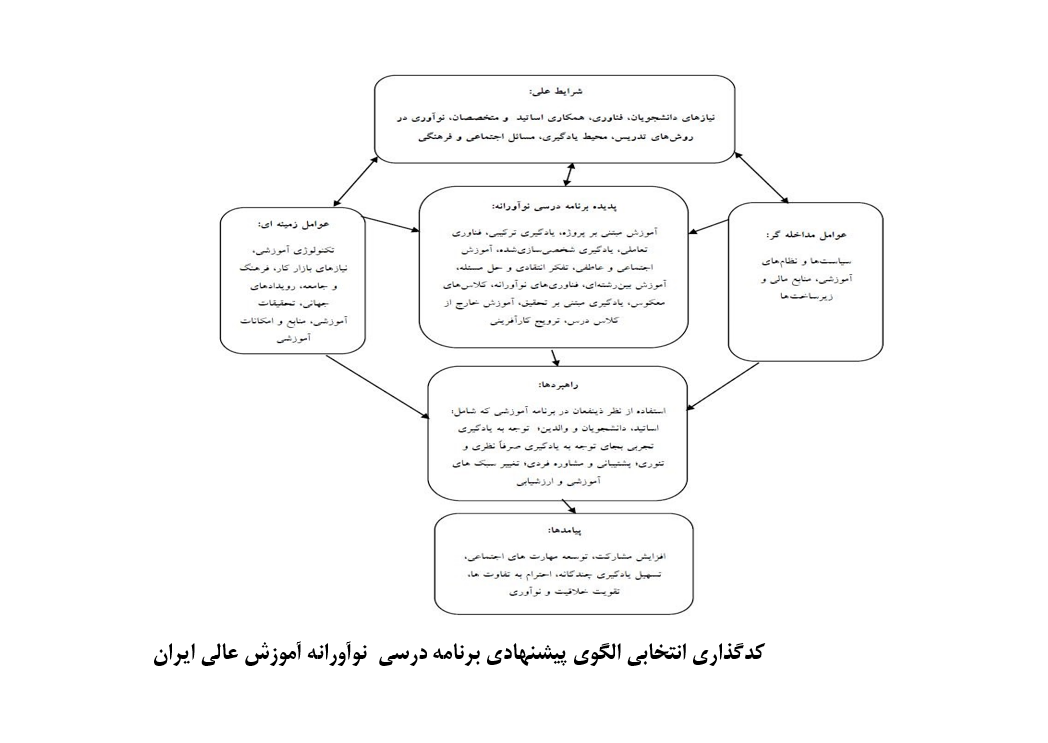
هدف این پژوهش طراحی و ارزشیابی یک برنامه درسی نوآورانه مبتنی بر اصول تنوع، برابری و شمول بهمنظور ایجاد نظام آموزشی عادلانه، پاسخگو و فراگیر در آموزش عالی ایران است. این پژوهش از نوع کیفی و با رویکرد نظریه دادهبنیاد سیستماتیک انجام شد. جامعه پژوهش شامل خبرگان حوزه برنامهریزی درسی، اعضای هیئت علمی، مدیران آموزشی و متخصصان آموزش عالی بود که با استفاده از نمونهگیری هدفمند و نظری تا رسیدن به اشباع نظری انتخاب شدند. دادهها از طریق مصاحبههای ساختاریافته عمیق، بررسی اسناد و مطالعات کتابخانهای گردآوری شدند. تحلیل دادهها با استفاده از کدگذاری سهمرحلهای شامل کدگذاری باز، محوری و انتخابی و با بهرهگیری از نرمافزار NVivo انجام گرفت. برای ارزشیابی مدل استخراجشده، پرسشنامهای طراحی و پس از تأیید روایی و پایایی، در اختیار خبرگان قرار گرفت . نتایج نشان داد که برنامه درسی نوآورانه شامل دوازده مؤلفه کلیدی است و آموزش مبتنی بر پروژه بهطور معناداری بالاترین اولویت را در بین مؤلفهها دارد، در حالی که فناوریهای نوآورانه و کلاسهای معکوس در سطح معناداری پایینتری قرار گرفتند. همچنین روابط معناداری بین عوامل علّی، زمینهای و مداخلهگر با راهبردهای برنامه درسی مشاهده شد که در نهایت منجر به پیامدهایی نظیر افزایش مشارکت، توسعه مهارتهای اجتماعی و تقویت خلاقیت گردید. یافتهها حاکی از آن است که همراستاسازی برنامه درسی با نیازهای دانشجویان و بازار کار بهطور معناداری بر تحقق تنوع، برابری و شمول تأثیرگذار است . برنامه درسی نوآورانه مبتنی بر تنوع، برابری و شمول میتواند با تلفیق رویکردهای یادگیری فعال، مشارکت ذینفعان و بهرهگیری از فناوریهای آموزشی، زمینه تحقق عدالت آموزشی و ارتقاء کیفیت آموزش عالی را فراهم سازد.
دانلودها
مراجع
1. Gupta A. Focus on Quality in Higher Education in India. Indian Journal of Public Administration. 2021;67(1):54-70. doi: 10.1177/00195561211007224.
2. Li Y, Zhang X, Dai DY, Hu W. Curriculum Innovation in Times of the COVID-19 Pandemic: The Thinking-Based Instruction Theory and Its Application. Frontiers in Psychology. 2021;12(3):601-17. doi: 10.3389/fpsyg.2021.601607.
3. Mohammadi R, Soleimani A. Systematic Review of Educational Justice in Iran: Conceptualization, Challenges and Indicators. Educational Planning Studies. 2023;12(23):145-70. doi: 10.22080/eps.2024.26091.2220.
4. Setiabudi DI, Ismi SF. Analysis of the Alignment of OBE-Based Curriculum With the Principles of Sustainable Development Goals in Higher Education. Icgel. 2025;2(1):46-58. doi: 10.62951/icgel.v2i1.147.
5. Ministry of Science W. Ministry of Science Website. 2024.
6. Omidvar A, Niazi M, Mazrouei Nasrabadi I, Khodakarmian Gilan N. Future Study of the Employment Status of Graduates of Humanities in Iran: A Product-Oriented View Using the Causal Layer Analysis Method. Quarterly Journal of Interdisciplinary Studies in the Humanities. 2014;16(1):121-56. doi: 10.22035/isih.2024.4975.4829.
7. Jafari H. Iranian Economy and Maritimeism. Journal of Modern Studies in Economic Diplomacy. 2023;12(3):25-55.
8. Mosali S, Amini A, Garai-Nejad G, Khosravinejad A. The Effect of Quality and Quantity of Human Capital in the Type of Education on Total Factor Productivity in the Non-Oil Economy of Iran. Quarterly Journal of Computational Economics. 2022;1(1):25-50.
9. Wu YJ, Chen JC. Stimulating Innovation with an Innovative Curriculum: A Curriculum Design for a Course on New Product Development. The International Journal of Management Education. 2021;19(3):100561. doi: 10.1016/j.ijme.2021.100561.
10. Irawati D, Najili H, Supiana S, Zaqiah QY. Merdeka Belajar Curriculum Innovation and Its Application in Education Units. Edumaspul: Jurnal Pendidikan. 2022;6(2):2506-14. doi: 10.62775/edukasia.v4i2.507.
11. Dano M, Prado N. Innovative Curriculum Design, Classroom Management Strategies, Competencies, and Mathematics Teachers' Performance: A Causal Model. Psychology and Education: A Multidisciplinary Journal. 2024;27(2):199-203.
12. Supriani Y, Meliani F, Supriyadi A, Supiana S, Zaqiah QY. The Process of Curriculum Innovation: Dimensions, Models, Stages, and Affecting Factors. Nazhruna: Jurnal Pendidikan Islam. 2022;5(2):485-500. doi: 10.31538/nzh.v5i2.2235.
13. Senivongse C, Bennet A. University-as-a-Service: Designing Thinking Approach for Bangkok University Business Innovation Curriculum and Service Development. Innovations in Education and Teaching International. 2024;61(5):1101-24. doi: 10.1080/14703297.2023.2253251.
14. Hosseini Largani SM. Designing an Innovative Curriculum Model in the Iranian Higher Education System: A Qualitative Study. Quarterly Journal of Research and Planning in Higher Education. 2022;25(3):27-49.
15. Jafarpour M, Hashemi SA, Mashinchi AA. Design and Validation of an Entrepreneurial Curriculum Model in Secondary Schools in Line with the General Policies of the System's Entrepreneurship. Strategic and Macro Policies. 2024;12(45):48-86.
16. Nasirian A, Ghiyashi Nadushan S, Khorsandi Taskoveh A, Taheri M, Kamali Y. Designing a Model for Evaluating the Final Impact of Policy in Iranian Higher Education. Public Policy. 2023;9(3):9-25.
17. Mousavi S, Abbasi Z, Izadi L, Ghasemi M, Safari R. Evaluation of Privatization Policies of Public Higher Education: A Case Study of Iranian Higher Education. Quarterly Journal of Research and Planning in Higher Education. 2024;31(1):77-113.
18. Rad T. Application of Iranian Basic Texts in Teaching Political Science with Emphasis on Kalileh and Demne. Political Science. 2023;19(2):395-418.
19. Sobhani Nejad M, Khalafi M. Studying the Compatibility of the Curriculum Content of In-Service Training Courses with Job Descriptions from the Perspective of the Staff of the Technical and Vocational Education Organization During 2019. Education Journal. 2019;3(1):23-49. doi: 10.1016/j.heliyon.2021.e06995.
20. Asgarova V, Hashmi ZF, Ngajie BN, Asghar MZ, Järvenoja H. Exploring Faculty Experiences With Generative Artificial Intelligence Tools Integration in Second Language Curricula in Chinese Higher Education. Discov Computing. 2025;28(1). doi: 10.1007/s10791-025-09655-6.
21. Zheng S. Artificial Intelligence – Driven Design of Aesthetic Education Curricula in Higher Education. Educ Insights. 2025;2(6):247-56. doi: 10.70088/ta9v8365.
22. Strauss A, Corbin J. Basics of Qualitative Research: Techniques and Procedures for Developing Grounded Theory: Sage Publications; 1998.
23. Behboodi Golkhatami A, Taghizadeh H, Bafandeh Zendeh A. Human Resources Planning Model of Mehr Eqtesad Bank Using System Dynamics. Public Policy Making in Management. 2021;12(1):83-96.
24. Ahmadi Moqim A, Sukhdari K. Identifying the Framework of Entrepreneurship Education Curriculum Elements for Secondary Schools and Free Technical and Vocational Schools Using the Meta-Synthesis Method. Skill Training. 2022;10(38):118-52.
25. Salari M, Momeni Mahmoui H, Akbari A, Zirak M. Designing a Model for Making Higher Education Textbooks and Curricula Agile: A Case Study of Islamic Azad University. Research and Writing of Academic Textbooks. 2019;27(53):205-35. doi: 10.30487/rwab.2024.2014814.1589.
26. Ajdari Fam N, Farajollahi M, Sarmadi MR, Mahboubi T. Design and Validation of a Learning-Based Curriculum Model with Emphasis on the Aker Model in Higher Education. Bi-Quarterly Journal of Higher Education Curriculum Studies. 2020;11(21):251-90. doi: 10.61838/kman.ijes.7.1.17.
27. Abdollahi F, Ranjdoust S, Yarigholi B. Designing and Validating an Optimal Transformation Model in Humanities with Emphasis on Curriculum in the Higher Education System of the Islamic Republic of Iran. Journal of Applied Educational Leadership. 2025;1:1-20.
28. Dixon K. Accounting for higher education: Calculative practices in curricular administration. Critical Perspectives on Accounting. 2025;102(11):102805-30.
دانلودها
گاهشمار انتشار
- ارسال
- بازنگری
- پذیرش
شماره
نوع مقاله
مجوز
حق نشر 2025 Ali Radmehr, Fatemeh Shefaat, Farzaneh Soufi (Author); Roghayeh Khademi (Corresponding author)

این پروژه تحت مجوز بین المللی Creative Commons Attribution-NonCommercial 4.0 می باشد.