تحلیل اهمیت–عملکرد ابعاد بهبود اثربخشی همکاری دانشگاه و صنعت: رهیافتی برای اولویتبندی اقدامات اصلاحی
کلمات کلیدی:
اهمیت, عملکرد, تحلیل اهمیت–عملکرد, اثربخشی همکاری, همکاری دانشگاه و صنعتچکیده
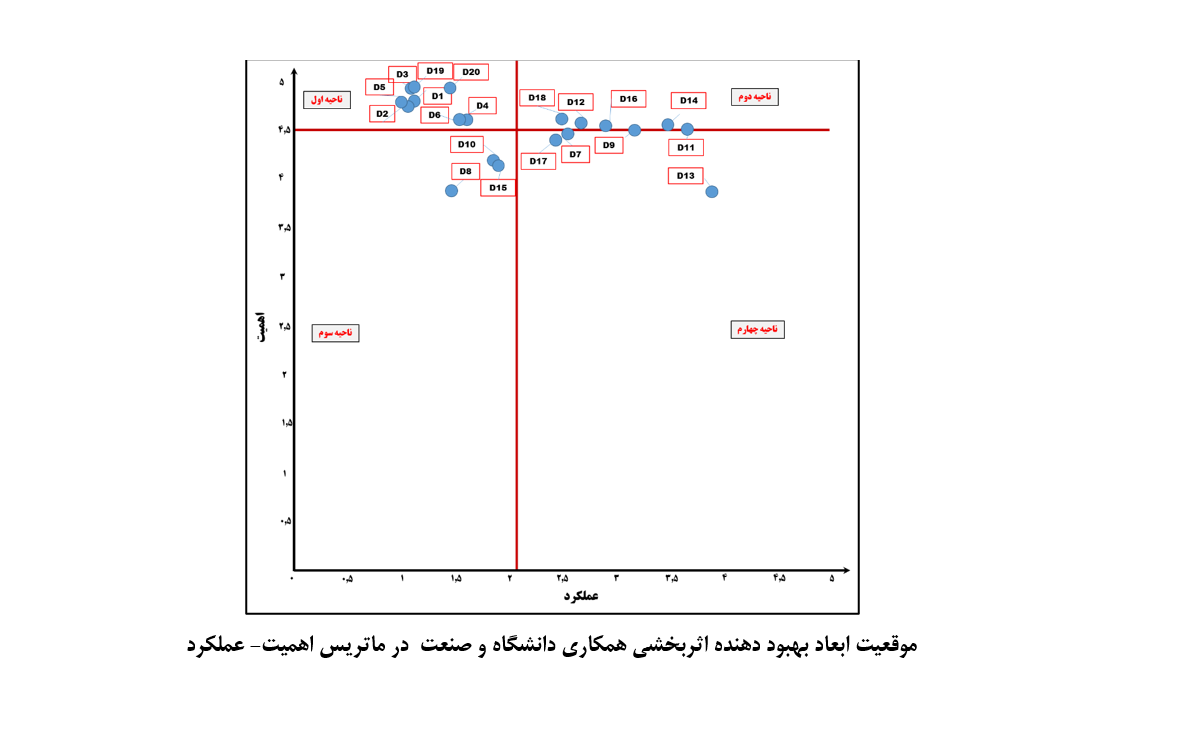
هدف پژوهش حاضر، تحلیل اهمیت و عملکرد ابعاد بهبوددهنده اثربخشی همکاری دانشگاه و صنعت در ایران و تعیین اولویتهای اقدام اصلاحی برای سیاستگذاران و تصمیمگیران این حوزه بود. این پژوهش از نظر هدف، کاربردی–توسعهای و از نظر ماهیت و روش، توصیفی–اکتشافی با رویکرد آمیخته کیفی–کمی انجام شد. در مرحله کیفی، با استفاده از روش فراترکیب هفتمرحلهای سندلوسکی و باروسو و بررسی نظاممند ۳۲ مقاله مرتبط با الگوهای همکاری دانشگاه و صنعت در ایران، ۲۰ بعد اصلی بهبود اثربخشی همکاری شناسایی شد. در مرحله کمی، دو پرسشنامه محققساخته برای سنجش میزان اهمیت و عملکرد این ابعاد در مقیاس لیکرت پنجدرجهای طراحی شد و در اختیار ۲۵ نفر از خبرگان دانشگاهی و صنعتی با سابقه بیش از ۱۰ سال فعالیت در حوزه همکاری دانشگاه و صنعت قرار گرفت. پایایی پرسشنامه اهمیت با آلفای کرونباخ ۰.۸۴ و پایایی پرسشنامه عملکرد با آلفای کرونباخ ۰.۹۱ تأیید شد. دادهها با روش تحلیل اهمیت–عملکرد و شاخص شکاف وزنی تحلیل شدند. نتایج نشان داد میانگین کل اهمیت ابعاد برابر با ۴.۵۰ و میانگین کل عملکرد برابر با ۲.۱۰ بود که بیانگر شکاف معنادار میان اهمیت ادراکشده و عملکرد موجود است. بیشترین اولویتها بر اساس شاخص شکاف وزنی بهترتیب شامل ایجاد زیستبوم همکاری مشترک داناییمحور با وزن ۱۸.۳۴، اتخاذ رویکرد حکمرانی مشارکتی با وزن ۱۸.۰۰، ایجاد نظام تأمین مالی پایدار با وزن ۱۷.۷۰، ایجاد سامانه یکپارچه برخط و امن ارتباطی با وزن ۱۷.۱۳، همکاری مشترک بلندبرد با وزن ۱۶.۹۸، ایجاد سکوی تعاملی مشترک با وزن ۱۶.۸۴، ایجاد نظام ارتقای محققین و پژوهشگران با وزن ۱۴.۲۹ و ایجاد نظام همکاری مشترک پژوهشی و تحقیقاتی با وزن ۱۳.۳۱ بود. نتایج پژوهش نشان داد که اثربخشی همکاری دانشگاه و صنعت در ایران بیش از هر چیز نیازمند تمرکز راهبردی بر ابعادی است که اهمیت بالا و عملکرد پایین دارند. تمرکز بر ایجاد زیستبوم داناییمحور، حکمرانی مشارکتی، تأمین مالی پایدار، زیرساخت ارتباطی امن و همکاریهای بلندمدت میتواند مسیر اصلاح سیاستها، تخصیص منابع و افزایش کارآمدی تعاملات دانشگاه و صنعت را هدایت کند.
مراجع
1. Bianchi M, Cavaliere A, Chiaroni D, Frattini F, Chiesa V. Organizational modes for open innovation in the bio-pharmaceutical industry: An exploratory analysis. Technovation. 2011;31(1):22-33.
2. Van de Vrande V, de Jong JPJ, Vanhaverbeke W, de Rochemont M. Open innovation in SMEs: Trends, motives and management challenges. Technovation. 2009;29(6-7):423-37.
3. Samadi M, Mahmodi R, editors. Analysis of the relationship between industry and university in Iran. 7th National Conference of Modern Studies and Research in the Field of Humanities, Management, and Entrepreneurship in Iran; 2020.
4. Hosseinzadeh AH, Rezadoust K, Bahmani S, Arabi A, Bandari M. The vicious cycle of industry-university relations: Solutions for moving toward knowledge capital creation. Strategic Research on Social Problems. 2025;14(2):6-88.
5. Hemmert M, Bstieler L, Okamuro H. Bridging the cultural divide: Trust formation in university-industry research collaborations in the US, Japan, and South Korea. Technovation. 2014;34(10):605-16.
6. Sjoo K, Hellstrom T. University-industry collaboration: A literature review and synthesis. Industry and Higher Education. 2019;33(4):275-85.
7. Liu J, Wang X, Miao W, Wang X. What factors enable sustainable university-industry collaboration communities? Evidence from a symbiosis theory perspective. Journal of Sustainable Futures. 2025:101166.
8. Hanafizadeh P, Salami R, Rowhani Tabatabaei M. Determining the factors influencing the selection of the inter-entities cooperation method: Case study of Iran's information technology entities. Journal of Knowledge Management. 2006;74:3-18.
9. Bjerregaard T. University-industry collaboration strategies: A micro-level perspective. European Journal of Innovation Management. 2009;12(2):161-76.
10. Edmondson G, Valigra L, Kenward M, Hudson R, Belfield H. Making Industry-University Partnerships Work: Lessons from Successful Collaborations. Science Business Innovation Board, 2012.
11. Rohrbeck R, Arnold HM, editors. Making UIC's work: A case study on the Deutsche Telekom Laboratories contrasted with findings in literature. The International Society for Professional Innovation Management Conference, Networks for Innovation; 2009; Athens, Greece.
12. Awasthy R, Flint S, Sankarnarayana R, Jones RL. A framework to improve university-industry collaborations. Journal of University-Industry Collaborations. 2020;2(1):49-62.
13. Farahi MM, Beigi Nasrabadi F. University and industry: From contractual relations to strategic partnership; presenting a model of strategic roles in university-society relations. Research and Planning in Higher Education. 2020;26(1):79-122.
14. Moghaddas Nodeh M. Investigating challenges of university-industry collaboration: Case study of Tehran Province Electricity Distribution Company. Innovation Management. 2019;8(1):8-106.
15. Hesan R, Sharif Zadeh R, Karimi A. Industry-university relationship: An analysis of policy instruments in Iranian laws and regulations. Public Policy Quarterly. 2021;7(2):145-66.
16. Shafiei M, Yazdanian V. Conceptual development of the relationship between industry and university: From operation-based solutions to institutional-driven solutions. Iranian Journal of Engineering Education. 2008;9:81-110.
17. Norouzpour B, Moradi M, Ramazanian MR, Ebrahim Pour Azbari M. Explaining technological collaborations of knowledge and business ecosystems: A perspective based on boundary-spanning theory and ambidexterity. Decision Making and Operations Research. 2024;9(1):236-59.
18. Nouri S, Moradi Y, editors. Investigating the methods of interaction and cooperation between the university and small and medium-sized enterprises. Proceedings of the Second International Conference on Management, Dynamic Accounting and Auditing; 2017; Tehran, Iran.
19. Tseng FC, Huang MH, Chen DZ. Dimensions of university-industry collaborations affecting university innovation performance. The Journal of Technology Transfer. 2020;45(2):560-77.
20. Azzopardi E, Nash R. A critical evaluation of importance-performance analysis. Tourism Management. 2013;35:222-33.
21. Heidari M, Alishiri MM, Heidari M. Importance-performance analysis of the challenges of implementing performance management in the country's executive agencies based on the Civil Service Management Law. Strategic Management Thought. 2024;18(1):2-193.
22. Tabrizian H. Prioritizing policy areas of energy governance in Iran through the application of importance-performance analysis. Energy Policy and Planning Research Quarterly. 2025;11(2).
23. Shayegani M, Nouri S, Zakeri A, Mahdinejad Nouri M. Strategies and mechanisms for improving the effectiveness of industry-university collaboration in Iran and their effects on the six levels of collaboration between the parties. Management Improvement. 2024;18(3).
دانلودها
گاهشمار انتشار
- ارسال
- بازنگری
- پذیرش
شماره
نوع مقاله
مجوز
حق نشر 2025 Mehdi Shayegani Madad (Corresponding author); Siyamak Noori, Amir Zakery (Author)

این پروژه تحت مجوز بین المللی Creative Commons Attribution-NonCommercial 4.0 می باشد.