Designing a Cultural Consumption Model in the Autism Community: A Thematic Analysis Approach
DOI:
https://doi.org/10.61838/jsied.481Keywords:
Autism, Consumption Pattern, Cultural Goods, Thematic Analysis, Institutional SupportAbstract
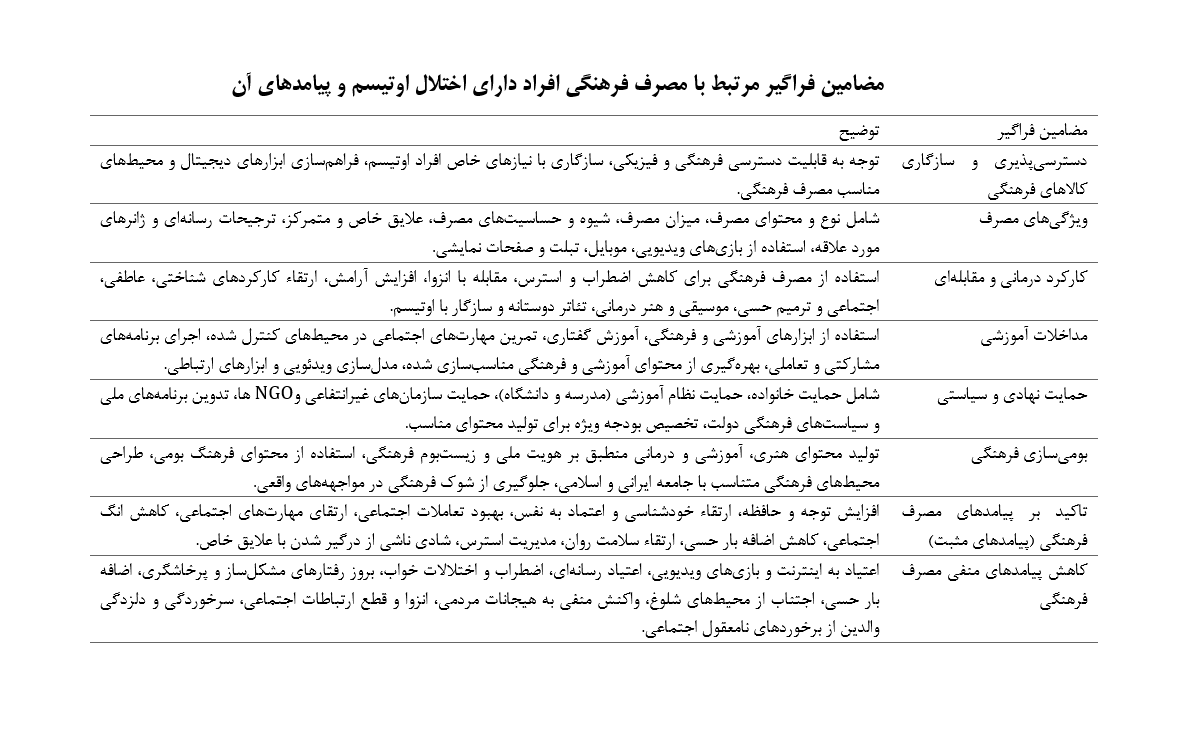
The present study aimed to develop a comprehensive conceptual model of cultural goods consumption among individuals with autism spectrum disorder. This qualitative study employed thematic analysis based on the Attride-Stirling approach. Participants included both theoretical and experiential experts (parents of children with autism and educational instructors), selected through purposive and snowball sampling until theoretical saturation was reached. Data were collected via semi-structured interviews and analyzed through open, axial, and selective coding. Credibility was ensured using member checking, peer debriefing, triangulation, and prolonged engagement with data. A total of 119 basic themes were extracted and organized into higher-level organizing and global themes . Findings revealed that cultural consumption in the autism community is a multidimensional and interactive process shaped by individual, environmental, and institutional factors. Organizing themes included consumption characteristics, therapeutic-developmental functions, educational interventions, institutional support, and cultural localization. The results indicated that the manner of consumption, rather than merely type or quantity, plays a decisive role in generating positive outcomes such as improved cognitive, emotional, and social functioning. Conversely, unregulated consumption may lead to negative consequences including anxiety, sensory overload, and social isolation. The proposed model suggests that cultural consumption in the autism community is a structured and context-dependent process requiring intentional design, institutional support, and culturally adapted content to maximize developmental and social outcomes.
Downloads
References
1. Wright B, Pearson H, Spikins P, Scott C, Schofield J. Autism and Engagement with Material Culture. Interdisciplinary Science Reviews. 2022;47(1):18-39.
2. Dolan EW. Sensory Issues in Autism May Stem from Co-Occurring Emotional Blindness, Not Autism Itself. 2025.
3. Zhao Z, Shi D, Qi X, Shan Y, Liu X. Family Travel Among People with Autism: Challenges and Support Needs. International Journal of Contemporary Hospitality Management. 2023.
4. Atherton MY, Nakashima S, Cross L. Does the Study of Culture Enrich Our Understanding of Autism? A Cross-Cultural Exploration of Life on the Spectrum in Japan and the West. Journal of Cross-Cultural Psychology. 2023;54(5):610-34.
5. Alaghband-Rad M, Cook J, Russell G. Foucault, Bourdieu, and the Autistic Teacher: A Critical Analysis of Camouflaging. 2023.
6. Bagheri-Rakhneh H, Jafari-Harandi R, Heydari K. The Effectiveness of Music Therapy on Academic Engagement and Academic Vitality in Male Students with Autism Spectrum Disorder. Research in Teaching and Learning. 2024;21(2):1-14. doi: 10.22070/tlr.2024.19151.1597.
7. Talebi A, Kashani-Vahid L, Asaseh M, Afrooz GA, Moradi-Sabzevar M. Comparison of the Effectiveness of Two Intervention Methods Based on Music Software Training and Visual Communication on Stereotyped Movements and Eye-Hand Coordination in Children with Autism. Journal of Applied Psychological Research. 2025;16(2):33-46.
8. Mathew NE, Mallitt KA, Masi A, Katz T, Walker AK, Morris MJ, et al. Dietary Intake in Children on the Autism Spectrum Is Altered and Linked to Differences in Autistic Traits and Sensory Processing Styles. Autism Research. 2022;15(10):1824-39.
9. Simpson HA. Forming Strong Cultural Identities in an Intersecting Space of Indigeneity and Autism Using Participatory Action Research and Digital Storytelling. AlterNative: An International Journal of Indigenous Peoples. 2023:11771801231197838.
10. Korosec K, Backman Bister A, Bojner Horwitz E, colleagues. A Space to Be Myself: Music and Self-Determination in the Lives of Autistic Adults. Psychology of Music. 2025. doi: 10.1177/03057356241305558.
Downloads
Publication Timeline
- Submitted
- Revised
- Accepted
Issue
Section
License
Copyright (c) 2025 Leyla Mehrdana (Author); Rozita Sepehrnia (Corresponding author); Fatemeh Azizabadi Farahani (Author)

This work is licensed under a Creative Commons Attribution-NonCommercial 4.0 International License.