تطبیق آموزههای دینی با دادههای علمی در تحلیل انحرافات جنسی: بررسی تطبیقی با تأکید بر پیامدهای فردی، خانوادگی و اجتماعی
کلمات کلیدی:
آموزههای دینی, دادههای علمی, انحرافات جنسی, رفتارهای جنسی آسیبزا, پیامدهای فردی, خانواده, پیامدهای اجتماعیچکیده
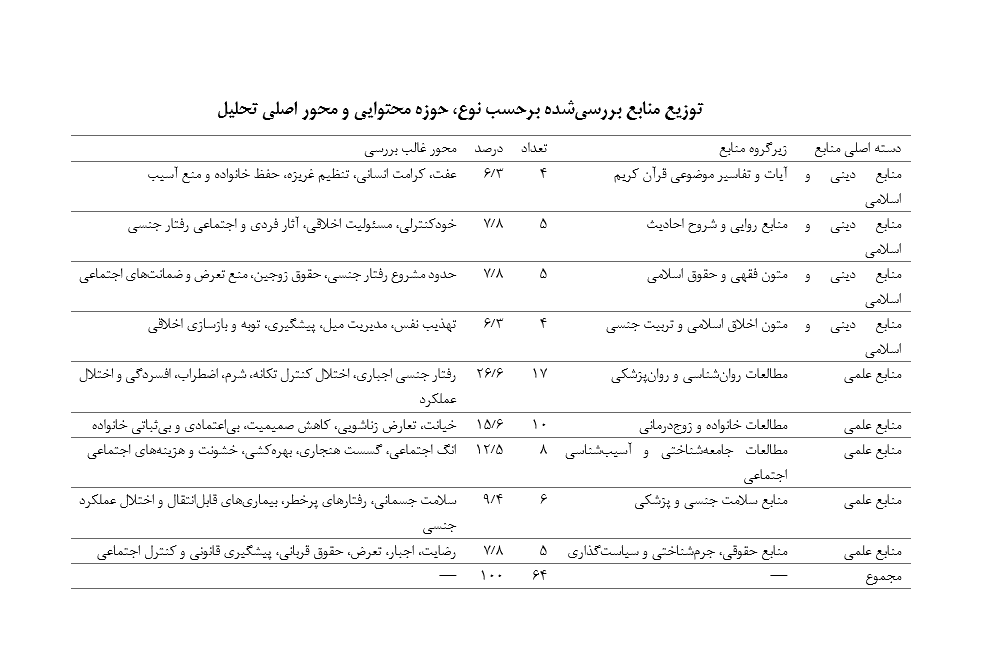
پژوهش حاضر با هدف تطبیق آموزههای دینی با دادههای علمی در تحلیل انحرافات و رفتارهای جنسی آسیبزا و تبیین نقاط همسویی، تفاوت و تکمیلکنندگی آنها با تأکید بر پیامدهای فردی، خانوادگی و اجتماعی انجام شد. این پژوهش یک مطالعه مروری تطبیقی با رویکرد کیفی بود که جامعه آن را منابع دینی، تفسیری، فقهی، اخلاقی، روانشناختی، روانپزشکی، جامعهشناختی، حقوقی و مطالعات خانواده تشکیل میداد. نمونه نهایی به شیوه هدفمند و مبتنی بر معیار انتخاب شد و شامل ۶۴ منبع، متشکل از ۱۸ منبع دینی و اسلامی و ۴۶ منبع علمی بود. دادهها با استفاده از فرم محققساخته استخراج اطلاعات گردآوری شدند. این فرم مؤلفههایی مانند تعریف رفتار جنسی آسیبزا، عوامل زمینهساز، پیامدهای فردی، خانوادگی و اجتماعی، معیارهای رضایت و اجبار، راهبردهای پیشگیرانه و درمانی و ارتباط یافتهها با مفاهیم دینی را دربر میگرفت. دادهها با روش تحلیل محتوای کیفی جهتدار و مقایسه تطبیقی تحلیل شدند و مضامین استخراجشده در چهار سطح همسویی، تکمیلکنندگی، تفاوت مفهومی و تعارض ظاهری سازمان یافتند. نتایج تحلیل نشان داد که آموزههای دینی و دادههای علمی در محورهایی مانند خودکنترلی، حفظ کرامت انسانی، منع اجبار و بهرهکشی، مسئولیتپذیری، رعایت حقوق دیگران، تحکیم خانواده و پیشگیری از آسیب همگرایی معناداری دارند. در مقابل، تفاوت اصلی در معیار تعریف انحراف مشاهده شد؛ بهگونهای که رویکرد دینی بر مشروعیت اخلاقی و شرعی و رویکرد علمی بر رنج بالینی، اختلال عملکرد، اجبار، فقدان رضایت و آسیب قابلمشاهده تأکید داشت. پیامدهای فردی شامل اضطراب، افسردگی، شرم، احساس گناه، اختلال خودتنظیمی و افت عملکرد بود. در سطح خانوادگی، کاهش اعتماد، تعارض زناشویی، خیانت، فاصله عاطفی و بیثباتی خانواده برجسته بود. در سطح اجتماعی نیز خشونت جنسی، بهرهکشی، سوءاستفاده از قدرت، انگ اجتماعی و افزایش هزینههای بهداشتی، قضایی و حمایتی شناسایی شد. تلفیق آموزههای دینی و دادههای علمی، در صورت حفظ مرزهای مفهومی میان گناه، جرم، رفتار پرخطر و اختلال بالینی، میتواند چارچوبی جامع، کرامتمحور و شواهدمحور برای پیشگیری، ارزیابی و مداخله در رفتارهای جنسی آسیبزا فراهم کند.
دانلودها
مراجع
1. Karamī NK. Foundations, Principles, and Goals of Sexuality Education in Islam and the West. Ethical Research. 2024;14(3).
2. Hajizadeh M, Mohseni Dekhlani M, Jahani AA, Izadi Fard A. Designing an Islamic Model for Sexual Education for Children from a Jurisprudential Perspective. [Unknown Journal]. 2021.
3. Salak R, Salak A, Kashani M. The Role of Parents in the Sexual Education of Children in Islamic Sources. Islamic Scholars Scientific Journal. 2023;9(25):104-32.
4. Khushkharam Roudmaejani M. Analysis of Perceived Islamic Sexual Education by Parents in Qom City; A Qualitative Study. Quarterly Journal of Psychology and Religion. 2022;14(4):83-96.
5. NoralizadehMianji M, Rahimi A. Patterns of health-oriented sex education in the growth process. Scientific Quarterly Journal of Islamic Education. 2022;17(41):15-30.
6. Kord H, Karimi M, Fotreti S, Pourkhosravi P, editors. Investigating the Role of Teachers in Sexual Education of Students and Prevention of Deviations and Social Harms. 1st International Conference on Distinguished Teachers and Modern Schools; 2024; Hamadan.
7. Hajipoor Bagheri R. Target Setting for Sexual Education in Elementary Schools According to Islamic Teachings. Research on Islamic Education Issues. 2024;32(62):221-46.
8. Pourmanouchehri SA, Abangah Azgami H. Jurisprudential Reconsideration of Sexual Education and Its Compatibility with the 2030 Document. Islamic Jurisprudence and Law Research. 2022;18(68):11-34.
9. Shīrbeygī M, Esmā'īlī Z, Sa'īdīpūr B, Sarmadī MR. Designing a Sexuality Education Model in the Era of Globalization with Emphasis on the Islamic Viewpoint: A Grounded Theory Approach. Journal of Research in Religion and Health. 2020;6(3):122-38.
10. Ogidiolu AO, Aderounmu DA. Social Media, Digital Technology, and Sex-Related Conflicts Among Christian Couples in the Good Message Baptist Association, Lagos State, Nigeria. African Journal of Religious and Theological Studies. 2025;4(1):66-82. doi: 10.62154/ajrts.2025.04.01015.
11. Reimers E. Sex Education and Religion-Resistance and Possibilities. British Journal of Religious Education. 2025. doi: 10.1080/01416200.2024.2336533.
12. Admiral R. Navigating consent: On women's sexual agency in the premodern Islamic West. Journal of Feminist Studies in Religion. 2023;39(1):69-86.
13. Safdarzadeh SFe, Shariati E, Roshan M, Atlabi S. Jurisprudential-Legal Analysis of the Wife's Right to Sexual Enjoyment with Emphasis on the Need for Spousal Temperament Understanding. Islamic Women and Family Research Journal. 2022;10(26):33-59.
14. Khan MW, Ebrahim S. The Marital Sexual Experiences of South African Muslim Wives of Indian Descent: Interpretative Phenomenological Analysis. Journal for the Study of Religion. 2024;37(1):1-24. doi: 10.17159/2413-3027/2024/v37n1a5.
15. Rahmani S, Goudarzi M, Arasteh M. Compare the effectiveness of sex problem-centered couple therapy based on the Islamic approach and integrated metacognitive-meta emotional couple therapy. The Women and Families Cultural-Educational. 2022;17(60):109-30.
16. Fasihi Permehr F. The Role of Sexual Excitation/Inhibition, Marital Conflicts, and Marital Communication Skills in Predicting Married Men's Propensity for Marital Infidelity [Master's Thesis]. Islamic Azad University, Ardabil Branch2023.
17. Valabeigi J. The relationship between marriage and prevention of sexual deviations among young people in Sanandaj. Sociological Studies of Youth. 2023;14(48):135-52.
18. Yusuf MA. Islamic communication a solution to reduce sexual violence. Al-Mishbah: Jurnal Ilmu Dakwah dan Komunikasi. 2023;18(2):237-53.
19. Razak A, Nuraini N, Putra RS, Kurniawan R. Patriarchy and Paternalistic Culture of Religious Leader Deification Causing Sexual Harassment in Islamic Educational Institutions. el Harakah: Jurnal Budaya Islam. 2024;26(1):139-70.
دانلودها
گاهشمار انتشار
- ارسال
- بازنگری
- پذیرش
شماره
نوع مقاله
مجوز
حق نشر 2025 Sakineh Rastegar Moghadam Ebrahimian (Corresponding author)

این پروژه تحت مجوز بین المللی Creative Commons Attribution-NonCommercial 4.0 می باشد.