Designing an Artificial Intelligence Research and Development Governance Model through the Convergence of Policy-Making, Investment, and Innovation: A Qualitative Thematic Analysis
Keywords:
Artificial Intelligence Governance, Research and Development (R&D), Policy, making, Investment, Innovation, Thematic Analysis, ConvergenceAbstract
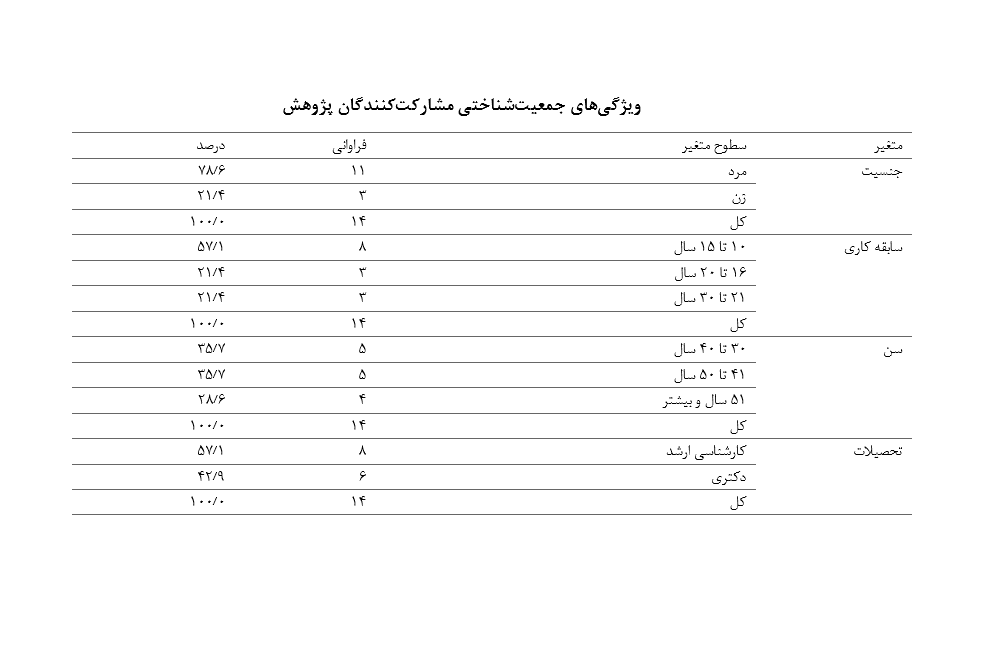
This study aimed to design and explain a governance model for artificial intelligence research and development (AI R&D), emphasizing the mechanisms through which policy-making, investment, and innovation converge within the Information and Communication Technology Research Institute. This applied, exploratory qualitative study employed thematic analysis. The study population comprised managers, senior experts, and researchers working at the Information and Communication Technology Research Institute. Fourteen experts were recruited through purposive and snowball sampling, and data were collected through in-depth semi-structured interviews until theoretical saturation was achieved. Data were analyzed following Braun and Clarke’s six-phase thematic analysis procedure using MAXQDA. Credibility and trustworthiness were strengthened through participant review, coding review, comparison of expert perspectives, and repeated reference to the original data. Inter-coder reliability was assessed using Cohen’s kappa coefficient. Analysis of the 14 interviews generated 4,708 initial coding instances, which were progressively refined and organized into 130 basic themes, 45 organizing themes, and 11 global themes. The final model comprised three principal governance domains: AI R&D policy governance, R&D investment governance, and AI innovation governance. The “convergence capability of policy-making, investment, and innovation” emerged as the central mechanism of the model and consisted of four dimensions: alignment of goals and priorities, joint decision-making and resource allocation, integration of information and processes, and feedback and adaptability. Institutional structure and organizational capacity, data governance and technical infrastructure, responsible AI, stakeholder participation, and risk and lifecycle governance were also identified as key enabling components. A kappa coefficient of 0.882 demonstrated a high level of coding agreement. Effective AI R&D governance requires a systematic linkage among policy priorities, resource allocation, innovation capabilities, and institutional, data, and technical mechanisms. Accordingly, establishing joint decision-making arrangements, aligning budgets with research priorities, and developing integrated monitoring, feedback, and adaptive mechanisms can strengthen coordination, accountability, risk management, and the creation of public value in AI research and development.
Downloads
References
1. Berente N, Gu B, Recker J, Santhanam R. Managing artificial intelligence. MIS Quarterly. 2021;45(3):1433-50. doi: 10.25300/MISQ/2021/16274.
2. Dwivedi YK, Hughes L, Ismagilova E, Aarts G, Coombs C, Crick T, et al. Artificial Intelligence (AI): Multidisciplinary perspectives on emerging challenges, opportunities, and agenda for research, practice and policy. International Journal of Information Management. 2021;57:101994.
3. Mäntymäki M, Minkkinen M, Birkstedt T, Viljanen M. Defining organizational AI governance. AI and Ethics. 2022;2(4):603-9.
4. Batool A, Zowghi D, Bano M. AI governance: a systematic literature review. AI and Ethics. 2025;5(3):3265-79. doi: 10.1007/s43681-024-00653-w.
5. Schot J, Steinmueller WE. Three frames for innovation policy: R&D, systems of innovation and transformative change. Research Policy. 2018;47(9):1554-67.
6. Mazzucato M. Mission-oriented innovation policies: challenges and opportunities. Industrial and Corporate Change. 2018;27(5):803-15.
7. Alinaghian A, Safdari Ranjbar M, Mohammadi M. Policy Objectives and Instruments for Artificial Intelligence Development: An Inquiry into Policy Programs of Selected Countries. Rahyaft. 2021;31(3):95-122. doi: 10.22034/rahyaft.2022.10940.1280.
8. Safdari Ranjbar M, Alinaghian A, Ghaderi F. Examining Policies for the Development of the Artificial Intelligence Innovation Ecosystem in Iran. Quarterly Journal of Innovation Economy Ecosystem Studies. 2023;3(3):99-120. doi: 10.22111/innoeco.2022.43535.1036.
9. Gursoy F, Kakadiaris IA. Artificial intelligence research strategy of the United States: critical assessment and policy recommendations. Frontiers in Big Data. 2023;6:1206139.
10. Soleimanzadeh S, Eslami M, Mousavi Shafaei M, Golmohammadi V. Artificial Intelligence Governance in the Digital Age: An Analysis of U.S. Strategies and Approaches. Foreign Relations Quarterly. 2024;16(2):193-224.
11. van Noordt C, Medaglia R, Tangi L. Policy initiatives for Artificial Intelligence-enabled government: An analysis of national strategies in Europe. Public Policy and Administration. 2025;40(2):215-53. doi: 10.1177/09520767231198411.
12. Oecd. Revised Recommendation of the Council on Artificial Intelligence. C/MIN(2024)16/FINAL. 2024.
13. De Almeida PGR, dos Santos Junior CD. Artificial intelligence governance: Understanding how public organizations implement it. Government Information Quarterly. 2025;42(1):102003. doi: 10.1016/j.giq.2024.102003.
14. Alrasbi O, Ariaratnam ST. The Organizational Transformation of Artificial Intelligence in Smart Cities: An Urban Artificial Intelligence Governance Maturity Model. Urban Science. 2026;10(1):63. doi: 10.3390/urbansci10010063.
15. Abraham R, Schneider J, Vom Brocke J. Data governance: A conceptual framework, structured review, and research agenda. International Journal of Information Management. 2019;49:424-38. doi: 10.1016/j.ijinfomgt.2019.07.008.
16. Jobin A, Ienca M, Vayena E. The global landscape of AI ethics guidelines. Nature Machine Intelligence. 2019;1(9):389-99.
17. Stilgoe J, Owen R, Macnaghten P. Developing a framework for responsible innovation. The Ethics of Nanotechnology, Geoengineering, and Clean Energy: Routledge; 2020. p. 347-59.
18. Papagiannidis E, Mikalef P, Conboy K. Responsible artificial intelligence governance: A review and research framework. The Journal of Strategic Information Systems. 2025;34(2):101885. doi: 10.1016/j.jsis.2024.101885.
19. Tabassi E. Artificial Intelligence Risk Management Framework (AI RMF 1.0). NIST AI 100-1. National Institute of Standards and Technology, 2023.
20. Wirtz BW, Weyerer JC, Kehl I. Governance of artificial intelligence: A risk and guideline-based integrative framework. Government Information Quarterly. 2022;39(4):101685.
21. Birkstedt T, Minkkinen M, Tandon A, Mäntymäki M. AI governance: themes, knowledge gaps and future agendas. Internet Research. 2023;33(7):133-67. doi: 10.1108/INTR-01-2022-0042.
22. Bashir H, Ravi MJ. A Systematic Review of Strategic Artificial Intelligence Governance Frameworks and Mechanisms in Studies from 2017-2025. Virtual Space and Social Media Studies. 2025;2(3):9-54. doi: 10.22083/cssms.2025.538964.1067.
23. Aghayari P, Karimmian Z. Governance and Artificial Intelligence: A Scientometric Narrative of Two Intertwined Stories. Science and Technology Policy. 2024;17(4):1-17. doi: 10.22034/jstp.2025.11814.1837.
24. Kuehnert B, Kim R, Forlizzi J, Heidari H. The "Who", "What", and "How" of Responsible AI Governance: A Systematic Review and Meta-Analysis of (Actor, Stage)-Specific Tools. Proceedings of the 2025 ACM Conference on Fairness, Accountability, and Transparency2025. p. 2991-3005.
Downloads
Publication Timeline
- Submitted
- Revised
- Accepted
Issue
Section
License
Copyright (c) 2025 Najmeh Anbari, Reza Radfar, Mohammad Kazem Sayadi (Author)

This work is licensed under a Creative Commons Attribution-NonCommercial 4.0 International License.