عنوان: مقایسه نوع اسناد دانشآموزان دارای افت تحصیلی درس ریاضیات در مقطع متوسطه دوره دوم
DOI:
https://doi.org/10.61838/jsied.488کلمات کلیدی:
جنبه های اسنادی, افت تحصیلی, تلاش، شرایط, استعداد, شانس, سطح دشواریچکیده
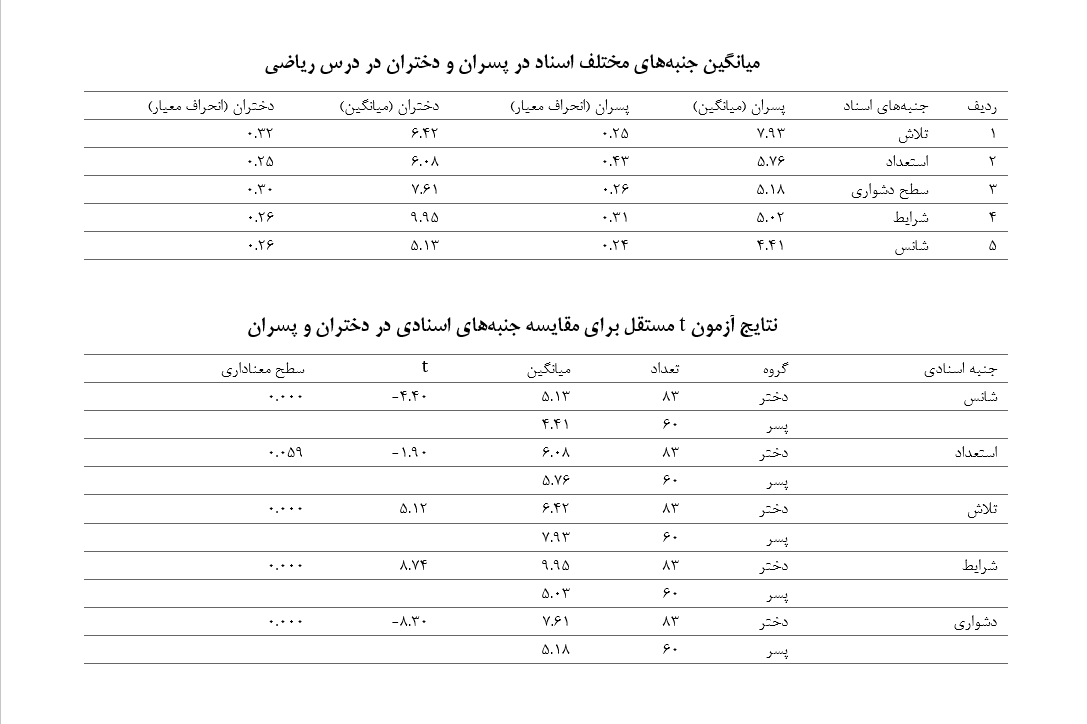
هدف پژوهش حاضر مقایسه نوع اسنادهای تحصیلی دانشآموزان دختر و پسر دارای افت تحصیلی در درس ریاضیات در مقطع متوسطه دوره دوم و بررسی تفاوت آنها در ابعاد تلاش، استعداد، شرایط، شانس و سطح دشواری بود. پژوهش حاضر از نوع غیرآزمایشی و علی–مقایسهای بود. جامعه آماری شامل دانشآموزان دختر و پسر مقطع متوسطه دوم شهر بهبهان در رشتههای ریاضی و علوم تجربی بود که در درس ریاضی افت تحصیلی داشتند. نمونه پژوهش شامل 143 دانشآموز (83 دختر و 60 پسر) بود که به روش سرشماری انتخاب شدند. ملاک انتخاب، کسب نمره کمتر از 10 در درس ریاضی در سهماهه اول سال تحصیلی 1404–1405 بود. دادهها با استفاده از پرسشنامه اسناد در درس ریاضی گردآوری شد که دارای 17 سؤال چهارگزینهای و پنج مؤلفه تلاش، استعداد، شانس، شرایط و سطح دشواری بود. پایایی ابزار با آلفای کرونباخ 0.83 گزارش شد. برای تحلیل دادهها از شاخصهای توصیفی و آزمون t مستقل استفاده شد. نتایج نشان داد هر دو گروه دختران و پسران از تمامی ابعاد اسنادی برای تبیین افت تحصیلی خود استفاده میکنند. در میان پسران، مؤلفه تلاش بالاترین میانگین را داشت، در حالی که در دختران، شرایط محیطی و سطح دشواری بیشترین میانگین را به خود اختصاص دادند. نتایج آزمون t مستقل نشان داد بین دختران و پسران در ابعاد تلاش، شرایط، شانس و سطح دشواری تفاوت معنادار وجود دارد (P<0.001)، اما در بعد استعداد تفاوت معناداری مشاهده نشد (P>0.05). همچنین یافتهها نشان داد پسران بیشتر از اسنادهای درونی و دختران بیشتر از اسنادهای بیرونی برای تبیین افت تحصیلی ریاضی استفاده میکنند. نتایج پژوهش نشان داد نوع اسناددهی دانشآموزان نقش مهمی در تبیین افت تحصیلی ریاضی دارد. اسناددهی پسران به تلاش، میتواند زمینهساز مسئولیتپذیری و انگیزش بیشتر برای پیشرفت تحصیلی باشد، در حالی که اسناددهی دختران به شرایط محیطی و دشواری درس ممکن است به کاهش انگیزش و شکلگیری درماندگی آموختهشده منجر شود. بنابراین، اصلاح سبکهای اسنادی دانشآموزان و تقویت اسنادهای درونی و قابلکنترل میتواند در کاهش افت تحصیلی ریاضی مؤثر باشد.
دانلودها
مراجع
1. Seif AA. Educational Psychology. Tehran: Agah Publications; 2021.
2. Santrock J. Educational Psychology. Omidian M, editor. Yazd: Yazd University; 2006.
3. Karimi Y. Social Psychology: Theories, Concepts, and Applications. 45th ed: Arasbaran Publications; 2024.
4. Carabeo JN, Tado PP. Student's Self-Esteem and Self-Control as Predictors of Academic Achievement of Students in Mathematics. Epra International Journal of Research & Development (Ijrd). 2024:149-55. doi: 10.36713/epra17796.
5. Steinberg O, Kulakow S, Raufelder D. Academic self-concept, achievement, and goal orientations in different learning environments. European Journal of Psychology of Education. 2024. doi: 10.1007/s10212-024-00825-6.
6. Baseri M. The relationship between mathematical self-efficacy and academic self-regulation with mathematics achievement of ninth-grade male students in Kamfirouz schools in the 2022-2023 academic year: Islamic Azad University, Marvdasht Branch; 2024.
7. Soleimani Far M. Investigating the Role of Attitude, Self-Efficacy, and Mathematical Self-Concept in Improving Mathematical Educational Performance. Modern Research in Performance Evaluation. 2025;4(2):124-38.
8. Schoenherr J, Schukajlow S, Pekrun R. Emotions in Mathematics Learning: A Systematic Review and Meta-Analysis. ZDM - Mathematics Education. 2025;57:603-20.
9. Gomez-Talal I, Bote-Curiel L, Rojo-Alvarez JL. Understanding the Disparities in Mathematics Performance: An Interpretability-Based Examination. Engineering Applications of Artificial Intelligence. 2024;133(Part B):108109. doi: 10.1016/j.engappai.2024.108109.
10. Darmanova Z, Abylkassymova A, Nurmukhamedova Z. A Systematic Review of Technology Use in Middle and High School Mathematics Education: Insights from Contextual, Methodological, and Evaluation Characteristics. Frontiers in Education. 2025;10. doi: 10.3389/feduc.2025.1644284.
11. Darmayanti R. Programmed Learning in Mathematics Education Before and After the Pandemic: Academics Integrate Technology. Alj. 2024;2(1):40-56. doi: 10.61650/alj.v2i1.126.
12. Heidari S, Taghvaei D, editors. The effectiveness of using an educational platform on academic motivation and academic achievement in mathematics among female junior high school students: A case study of Skyroom. Proceedings of the First National Conference on Research and Studies in Psychology and Educational Sciences (Mental Health in the Digital Age); 2025.
13. Zhu L, You H, Minju, Fang F. Predictive Insights into U.S. Students' Mathematics Performance on PISA 2022 Using Ensemble Tree-Based Machine Learning Models. International Journal of Educational Research. 2025;130(5):102537. doi: 10.1016/j.ijer.2025.102537.
14. Babaei A, editor A Comparative Study of Attribution Types among Male and Female Students with Academic Failure in Arabic Course at Lower Secondary Level. Proceedings of the Fifth National Conference on Pedagogical Content Knowledge (PCK) in Arabic Language and Literature Education; 2025 2025/12: Farhangian University.
15. Granello F, Cuder A, Doz E, Pellizzoni S, Passolunghi MC. Improving Math Self-Efficacy and Math Self-Concept in Middle School: A Narrative Systematic Review. European Journal of Psychology of Education. 2025.
دانلودها
گاهشمار انتشار
- ارسال
- بازنگری
- پذیرش
شماره
نوع مقاله
مجوز
حق نشر 2025 Ali Babaei (Corresponding author)

این پروژه تحت مجوز بین المللی Creative Commons Attribution-NonCommercial 4.0 می باشد.