تدوین سناریو مدل مدیریت منابع انسانی بر مبنای هوش مصنوعی با استفاده از روش آیندهپژوهی
کلمات کلیدی:
سناریو, مدیریت منابع انسانی, هوش مصنوعی, آینده پژوهیچکیده
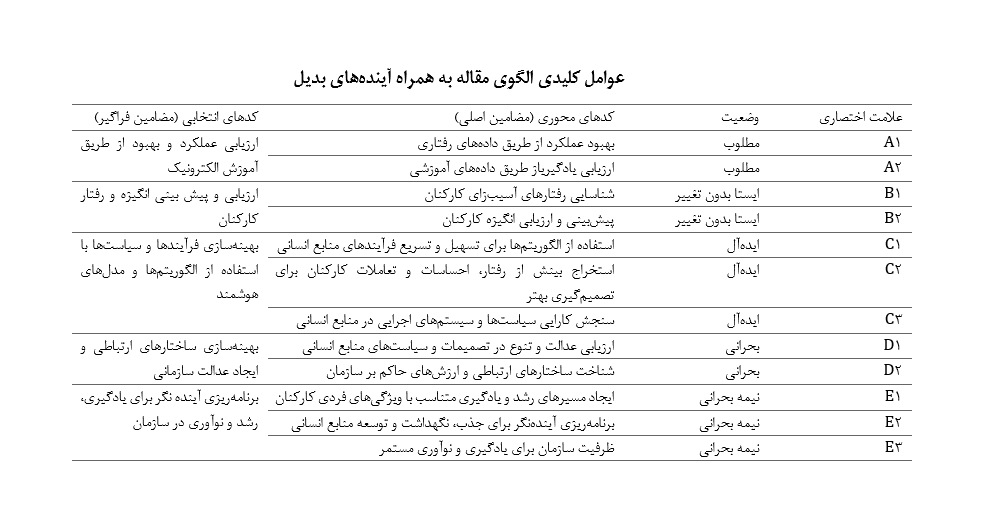
هدف این پژوهش تدوین سناریوهای محتمل برای مدل مدیریت منابع انسانی مبتنی بر هوش مصنوعی با بهرهگیری از روش آیندهپژوهی است. این پژوهش بهصورت ترکیبی و در دو بخش کیفی و کمی اجرا شد. در بخش کیفی، تحلیل مضمون با انجام مصاحبههای عمیق با خبرگان دانشگاه و صنعت بانکداری انجام گرفت و مضامین از طریق کدگذاری باز، محوری و انتخابی استخراج شدند. پس از آن، روش دلفی برای اعتبارسنجی مؤلفهها و شاخصها بهکار برده شد. در بخش کمی، از تحلیل تأثیر متقابل (MICMAC) و ابزار Scenario Wizard برای شناسایی متغیرهای کلیدی، تحلیل روابط آنها و استخراج سناریوهای سازگار استفاده شد. دادهها با نرمافزارهای مکسکیودا، میکمک و سناریو ویزارد تحلیل شدند. نتایج نشان داد پنج مؤلفه اصلی شامل: «بهبود عملکرد و آموزش الکترونیک مبتنی بر AI»، «پیشبینی انگیزه و رفتار کارکنان»، «بهینهسازی فرایندها و سیاستهای منابع انسانی با الگوریتمهای هوشمند»، «ایجاد عدالت و بهینهسازی ساختارهای ارتباطی»، و «آیندهنگری سازمانی برای یادگیری و نوآوری» بیشترین نقش را دارند. تحلیل MICMAC سه سناریوی سازگار تولید کرد: ۱) سناریوی ادغام متعادل (مطلوبترین)، ۲) سناریوی شتاب اخلاقی (محتمل)، و ۳) سناریوی تأخیر عدالت (پرریسک). در سناریوی اول، تعادل بین فناوری و اخلاق سازمانی، افزایش ۳۰–۵۰٪ کارایی را محتمل میسازد. سناریوی دوم بر همافزایی اخلاقی و سرعت بالای فناوری تأکید دارد، و سناریوی سوم نشاندهنده کاهش اعتماد سازمانی و بروز سوگیریهای سیستمی است. نتایج بیانگر آن است که مدل مدیریت منابع انسانی مبتنی بر هوش مصنوعی زمانی بیشترین کارایی را دارد که میان عوامل فناورانه، انسانی و ساختاری تعادل برقرار شود. استفاده از آیندهپژوهی، سازمانها را قادر میسازد پیامدهای احتمالی هوش مصنوعی را پیشبینی کرده، ریسکهای اخلاقی و رفتاری را کنترل کنند و مسیر توسعه منابع انسانی را در افق بلندمدت طراحی نمایند.
دانلودها
مراجع
Subrahmanyam S. Role of Artificial Intelligence in Re-Inventing Human Resource Management (HRM) 2.0. 2025. p. 243-64.
Zhu Y. Research on the Influence of Artificial Intelligence Technology in Enterprise Human Resource Management on Employee Performance. Frontiers in Business Economics and Management. 2024;15(3):116-9. doi: 10.54097/gghb5k57.
Yazdani HR, Hakiminia M. Identifying Challenges and Opportunities for the Implementation of Artificial Intelligence in Human Resource Management: A Meta-Synthesis Approach. Journal of Sustainable Human Resources. 2024;6(10). doi: 10.2478/czoto-2024-0026.
Yamin BM, Almuteri SD, Bogari KJ, Ashi AK. The Influence of Strategic Human Resource Management and Artificial Intelligence in Determining Supply Chain Agility and Supply Chain Resilience. Sustainability. 2024;16(7):2688. doi: 10.3390/su16072688.
Shenbhagavadivu T, Poduval K, Vinitha V. Artificial Intelligence in Human Resource: The Key to Successful Recruiting and Performance Management. Shodhkosh Journal of Visual and Performing Arts. 2024;5(6). doi: 10.29121/shodhkosh.v5.i6.2024.1351.
Cai F, Zhang J, Zhang L. The Impact of Artificial Intelligence Replacing Humans in Making Human Resource Management Decisions on Fairness: A Case of Resume Screening. Sustainability. 2024;16:3840. doi: 10.3390/su16093840.
Shehadeh HK, Abu Al-Haija KMR. The Impact of Human Resource Management Practices on Achieving Institutional Excellence: A Case Study in the Ministry of Education/Jordan: In: Musleh Al-Sartawi, A.M.A., Aydiner, A.S., Kanan, M. (eds) Business Analytical Capabilities and Artificial Intelligence-enabled Analytics: Applications and Challenges in the Digital Era; 2024. 17 p.
Rismayadi B. Opportunities and Challenges for Using Artificial Intelligence Technology in Human Resource Management. Journal Of Data Science. 2024;2(01):32-40. doi: 10.58471/jds.v2i01.4273.
Ogbeibu S, Emelifeonwu J, Pereira V, Oseghale R, Gaskin J, Sivarajah U, et al. Demystifying the roles of organisational smart technology, artificial intelligence, robotics and algorithms capability: A strategy for green human resource management and environmental sustainability. Business Strategy and the Environment. 2024;33(2):369-88. doi: 10.1002/bse.3495.
Musthafa HS. Strategic Integration of Diversity, Equity, Inclusion (DEI) and Artificial Intelligence (AI) in Human Resource Management (HRM). 2024:173-96. doi: 10.4018/979-8-3693-6402-4.ch006.
Mallah H. Artificial Intelligence in Human Resource Management - Innovation, Challenges, and the Way Forward. 2024.
Gričnik AM. Socially Responsible Application of Artificial Intelligence in Human Resources Management. 2024:82-143. doi: 10.4018/979-8-3693-3334-1.ch004.
Behizdani H, Hakimi Nia M. Identifying the Challenges and Opportunities of Employing Artificial Intelligence in Human Resource Management: A Meta-Synthesis Approach. Bimonthly Journal of Sustainable Human Management. 2024;6(10).
Barrett B. Artificial Intelligence (Ai) Skills Sets For Today's Human Resource Management Professionals: Recognizing The Need For Additional Technology Training And Development: IATED; 2024. 5148-52 p.
Alrakhawi HA, Elqassas R, Elsobeihi MM, Habil B, Abunasser BS, Abu-Naser SS. Transforming Human Resource Management: The Impact of Artificial Intelligence on Recruitment and Beyond. 2024.
Vishwakarma LP, Singh RK. An analysis of the challenges to human resource in implementing artificial intelligence. The Adoption and Effect of Artificial Intelligence on Human Resources Management, Part B: Emerald Publishing Limited; 2023. p. 81-109.
Varma A. Artificial intelligence and people management: A critical assessment through the ethical lens. Human Resource Management Review. 2023;33(1):100923. doi: 10.1016/j.hrmr.2022.100923.
Samadzadeh MR, editor Investigating the role of artificial intelligence systems based on machine learning and their impact on changing modern human resource management. First National Conference on New Achievements in Electrical Engineering, Computer Engineering, and Biomedical Engineering; 2023.
Qi Z, Jia-yi L, Lu C, Jun L. Human Resource Management Driving by Artificial Intelligence Technology: Theoretical Research and Practical Application. Journal of University of Electronic Science and Technology of China. 2023;25(1):77-84.
Huang X, Yang F, Zheng J, Feng C, Zhang L. Personalized human resource management via HR analytics and artificial intelligence: Theory and implications. Asia Pacific Management Review. 2023. doi: 10.1016/j.apmrv.2023.04.004.
Esm Khani Aadeh M, editor The Role of Artificial Intelligence in Human Resource Management2023.
Chowdhury S, Dey PK, Joel-Edgar S, Bhattacharya S, Rodríguez-Espíndola O, Abadie A, et al. Unlocking the Value of Artificial Intelligence in Human Resource Management Through AI Capability Framework. Human Resource Management Review. 2023;33(1):100899. doi: 10.1016/j.hrmr.2022.100899.

دانلود
چاپ شده
ارسال
بازنگری
پذیرش
شماره
نوع مقاله
مجوز
حق نشر 2025 Mostafa Azarkheil (Author); Mansoure Moradi Haghighi (Corresponding author); Niloufar Imankhan, Farshad Hajalian (Author)

این پروژه تحت مجوز بین المللی Creative Commons Attribution-NonCommercial 4.0 می باشد.