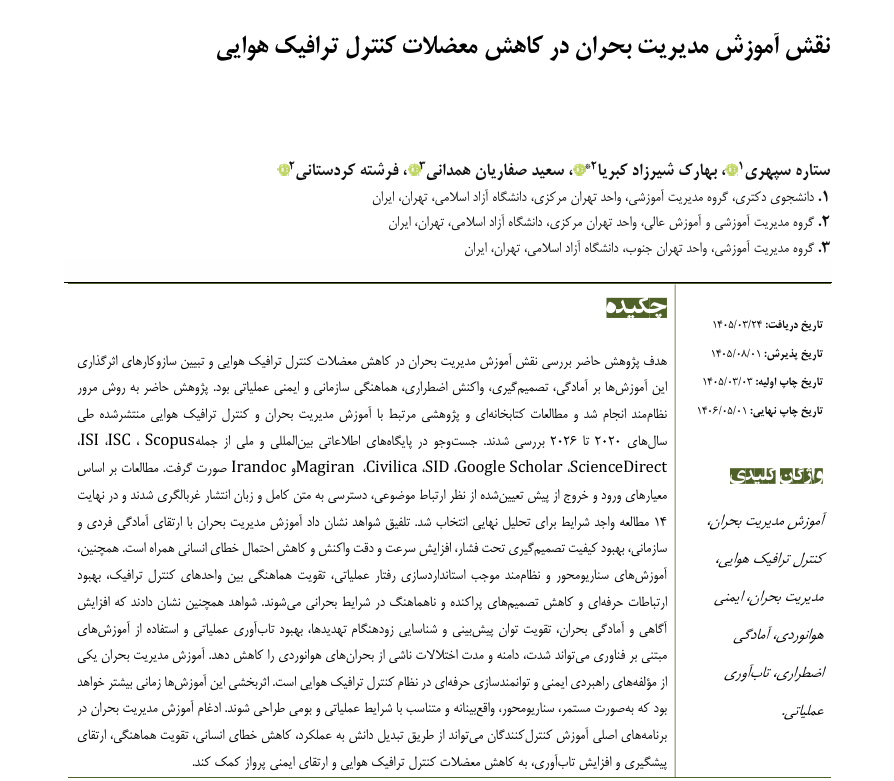
نقش آموزش مدیریت بحران در کاهش معضلات کنترل ترافیک هوایی
کلمات کلیدی:
آموزش, ترافیک هوایی, مدیریت بحرانچکیده
هدف پژوهش حاضر بررسی نقش آموزش مدیریت بحران در کاهش معضلات کنترل ترافیک هوایی و تبیین سازوکارهای اثرگذاری این آموزشها بر آمادگی، تصمیمگیری، واکنش اضطراری، هماهنگی سازمانی و ایمنی عملیاتی بود. پژوهش حاضر به روش مرور نظاممند انجام شد و مطالعات کتابخانهای و پژوهشی مرتبط با آموزش مدیریت بحران و کنترل ترافیک هوایی منتشرشده طی سالهای 2020 تا 2026 بررسی شدند. جستوجو در پایگاههای اطلاعاتی بینالمللی و ملی از جمله Scopus، ISC، ISI، ScienceDirect، Google Scholar، SID، Civilica، Magiran و Irandoc صورت گرفت. مطالعات بر اساس معیارهای ورود و خروج از پیش تعیینشده از نظر ارتباط موضوعی، دسترسی به متن کامل و زبان انتشار غربالگری شدند و در نهایت 14 مطالعه واجد شرایط برای تحلیل نهایی انتخاب شد. تلفیق شواهد نشان داد آموزش مدیریت بحران با ارتقای آمادگی فردی و سازمانی، بهبود کیفیت تصمیمگیری تحت فشار، افزایش سرعت و دقت واکنش و کاهش احتمال خطای انسانی همراه است. همچنین، آموزشهای سناریومحور و نظاممند موجب استانداردسازی رفتار عملیاتی، تقویت هماهنگی بین واحدهای کنترل ترافیک، بهبود ارتباطات حرفهای و کاهش تصمیمهای پراکنده و ناهماهنگ در شرایط بحرانی میشوند. شواهد همچنین نشان دادند که افزایش آگاهی و آمادگی بحران، تقویت توان پیشبینی و شناسایی زودهنگام تهدیدها، بهبود تابآوری عملیاتی و استفاده از آموزشهای مبتنی بر فناوری میتواند شدت، دامنه و مدت اختلالات ناشی از بحرانهای هوانوردی را کاهش دهد. آموزش مدیریت بحران یکی از مؤلفههای راهبردی ایمنی و توانمندسازی حرفهای در نظام کنترل ترافیک هوایی است. اثربخشی این آموزشها زمانی بیشتر خواهد بود که بهصورت مستمر، سناریومحور، واقعبینانه و متناسب با شرایط عملیاتی و بومی طراحی شوند. ادغام آموزش مدیریت بحران در برنامههای اصلی آموزش کنترلکنندگان میتواند از طریق تبدیل دانش به عملکرد، کاهش خطای انسانی، تقویت هماهنگی، ارتقای پیشگیری و افزایش تابآوری، به کاهش معضلات کنترل ترافیک هوایی و ارتقای ایمنی پرواز کمک کند.
دانلودها
مراجع
1. Raziq O, Khaili ME, Nhaila H, Khiat A. Improving air traffic control by combining centralized and decentralized solutions. Edelweiss Applied Science and Technology. 2025;9(8):1122-38. doi: 10.55214/2576-8484.v9i8.9564.
2. Chen X, Li S, Li M. A hybrid centralized-decentralized traffic control framework for unmanned aerial vehicles in urban low-altitude airspace. Communications in Transportation Research. 2025;5(5). doi: 10.1016/j.commtr.2025.100195.
3. Cook D, Mayer R, Doy G. Crises and the resilience of the aviation industry: A literature review of crises and airline responses. Transportation Research Procedia. 2024;75(3):33-42. doi: 10.1016/j.trpro.2023.12.005.
4. Hsiu-Ying Kao G, Wang SW, Farquhar JD. Modeling airline crisis management capability: Brand attitude, brand credibility and intention. Journal of Air Transport Management. 2020;89(10):1-9. doi: 10.1016/j.jairtraman.2020.101894.
5. Gyles D, Bearman C. Co-constructing safety: How air traffic controllers change goals from efficiency to safety. Cognition, Technology & Work. 2025;27:449-65. doi: 10.1007/s10111-025-00805-w.
6. Chen Y, Zhao Y, Wu Y. Recent progress in air traffic flow management: A review. Journal of Air Transport Management. 2024;116(4). doi: 10.1016/j.jairtraman.2024.102573.
7. Zhao T, Macias JE, Zhang M, Fu S, Feng Y, Elhajj M, et al. Enhancing air traffic operational efficiency by reducing network scale. Aerospace Traffic and Safety. 2024;1(1):10-9. doi: 10.1016/j.aets.2024.06.001.
8. Meyer V, Jr., Cunha MPE, Mamédio DF, Nogueira DP. Crisis management in high-reliability organizations: Lessons from Brazilian air disasters. Disaster Prevention and Management: An International Journal. 2021;30(2):209-24. doi: 10.1108/DPM-08-2019-0245.
9. Abdallah F, Elhoss W, Chahine J. The importance of crisis management in the aviation industry: A case study on Kuwait. Edelweiss Applied Science and Technology. 2025;9(4):2459-70. doi: 10.55214/25768484.v9i4.6584.
10. Taylor F. Crisis management for airports and airlines. 2026.
11. Kar SK, Mathew DJ, S MM, John AM. Air Traffic Management as a Service for Urban Air Mobility in Indian Cities: A Study for Scalable and Adaptive Design Framework for Optimizing Airspace Over Rail, Metro, and Roads. In: Mahamuni R, Onkar P, editors. ServDes 2025: Empowering Diversity, Nurturing Lasting Impact; Hyderabad, India2025.
12. Gupta V, Bethapudi A. AI in crisis management: Reskilling and upskilling for the aviation industry. In: El Khoury R, editor. Empowering Business Through Technology: Innovations Shaping Our Future. Cham: Springer; 2026.
13. Hosseinian S, Ahmadi Dizaj I, Hosseini T, Hendiani A. Prioritizing the dimensions and components of a traffic crisis management model for natural disasters. Safe City. 2023;6(3):57-81.
14. Adibi Saadinejad F, Seif M. The necessity of smart urban development in crisis management and appropriate solutions for Tehran traffic. New Research Approaches in Management and Accounting. 2023;7(27):1477-96.
15. Moradi M, Ahmadvand AM, Samadi Foroushani M. System dynamics analysis of aviation accident crisis management to develop accident prevention policies based on improved flight safety. Disaster Prevention and Management Knowledge. 2024;14(3):274-91.
16. Mousavi K, Valizadeh R, Ahmadzad H. Analyzing the components influencing crisis management at the local scale: A case study of metropolitan Tabriz. Urban Structure and Function Studies. 2024;11(38):244-66.
17. Rabbani E, Moghli A, Shahin A, Abbasi N. Diagnosing organizational crisis management using a hazard and operability analysis approach: A case study of Iran's oil industry. Iranian Journal of Management Studies. 2025;16(1):43-60.
18. Shirini M, Ahmadzadeh H, Panahi A. Explaining the role and position of integrated urban management in crisis management through a passive defense approach in metropolitan Karaj. Urban Economics and Planning. 2026;7(1):86-103.
19. Saremi S, Esmaeili R, Taghipour F. Designing a media model for managing aviation accident crises. Transportation Engineering. 2023;15(2):3573-600.
دانلودها
گاهشمار انتشار
- ارسال
- بازنگری
- پذیرش
شماره
نوع مقاله
مجوز
حق نشر 2025 Setareh Sepehri (Author); Baharak Shirzad Kebria (Corresponding author); Saeid Saffariyan Hamedani, Fereshteh Kordestani (Author)

این پروژه تحت مجوز بین المللی Creative Commons Attribution-NonCommercial 4.0 می باشد.