تبیین واقعگرایی بر اساس قرآن کریم و ارائه دلالتهای تربیتی آن برای نظام تعلیم و تربیت دوره ابتدایی
کلمات کلیدی:
آموزههای قرآنی, تعلیم و تربیت ابتدایی, مضامین تربیتی, رشد اخلاقی, واقعگرایی هستیشناختیچکیده
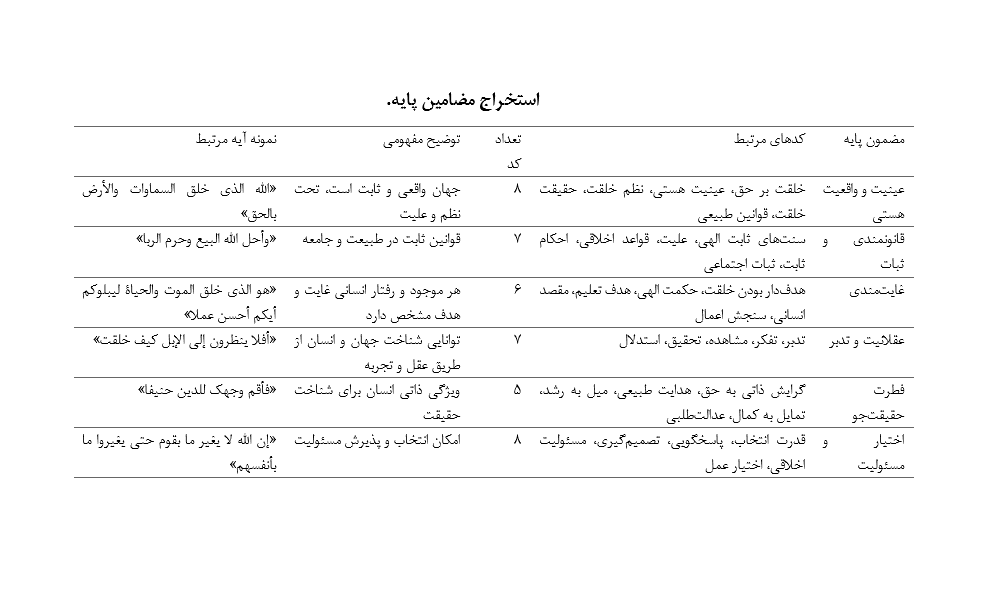
هدف این پژوهش، استخراج، تبیین و اعتبارسنجی مؤلفههای واقعگرایی مبتنی بر قرآن کریم و ارائه دلالتهای تربیتی آن برای طراحی و اجرای برنامههای آموزشی در دوره ابتدایی بود. پژوهش حاضر با رویکرد آمیخته (کیفی–کمی) انجام شد. در مرحله کیفی، 30 آیه منتخب قرآن کریم با استفاده از تحلیل محتوای کیفی، کدگذاری باز و محوری بررسی شدند. در ادامه، مضامین پایه، سازماندهنده و فراگیر استخراج گردید. در مرحله کمی، بر اساس مؤلفههای بهدستآمده، پرسشنامهای 30 سؤالی تدوین شد و دادههای حاصل از پاسخهای معلمان و دانشآموزان دوره ابتدایی با استفاده از نرمافزار SmartPLS، تحلیل عاملی تأییدی، میانگین واریانس استخراجشده (AVE) و پایایی ترکیبی (CR) مورد ارزیابی قرار گرفت. یافتههای تحلیلی نشان داد که از تحلیل آیات قرآن، 30 مؤلفه تربیتی، 6 مضمون پایه، 5 مضمون سازماندهنده و 6 مضمون فراگیر استخراج شد. مضامین فراگیر شامل واقعگرایی هستیشناختی، واقعگرایی معرفتشناختی، واقعگرایی انسانشناختی، رشد مرحلهای و تجربهآموزی، مسئولیت اجتماعی و اخلاق و احسان بودند. نتایج اعتبارسنجی مدل نیز بیانگر برازش مناسب و اعتبار همگرای مطلوب مؤلفهها بود؛ بهطوریکه مقادیر AVE بین 0.66 تا 0.72 و ضرایب پایایی ترکیبی بین 0.83 تا 0.88 قرار داشتند که نشاندهنده انسجام درونی و اعتبار سازهای مطلوب مدل است. نتایج نشان داد که آموزههای قرآنی ظرفیت ارائه یک چارچوب جامع، نظاممند و قابل اجرا برای تعلیم و تربیت دوره ابتدایی را دارند. مدل پیشنهادی با پوشش همزمان ابعاد شناختی، اخلاقی، اجتماعی و رشدی، میتواند مبنایی علمی برای طراحی برنامههای درسی، فعالیتهای آموزشی و راهبردهای تربیتی در مدارس ابتدایی باشد و زمینه پرورش دانشآموزانی مسئول، متفکر، اخلاقمدار و واقعبین را فراهم سازد.
دانلودها
مراجع
1. Hamedi AK, Rezaei S, Osareh A, Karimi Khoigani RH. Education of student-teachers at Farhangian University with emphasis on the Holy Quran. Quran and Medicine. 2021;6(2):73-83.
2. Gholami N, Marivani QH. A look at the foundations of education for students with special needs from the perspective of the Quran. Quranic Science Studies. 2021;3(3):138-66.
3. Abbasian A, Hajizad M, Mirian Akandi SA. Investigating the philosophical foundations of human education in the Holy Quran. Islamic Life Style Centered on Health. 2022;6(4):372-81.
4. Alizadeh F, Hosseini Mirsafi MS, Shirazi MR. De-bordering the Quranic concept of education: In pursuit of providing a novel explanation of Quranic education. Research in Islamic Education Issues. 2023;31(60):237-58.
5. Afchangi M, Alimohammadi A, Mirani A, Mousavi SR. Luqmanic education in the conduct of the leaders of the Islamic Revolution, within the approach of the Holy Quran. Journal of Islamic Revolution Research. 2022;11(1):147-67.
6. Mousavi SN. An analysis of education based on the sixth verse of Surah At-Tahrim. Research in Islamic Education Issues. 2025;33(66):113-32.
7. Hatefi Ardakani J, Shamrizi SH, Ghaemi M. Explaining the principles of effective teaching in all-round education from the perspective of the Quran and narrations. Educational Teachings in the Quran and Hadith. 2024;10(2):23-43.
8. Dayalameh N. Educational implication research in the Quranic theory of social lawfulness. Educational Teachings in the Quran and Hadith. 2022;8(1):143-58.
9. Ejlali Z, Momeni Mahmooei H, Ali M. Quranic stories as religious education content for the elementary period in the Philosophy for Children (P4C) content approach. Educational Teachings in the Quran and Hadith. 2022;8(1):123-41.
10. Pourmohammadi SR, Morovati S, Ehsani K. Explaining the concept of spiritual intelligence in the verb "Yahdi" extracted from Quranic verses and the role of its components in spiritual education. Educational Teachings in the Quran and Hadith. 2021;7(2):1-23.
11. Beheshti S, Maleki H, Asadzadeh H, Fatemi M. Educational strategies derived from Quranic anthropology with emphasis on the role of tendencies in human existence. Journal of Quranic Knowledge. 2022;13(48):65-94.
12. Hakimi SY, Salashouri A, Fayyaz I. Implications of the semantic connection between life and education in verse 24 of Surah Al-Anfal and its impact on the foundations of Islamic education. Research in Islamic Education Issues. 2024;32(63):117-44.
13. Hakimi SY, Salashouri A, Fayyaz I. Framework of the Velayi education approach in the school of Imam Khomeini based on the Quranic metaphor of the "Good Tree" and the "Wisdom-Based" model of Luqman the Wise. Research in Islamic Education Issues. 2023;31(59):273-332.
14. Sohbatloo A. Comparison of religious education components in the Fundamental Reform Document of Education with the views of Avicenna. Research in Islamic Education Issues. 2024;32(63):61-90.
15. Niyaraeis SM, Saadatmand Z, Rahmani J. Analysis of the concept of moderation in Quranic teachings regarding individual and social health in order to provide educational requirements. Quran and Medicine. 2022;7(3):109-18.
16. Tavan A, Hafezi M. The status of the ethics of tolerance with learners and examining its components in Quranic education with emphasis on the exemplary role of Divine Prophets. Ethics Research. 2023;6(3):63-80.
17. Davoodi M. Indicators of faith and piety in the Quran and their implications for formulating a comprehensive approach to religious education. Islamic Education. 2025:41-72.
18. Barahman M, Hosseini M. Explaining educational principles regarding the correction of human behavioral pathology based on the Holy Quran. Research in Islamic Education Issues. 2025;33(69).
19. Ordo F, Arabzadeh E. Ideation in the academic education system; a culture-oriented comparison with verses of the Holy Quran. Educational Sciences. 2024;31(1):241-58.
20. Mehrjoo P, Jafarzadeh M, Masoumifard M. Explaining the nature of chaste education based on Quranic teachings and its implications in the field of education. Educational Teachings in the Quran and Hadith. 2025:e731433.
21. Samadi M. Identifying the consequences of memorizing Quranic verses on the performance of Quranic memorizers. Research in Islamic Education Issues. 2023;31(59):333-60.

دانلود
چاپ شده
ارسال
بازنگری
پذیرش
شماره
نوع مقاله
مجوز
حق نشر 2025 Fatemeh Sahraii Parizi (Author); Irandokht Fayyaz (Corresponding author); Ahmad Salahshoori , Ahmad Borjali , Maryam Brahman (Author)

این پروژه تحت مجوز بین المللی Creative Commons Attribution-NonCommercial 4.0 می باشد.