مطالعه تطبیقی رشد اخلاقی در نظریههای روانشناسی و آموزههای اسلامی با تمرکز بر نظریههای رشد اخلاقی پیاژه و کلبرگ
DOI:
https://doi.org/10.61838/jsied.449کلمات کلیدی:
رشد اخلاقی, مطالعه تطبیقی, پیاژه, کلبرگ, آموزههای اسلامی, فطرتچکیده
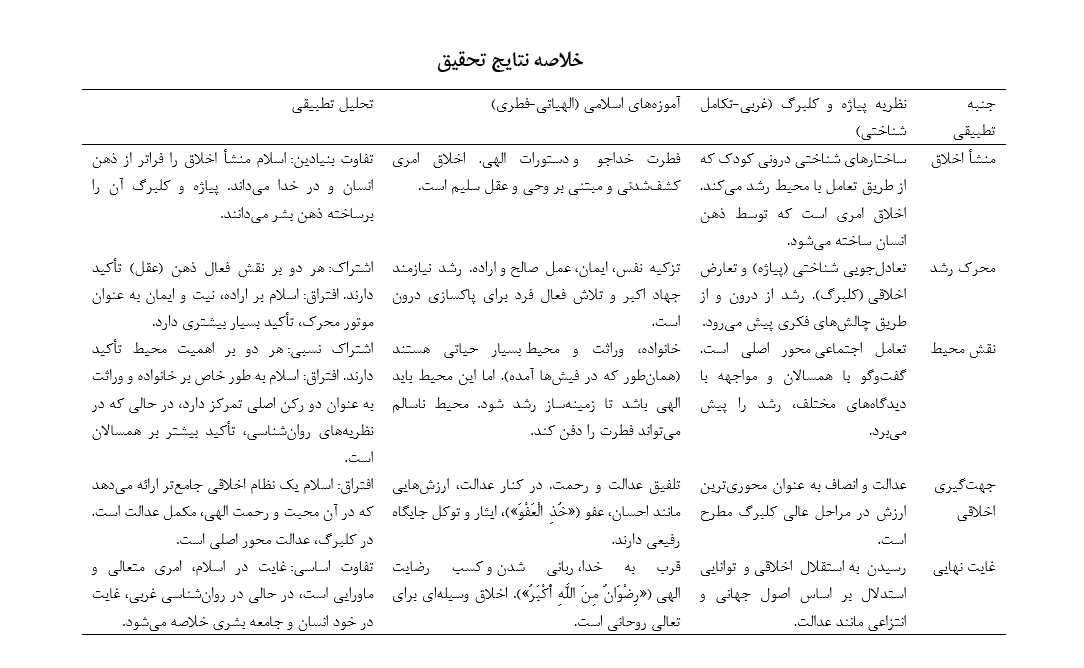
این تحقیق با هدف انجام مطالعهای تطبیقی میان نظریههای رشد اخلاقی پیاژه و کلبرگ در روانشناسی و آموزههای اسلامی صورت گرفته است. با بهرهگیری از روش کیفی و تحلیل محتوای تطبیقی، این پژوهش به واکاوی مبانی، مراحل، محرکها و غایات رشد اخلاقی در هر دو منظومه فکری پرداخته است. یافتهها نشان میدهد که نقطه اشتراک این دو دیدگاه، تأکید بر نقش فعال عقل و تدریجی بودن فرآیند رشد است. با این حال، شکافهای بنیادینی نیز شناسایی شد: منشأ اخلاق در نظریههای روانشناختی، «ساختارهای شناختی» و «تعامل اجتماعی» است، در حالی که در اسلام، «فطرت الهی» و «وحی» این نقش را ایفا میکنند. محرک رشد در نگاه پیاژه و کلبرگ «تعادلجویی شناختی» است، اما در اسلام «ایمان»، «اراده» و «تزکیه نفس» موتور محرک اصلی است. همچنین، غایت نهایی در نظریههای غربی، «استقلال اخلاقی و پایبندی به اصول انتزاعی» است، اما در اسلام، «قرب به خدا و کسب رضایت الهی» به عنوان عالیترین هدف ترسیم میشود. این تحقیق نتیجه میگیرد که آموزههای اسلامی با حفظ دستاوردهای ارزشمند روانشناسی در تبیین سیر شناختی، با ارائه چارچوبی فطری، الهیاتی و غایتمحور، عمق، معنویت و جامعیت بیبدیلی به مفهوم رشد اخلاقی میبخشد و آن را از یک «فرآیند استدلالی» صرف به یک «سلوک وجودی» برای تعالی و کمال مطلق ارتقا میدهد.
دانلودها
مراجع
Kohlberg L. Stages of Moral Development. Moral Education. 1971;1(51):23-92.
Kohlberg L. Moral Stages and Moralization: The Cognitive-Developmental Approach. Moral Development and Behavior: Theory, Research, and Social Issues1976. p. 31-53.
Yilmaz O, Bahçekapili HG, Sevi B. Theory of Moral Development. Encyclopedia of Evolutionary Psychological Science. Cham: Springer; 2019. p. 1-5.
Banda JH. A critical analysis of pedagogical strategies for fostering ethical decision-making, integrity, and social responsibility in Generation Z: addressing the impact of modern societal challenges on moral development. Journal of Trends in Arts and Humanities. 2025;2(1):15-25. doi: 10.61784/jtah3035.
Kayani S, Abid MHS, Sadiqi MZ. Relationship Between Moral Atmosphere of School and Moral Development of Secondary School Students. SocSciSpec. 2025;4(1):597-606. doi: 10.71085/sss.04.01.243.
Chalmers P, Dunngalvin A, Shorten G. Reflective Ability and Moral Reasoning in Final-Year Medical Students: A Semi-Qualitative Cohort Study. Medical Teacher. 2011;33(5):e281-e9.
Murrell VS. The Failure of Medical Education to Develop Moral Reasoning in Medical Students. International Journal of Medical Education. 2014;5:219-25.
Lin CS, Tsou KI, Cho SL, Hsieh MS, Wu HC, Lin CH. Is Medical Students' Moral Orientation Changeable After Preclinical Medical Education? Journal of Medical Ethics. 2012;38(3):168-73.
Piaget J. The Moral Judgment of the Child: Routledge; 2013.
Lickona T. Piaget Misunderstood: A Critique of the Criticisms of His Theory of Moral Development. Merrill-Palmer Quarterly of Behavior and Development. 1969;15(4):337-50.
Kohlberg L, Hersh RH. Moral Development: A Review of the Theory. Theory into Practice. 1977;16(2):53-9.
Turiel E, Edwards CP, Kohlberg L. Moral Development in Turkish Children, Adolescents, and Young Adults. Journal of Cross-Cultural Psychology. 1978;9(1):75-86.
Nisan M, Kohlberg L. Universality and Variation in Moral Judgment: A Longitudinal and Cross-Sectional Study in Turkey. Child Development. 1982:865-76.
Colby A, Kohlberg L, Gibbs J, Lieberman M, Fischer K, Saltzstein HD. A Longitudinal Study of Moral Judgment. Monographs of the Society for Research in Child Development. 1983;48:1-124.
Haidt J. The Emotional Dog and Its Rational Tail: A Social Intuitionist Approach to Moral Judgment. Psychological Review. 2001;108(4):814.
Haidt J, Kesebir S. Morality. In: Fiske ST, Gilbert DT, Lindzey G, editors. Handbook of Social Psychology. 5. Hoboken: Wiley; 2010. p. 797-832.
Henrich J, Heine SJ, Norenzayan A. Most People Are Not WEIRD. Nature. 2010;466(7302):29.
Firouzmehr MM. Factors Influencing Moral Development from a Qur’anic Perspective. Qur’anic Sciences Studies. 2020;2(2).
Salahshouri A. Stages of Moral Educational Development from the Perspective of Imam Ali (AS). Nahj al-Balaghah Research Quarterly. 2013;1(3).
Kakojoybari AA, Akbari Dehkordi MA, Saeedi F. Moral Development from the Perspective of Nahj al-Balaghah with Consideration of Kohlberg’s Theory. Epistemological Studies in the Islamic University. 2016;20(3).
Shahbazi J, Mohammadzadeh N, Entesarfoumani G. Patterns and Methods of Moral Development in Childhood from the Perspective of Nahj al-Balaghah. Ethical Research Studies. 2021;12(3).
Javidan F, Dehghan MS, Shamsi Goushki E, Abbasi M. An Analysis of Kohlberg’s Theory of Moral Development from a Qur’anic Perspective. Bioethics Journal. 2012;2(6):11-48.
Souri FZ. An Examination of Kohlberg’s Moral Theory and Its Comparison with Qur’anic Ethics. Psychology and Educational Sciences in the Third Millennium. 2023;7(3).
Nazemi Ashani MH, Kashani M, Kafi Mousavi A. A Critique of Kohlberg’s Moral Development Theory from a Qur’anic Perspective Using a Gender Structural Analysis of Women. Quarterly Journal of Applied Ethics Studies. 2023;19(5).
Unal U, Gunes G. The effect of Philosophy for Children (P4C) activities on the development of moral perception and social rules of preschool children. Journal of Childhood, Education & Society. 2024;5(2). doi: 10.37291/2717638X.202452392.
Sukisno S, Nurtjahyani SD. The Effect of Value Clarification and Locus of Control Learning on Students' Moral Development Level. Al-Ishlah Jurnal Pendidikan. 2024;16(4):5140-9. doi: 10.35445/alishlah.v16i4.5659.
Walker LJ, Taylor JH. Family Interaction and the Development of Moral Reasoning. Child Development. 1991;62:264-83.
Navas-Martínez MJ, Contreras L, Cano‐Lozano MC. Mediating Role of Moral Disengagement Mechanisms in the Relationship Between Perceived Parental Warmth and Youth Violence. Children. 2025;12(2):246. doi: 10.3390/children12020246.
Lișman CG, Holman AC. Principled faithfulness: A measure of moral reasons for fidelity and its associations with the tendency to engage in extramarital relationships, moral emotions and emotion regulation. Social Sciences. 2025;14(2):81. doi: 10.3390/socsci14020081.
Boseliki H, Alizadeh M. The Relationship Between Ethics and Economics in Islam: A Critical Comparative Study of Kohlberg’s Theory of Moral Development. Quarterly Journal of Applied Ethics Studies. 2020;16(37).
Hegazi I, Wilson I. Medical Education and Moral Segmentation in Medical Students. Medical Education. 2013;47(10):1022-8.
Kiani Moghaddam A, Bakhtiari M. Moral-Social Development of Preschool Children. Journal of Research in Religion and Health. 2020;6(3).
دانلودها
گاهشمار انتشار
- ارسال
- بازنگری
- پذیرش
شماره
نوع مقاله
مجوز
حق نشر 2025 Narges Shaterkazemi (Author); Seyyed Kabiri (Corresponding author); Nahid Babiraieamy (Author)

این پروژه تحت مجوز بین المللی Creative Commons Attribution-NonCommercial 4.0 می باشد.