تبیین فلسفی مسئولیت اخلاقی معلم در استفاده از سامانههای هوشمند آموزشی با روش تحلیل مضمون
کلمات کلیدی:
مسئولیت اخلاقی, اخلاق معلمی, سامانههای هوشمند آموزشی, هوش مصنوعی در آموزش, استقلال حرفهای, تحلیل مضمونچکیده
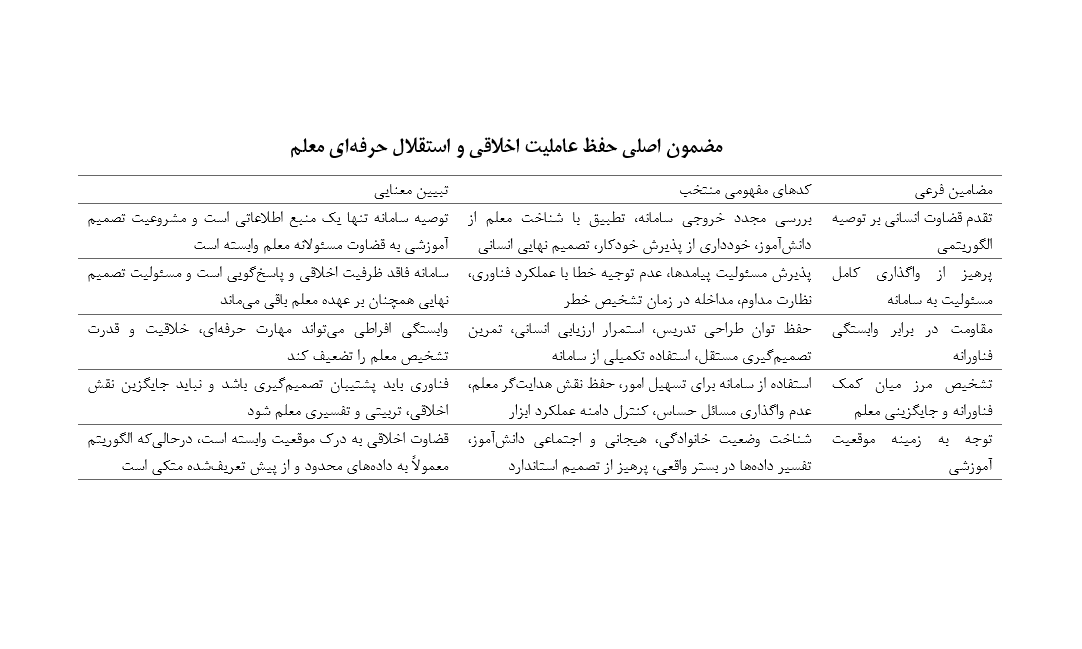
پژوهش حاضر با هدف تبیین فلسفی ابعاد و مؤلفههای مسئولیت اخلاقی معلم در استفاده از سامانههای هوشمند آموزشی انجام شد. این پژوهش از نظر هدف بنیادی و از نظر رویکرد کیفی بود و با روش تحلیل مضمون در چارچوب رویکرد تفسیری انجام شد. مشارکتکنندگان شامل ۲۰ نفر از صاحبنظران و افراد دارای تجربه تخصصی یا عملی در شهر تهران بودند که از میان آنان پنج نفر عضو هیئت علمی فلسفه تعلیم و تربیت، چهار نفر متخصص اخلاق و اخلاق حرفهای، چهار نفر متخصص فناوری آموزشی و هوش مصنوعی و هفت نفر معلم دارای تجربه استفاده از سامانههای هوشمند آموزشی بودند. نمونهگیری بهصورت هدفمند و با راهبرد حداکثر تنوع انجام شد و تا رسیدن به اشباع مفهومی ادامه یافت. دادهها از طریق مصاحبههای نیمهساختاریافته عمیق ۴۵ تا ۷۵ دقیقهای گردآوری و پس از پیادهسازی کامل، بهصورت همزمان با فرایند جمعآوری دادهها تحلیل شدند. برای سازماندهی و مدیریت دادهها از نرمافزار MAXQDA 2024 استفاده شد. اعتبار یافتهها از طریق بازبینی مشارکتکنندگان، مرور همتایان، مقایسه مستمر دادهها، ثبت مسیر تحلیل و یادداشتهای تأملی تقویت شد. تحلیل مصاحبهها به استخراج ۳۶۸ کد اولیه منجر شد که پس از حذف کدهای تکراری و ادغام مفاهیم مشابه، در قالب ۱۱۲ کد مفهومی، ۲۱ مضمون فرعی و هفت مضمون اصلی سازمان یافت. مضامین اصلی شامل حفظ عاملیت اخلاقی و استقلال حرفهای معلم، صیانت از کرامت و منافع متعالی دانشآموز، عدالت و مقابله با تبعیض الگوریتمی، مسئولیتپذیری در حفاظت از دادهها و حریم خصوصی، شفافیت و پاسخگویی در تصمیمهای فناورانه، مراقبت از رابطه انسانی و ماهیت تربیتی آموزش و برخورداری از شایستگی اخلاقی و سواد انتقادی بود. مسئولیت اخلاقی معلم در محیطهای آموزشی هوشمند، مسئولیتی چندبعدی، زمینهمند، رابطهای و غیرقابلواگذاری است و سامانههای هوشمند تنها زمانی از مشروعیت اخلاقی برخوردارند که تحت نظارت قضاوت انسانی و در خدمت کرامت، عدالت، حریم خصوصی و رشد همهجانبه دانشآموزان قرار گیرند.
دانلودها
مراجع
1. Gupta S, Sharma P, Vajrala KR, Fatima A, Sharma N. Integrating Artificial Intelligence in Education: Advancing Personalized Learning Within Ethical Frameworks: An Overview. EthAIca. 2025;4:418. doi: 10.56294/ai2025418.
2. Chen Z, Wenhao Z. Ethical Shifts and Innovative Approaches to Civic Education Under Generative Artificial Intelligence. 2024:181-7. doi: 10.2991/978-2-38476-263-7_25.
3. Hong C. The Ethical Challenges of Educational Artificial Intelligence and Coping Measures: A Discussion in the Context of the 2024 World Digital Education Conference. Science Insights Education Frontiers. 2024;20(2):3263-81. doi: 10.15354/sief.24.re339.
4. Wiese LJ, Patil I, Schiff DS, Magana AJ. AI ethics education: A systematic literature review. Computers and Education: Artificial Intelligence. 2025:100405.
5. Nwokocha S, Kennedy O, Yakpir G, Olori E, Nchindia C, Kachitsa C, et al. Commentary: artificial intelligence and the future of higher education—towards inclusive, ethical, and employability-driven learning ecosystems. Critique Open Research & Review. 2025;3(2):18-29. doi: 10.55640/corr-v03i02-04.
6. Swindell A, Greeley L, Farag A, Verdone B. Against Artificial Education: Towards an Ethical Framework for Generative Artificial Intelligence (AI) Use in Education. Online Learning. 2024;28(2). doi: 10.24059/olj.v28i2.4438.
7. Chatzichristou S. Moral Education and the Role of the Teacher: Reflections on Aristotle's Philosophy. Journal of Educational Philosophy. 2015;39(2):110-25.
8. Martin C. On the Educational Value of Philosophical Ethics for Teacher Education: The Practice of Ethical Inquiry as Liberal Education. Curriculum Inquiry. 2013;43(2):189-209. doi: 10.1111/curi.12010.
9. Orchard J, Heilbronn R, Winstanley C. Philosophy for Teachers (P4T): Developing New Teachers’ Applied Ethical Decision-Making. Ethics and Education. 2016;11(1):42-54.
10. Liu K. Leadership Practices Through Taoist Philosophical Principles and Teachers' Morale in Selected Preschools in Hebei, China. Pacific International Journal. 2025;8(2):47-51. doi: 10.55014/pij.v8i2.788.
11. Clarke M. The Ethico‐politics of Teacher Identity. Educational Philosophy and Theory. 2009;41(2):185-200. doi: 10.1111/j.1469-5812.2008.00420.x.
12. KarakuŞ N, Gedik K, Kazazoğlu S. Ethical Decision-Making in Education: A Comparative Study of Teachers and Artificial Intelligence in Ethical Dilemmas. Behavioral Sciences. 2025;15(4):469. doi: 10.3390/bs15040469.
13. Hadi MH, Jasim AA. Legislative and Ethical Foundations for Future Artificial Intelligence. Journal of the College of Basic Education. 2024;30(126):127-45. doi: 10.35950/cbej.v30i126.12231.
14. Chen H. The Ethical Challenges of Educational Artificial Intelligence and Coping Measures: A Discussion in the Context of the 2024 World Digital Education Conference. Science Insights Education Frontiers. 2024;20(2):3263-81. doi: 10.15354/sief.24.re339.
15. Chidinma AE, Yinka KR. Undergraduate Students' Perception of Artificial Intelligence for Enhancing Educational Practices: Opportunities, Challenges, and Ethical Considerations. Global Journal of Social Sciences Studies. 2025;11(1):30-41. doi: 10.55284/gjss.v11i1.1411.
16. Deep PD, Ghosh N, Natoli AP. Artificial Intelligence for Supporting College Students with Attention-Deficit/Hyperactivity Disorder: Cognitive, Emotional, and Ethical Perspectives. International Journal on Social and Education Sciences. 2026;8(1):1-17. doi: 10.46328/ijonses.5915.
17. Love AS. Artificial Intelligence in Public Health Education: Navigating Ethical Challenges and Empowering the Next Generation of Professionals. Health Promotion Practice. 2025. doi: 10.1177/15248399251320989.
18. Zhang DQW. Goal Progression, Trait Changes, and Practice Paths of Artificial Intelligence Ethics Education of Professional Courses in Higher Education. Jes. 2024;20(2):2151-60. doi: 10.52783/jes.1665.
19. Amiri N, Ketabi S, Hossein Vand F, Papi M, editors. Digital Citizenship Education in Smart Schools with an Emphasis on Digital Ethics. The First International Conference on Artificial Intelligence in Education and Training, Psychology, Educational Sciences, and Religious, Cultural, Social, and Management Studies in the Third Millennium; 2025; Bushehr.
20. Asadi Z, Donyadideh H. Examining the Relationship Between Philosophical Mindset and Moral Intelligence and Social Growth of Secondary School Teachers in Natanz. Journal of Psychology and Educational Sciences. 2022;40:37-45.
21. Biravand F, Sayadi A, Alipour N, editors. Ethical Challenges and Opportunities of Artificial Intelligence in Human Capital Development. 1st National Conference on Human Capital Education and Development; 2025.

دانلود
چاپ شده
ارسال
بازنگری
پذیرش
شماره
نوع مقاله
مجوز
حق نشر 2025 Sakineh Rastegar Moghadam Ebrahimian (Corresponding author)

این پروژه تحت مجوز بین المللی Creative Commons Attribution-NonCommercial 4.0 می باشد.