Identification of the Dimensions of Systematic Mentoring for the Professional Development of Faculty Members at Shahid Beheshti University of Medical Sciences
DOI:
https://doi.org/10.61838/jsied.399Keywords:
Systematic mentoring, professional development, faculty members, Shahid Beheshti University of Medical SciencesAbstract
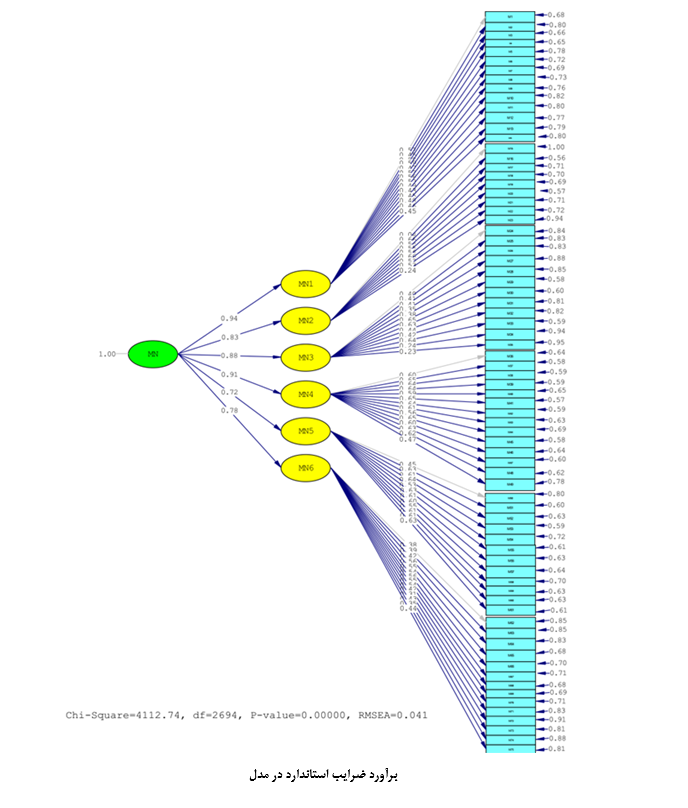
This study aimed to identify the dimensions, components, and indicators of systematic mentoring for the professional development of faculty members at Shahid Beheshti University of Medical Sciences. This research employed an exploratory mixed-methods design. In the qualitative phase, grounded theory was used to collect data through semi-structured interviews with 10 experts, including experienced faculty members and educational managers. Data were analyzed using open, axial, and selective coding. In the quantitative phase, the target population included 1,530 faculty members, from which 307 participants were selected through stratified random sampling. Data collection tools consisted of a researcher-made systematic mentoring questionnaire (75 items, 6 dimensions, 12 components) and the NOVA professional development questionnaire. Validity was assessed through confirmatory factor analysis, and reliability through Cronbach’s alpha values above 0.7. The results identified six main dimensions of systematic mentoring: process structuring, implementation quality, program framework, factors influencing success or failure, reciprocal roles and responsibilities, and implementation requirements. Standardized loadings ranged from 0.72 to 0.94, with all t-values exceeding 10, confirming the significance and strong fit of the model. The “process structuring” dimension had the highest factor loading, while “reciprocal roles and responsibilities” had the lowest but remained significant within the model. Systematic mentoring, supported by structured processes, continuous evaluation, reciprocal interactions, and institutional requirements, plays a crucial role in enhancing faculty professional development. The identified model facilitates improved teaching quality, research productivity, professional skills, innovation, and overall academic performance within the university.
Downloads
References
Brown B, Pedersen M, Harrington J, Belcourt A, Windchief S, Thomas A, et al. Exploring personal, relational, and collective experiences and mentorship connections that enhance or inhibit professional development and career advancement of native American faculty in STEM fields: A qualitative study. Journal of Diversity in Higher Education. 2024;17(1):14. doi: 10.1037/dhe0000376.
Caruana V. Peer-Mentoring at the Intersection of Education for Sustainable Development and Visual Arts Education. Art, Sustainability and Learning Communities: Intellect; 2024. p. 101-12.
Winderbaum J, Coventry LL. The benefits, barriers and facilitators of mentoring programs for first‐year doctors: A systematic review. Medical Education. 2024;58(6):687-96. doi: 10.1111/medu.15299.
Topcu APK. Design, implementation, and evaluation of remote mentoring practices for technology integration in higher education. Kastamonu Education Journal. 2025;33(2):286-303. doi: 10.24106/kefdergi.1683452.
Gholipour A, Akbari M, Rajabpour E. Presenting a Mentoring Model and Analyzing Effective Factors in its Implementation. Human Resource Management Research Quarterly. 2022;14(2):125-54.
Safdari N, Gharouneh D. Identifying the Process of Employing Mentoring in the Professional Development of School Principals. Journal of Management in Educational Organizations. 2021;10(4):61-94. doi: 10.52547/meo.10.4.61.
Geletu GM. The effects of pedagogical mentoring and coaching on primary school teachers' professional development practices and students' learning engagements in classrooms in Oromia regional state: implications for professionalism. Education. 2024;3-13:1-17. doi: 10.1080/03004279.2024.2312971.
Eroshenkova EI, Isaev IF, Mikhaylova DI, Tarasova SI. Volunteering and mentoring as prosocial strategies for professional training of a future physical education teacher. Theory and Practice of Physical Culture. 2024(5):40-2.
Deng C, Turner N. Identifying key mentor characteristics for successful workplace mentoring relationships and programmes. Personnel Review. 2024;53(2):580-604. doi: 10.1108/PR-08-2022-0535.
Afsāyi A, Honari H, Sha'bānī Bahār G, Kashkar S. Designing a Mentoring Model on Social Media Platforms for Career Path Management of Physical Education Teachers in Education. Contemporary Research in Sports Management Quarterly. 2024;11(33):173-88.
Hosseini SZ, Ghoorchian N, Ja'fari P, Zamani Moqaddam A. Presenting a Mentoring System Model for Newly Employed Staff (Case Study: Headquarters of the Ministry of Science, Research, and Technology). Innovation Management in Defense Organizations Quarterly. 2020;3(4):151-78.
Kikhā A. Designing a Mentoring Model to Promote the Human Capital of Faculty Members in Medical Sciences Universities. Journal of the Center for Educational Research and Development in Medical Sciences, Yazd. 2020;15(4):244-59.
Gharouneh D, Sanā'īpour F. A Conceptual Model for Professional Development of Faculty Members to Enhance Quality in Engineering Education. Iranian Engineering Education Quarterly. 2020;22(87):113-36.
Moḥseni Sarbandī H, Āfarinesh Khākī A, Zargar T, Shahbāzī M, Āzādfadā S. Designing a Mentoring Model to Improve the Job Performance of Physical Education Teachers. Research in Physical Education and Sport Quarterly. 2024;11(33):173-88.
Golpayegani N, Zāmeni F, Yousefi Sa'eedābādī R. Presenting a Model Based on the Impact of Mentoring on Responsive Education in Medical Sciences Universities of Macro-Region One with a Fourth-Generation University Approach. Journal of Medicine and Tazkieh. 2020;29(2):117-27.
Yāsāval N, Pourshāfe'ī H, Mo'menī Maḥmū'ī H, Akbari A. Components and Indicators of Peer Mentoring for Teachers' Professional Development: A Systematic Review Based on Wright's Model. Human Resource Excellence Quarterly. 2024;4(3):44-66.
Najafī Nezhād S, Maqbulī N. The Effect of Mentor-Mentee Relationship Characteristics on Satisfaction with Mentoring: Investigating the Medical Student Mentoring Program at Tehran University of Medical Sciences. Journal of the Center for Educational Research and Development in Medical Sciences, Yazd. 2019;14(1):2-13.
Downloads
Publication Timeline
- Submitted
- Revised
- Accepted
Issue
Section
License
Copyright (c) 2025 Mahdieh Shirazi (Author); Abdolrahim Navehebrahim (Corresponding author); Yusef Mohebzadegan, Javad Sadeqi Jafar (Author)

This work is licensed under a Creative Commons Attribution-NonCommercial 4.0 International License.