طراحی الگوی توسعه مهارتهای رهبری با استفاده از برنامهریزی عصبی-کلامی (NLP) در شرکتهای دولتی
DOI:
https://doi.org/10.61838/jsied.372کلمات کلیدی:
مهارت های رهبری, توسعه مهارت های رهبری, برنامه ریزی عصبی-کلامی(NLP)چکیده
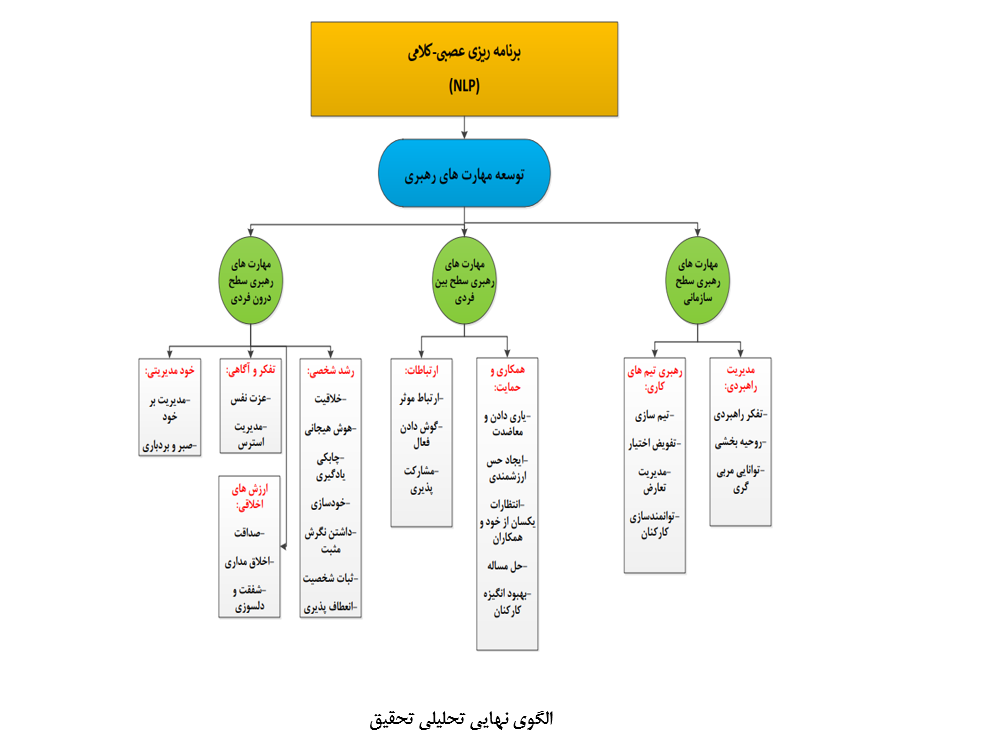
هدف این پژوهش طراحی و اعتبارسنجی الگوی توسعه مهارتهای رهبری با استفاده از تکنیکهای برنامهریزی عصبی-کلامی (NLP) در شرکتهای دولتی با تأکید بر شرکت بیمه ایران است. این پژوهش از نظر هدف توسعهای و از نظر نوع دادهها کمی است و در دو بخش انجام شده است: بخش نخست با رویکرد توسعهای به شناسایی شاخصها، مؤلفهها و ابعاد اصلی توسعه مهارتهای رهبری از طریق مرور نظاممند پیشینه و نظرخواهی از 25 نفر از خبرگان NLP با روش دلفی پرداخته است. در بخش دوم، با استفاده از پرسشنامه محققساخته و تحلیلهای آماری از جمله آزمون KMO و بارتلت، تحلیل عاملی تأییدی (CFA) و تحلیل سلسله مراتبی (AHP)، الگوی پیشنهادی در جامعه آماری شامل 152 نفر از مدیران شرکت بیمه ایران آزمون و رتبهبندی شده است. ضریب آلفای کرونباخ 0.87 و CVR بالاتر از حد بحرانی 0.37 نشاندهنده پایایی و روایی مطلوب ابزارها بود. نتایج نشان داد الگوی توسعه مهارتهای رهبری بر پایه NLP شامل سه بعد اصلی (درونفردی، بینفردی و سازمانی)، هشت مؤلفه و ۲۹ شاخص است. تحلیل AHP نشان داد مهارتهای درونفردی با ضریب وزنی 0.279 بالاترین اولویت را دارد، سپس مهارتهای سازمانی (0.254) و بینفردی (0.172) قرار دارند. در میان مؤلفهها، «خودمدیریتی» (0.433) و «تفکر و آگاهی» (0.421) بیشترین اهمیت را کسب کردند. تحلیل عاملی تأییدی نیز نشان داد مدل طراحیشده دارای برازش مناسب با دادهها است. بهکارگیری تکنیکهای NLP میتواند موجب توسعه معنادار مهارتهای رهبری در مدیران دولتی شود. این رویکرد علاوه بر ارتقای مهارتهای فردی و ارتباطی رهبران، توانایی آنان را در هدایت اثربخش سازمان و تقویت فرهنگ همکاری و خلاقیت افزایش میدهد. توصیه میشود آموزش NLP در برنامههای راهبردی توسعه منابع انسانی نهادهای دولتی گنجانده شود.
دانلودها
مراجع
Kouzes J, Posner B. The Leadership Challenge. Asgari N, Qurani F, editors. Tehran: Danesh-e Mandegar-e Asr Publishing; 2023. 403 p.
Muschard B, Rozenfeld H, Guzmán VE, Gerolamo M, Kohl H, editors. Characteristics and Skills of Leadership in the Context of Industry 4.0. Procedia Manufacturing; 2020.
Dowlen A. NLP-help or hype? Investigating the uses of neuro-linguistic programming in management learning. Career Development International. 1996;1(1):27-34. doi: 10.1108/13620439610111408.
Lazarus J. NLP for Business Success: How to get better results faster at work. London: Hodder& Stoughton Ltd; 2011. 220-4 p.
Larson A. Nlp:The Essential Guide to Neuro-linguistic Programming (Fast and Easy Neuro Linguistic Programming Techniques to Change Your Life)2023.
Jackson B, Parry K. A Very Short, Fairly Interesting and Reasonably Cheap Book about Studying Leadership. Australia: SAGE Publications Ltd; 2018. 200 p.
McCleskey JA. Situational, Transformational, and Transactional Leadership and Leadership Development. Journal of Business Studies Quarterly. 2014;5(4):117-30.
Taherpour F, Nasehian H. Analyzing the Relationship Between Sustainable Leadership Skills and Co-creation with the Mediation of Cognitive Trust Among Faculty Members of Birjand University. Quarterly Journal of Public Management Perspective. 2022;13(4):35-59. doi: 10.52547/jpap.2022.227484.1194.
Godarzvand Chegini M, Yousefi S. Explaining the Relationship Between Managers' Leadership Styles and Organizational Health (Case Study: Rasht Municipality). Biannual Journal of Psychological Research in Management. 2018;4(1):127-49.
Manfred FRdVK. Developing Leaders and Leadership Development. SSRN Electronic Journal. 2010.
Amandeep N. Role of Neuro Linguistic Programming (NLP) in Training and Development of Employees. Global journal of Enterprise Information System. 2018;10(3).
O'Connor J. The NLP Book Guidelines2001. 1-295 p.
Lavan I. NLP in business-or more than a trip to the zoo. Industrial and Commercial Training. 2002;34(5):182-7. doi: 10.1108/00197850210437102.
Yemm G. Can NLP help or harm your business? Industrial and Commercial Training. 2006;38(1):12-7. doi: 10.1108/00197850610645990.
Ahmed H. Improving Leadership Skills by Using Neuro Linguistic Programming (NLP). VAASA: University Of VAASA, Faculty Of Business Studies Department; 2017.
Akhtar F. Impact of Neuro-Linguistic Programming and Coaching on Employee Learning. P J M H S. 2019;13(4).
Nurhayati AS, Irmawan R. The Role of Leader in coaching through Neuro-Linguistic Programming approach. budapest International Research and Critics Institute-Journal (BIRCI-Journal). 2022;5(2):12082-94.
Mohamed Mahdy F, Binzafrah F, Alqahtani M. A Structural Framework for Neuro-Linguistic Programming (NLP) and its Consequence on Leadership Succession Planning Strategy Applying to the Leaders of King Khalid University and Qualified Personnel for Leadership Position. business Ethics and Leadership. 2022;6(2):24-43. doi: 10.21272/bel.6(2).24-43.2022.
Muller CR, Pelse TG. A proposed leadership skills development model for African FMCG business-Networks. South African Journal of Economic and Management Sciences. 2022;25(1). doi: 10.4102/sajems.v25i1.4303.
Binder M. How to Use Neuro-linguistic Programming (NLP) Techniques2025.
Sonqishe LE. Neuro-Linguistic Programming (NLP) in Professional Development: A Guide in 8 Steps2023.
Ahmed A, Pollitt A. The Support Model for interactive assessment. Assessment in Education Principles Policy and Practice. 2010;17(2):133-67. doi: 10.1080/09695941003694425.
Hosseinpour M, Hasani F. Comparing the Effectiveness of Neuro-Linguistic Programming (NLP) Training and Transactional Analysis on the Managerial Efficacy of Managers. Management Studies for Improvement and Transformation. 2021;30(102):376.
Ebrahimi Moghaddam H, Noei Sagarloo A, editors. Determining the Effectiveness of Neuro-Linguistic Programming (NLP) Skills on Anxiety and Resilience. Annual Conference on New Research Approaches in Humanities; 2015.
Seifi P. Investigating the Impact of Neuro-Linguistic Programming (NLP) on Employee Job Satisfaction (Case Study: Pasargad Insurance). Tehran: Payame Noor University of Tehran Province, West Tehran Payame Noor Center; 2018.
Anjam Shoa MR, Faheim Dovin H, Esmaeilzadeh MR, Keshtidar M. The Effect of a Training Course in Neuro-Linguistic Programming, Ethical Teachings, and Aquatic Exercise on Job Stress, Positive Organizational Behavior, and Job Motivation of Physical Education Teachers in Razavi Khorasan. Quarterly Journal of Sports Sciences. 2019;11(33).
Jose Hejase H, Hashem F, El Majzoub Dit Tartozi MI. Neuro-Linguistic Programming And Leadership: An Explorotary Study On Lebanese Management. European Journal of Business and Social Sciences. 2015;4(09):121-55.
Verlinden N. 18 Key Leadership Competencies for 2025 Success2025.
Joey L, Yazdanifard R. Can Neuro-Linguistic Programming (NLP) be used as contemporary and effective skill for an exceptional manager in an organization? International Journal of Management, Accounting and Economics. 2015;2(5):457-66.
Kotera Y, Van Gordon W. How Japanese managers use NLP in their daily work. In: Machado C, Davim P, editors. Emotional intelligence and neuro-linguistic programming: New insights for managers and engineers2019. p. 53-72.
Yousaf M, Chaudhry H, Haider A, editors. Leading Through NLP. International Conference on Information Management and Engineering; 2009.
Hedayat N, Raissi R, Azizzadeh Asl S. Neuro-linguistic Programming and Its Implications for English Language Learners and Teachers. Theory and Practice in Language Studies. 2020;10(9):1141-7. doi: 10.17507/tpls.1009.19.
Kazemi N, Heidari M. The Relationship Between Ethical Leadership, Organizational Legitimacy, Organizational Hypocrisy, and Work-Related Outcomes of Teachers. Journal of Educational Leadership and Management. 2021;15(2):97-119.
Oberholzer C. The role of NLP in improving organizational leadership through intrapersonal communication development. Pretoria: University of Pretoria-faculty of economic and management sciences; 2013.
دانلودها
گاهشمار انتشار
- ارسال
- بازنگری
- پذیرش
شماره
نوع مقاله
مجوز
حق نشر 2025 Alireza Nikmaram (Author); Nour mohammad Yaqhoubi (Corresponding author); Habibollah Salarzehi, Esmaeel Asadi, Abdolsamad khodami (Author)

این پروژه تحت مجوز بین المللی Creative Commons Attribution-NonCommercial 4.0 می باشد.