Analyzing the Impact of Integrating Artificial Intelligence Technologies into Higher Education Curricula on Cognitive, Analytical, and Research Competencies
DOI:
https://doi.org/10.61838/jsied.417Keywords:
artificial intelligence, higher education curriculum, cognitive competency, analytical competency, research competencyAbstract
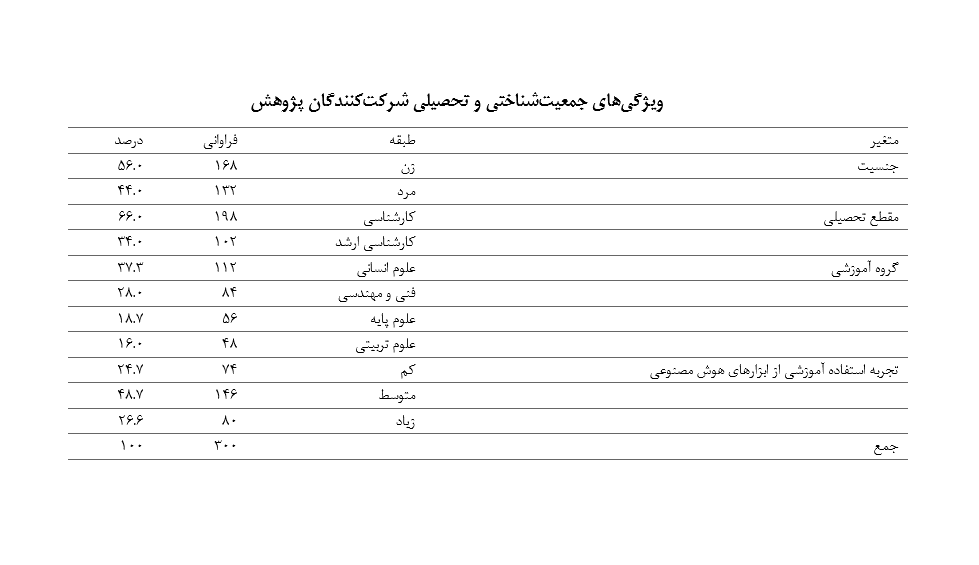
This study aimed to analyze the impact of integrating artificial intelligence technologies into higher education curricula on students’ cognitive, analytical, and research competencies. This applied quantitative study employed a descriptive–correlational design. The population consisted of undergraduate and master’s students at higher education institutions in Torbat Heydariyeh, selected through stratified random sampling. Data were collected using standardized and researcher-developed questionnaires measuring AI curriculum integration and cognitive, analytical, and research competencies. Descriptive statistics, correlation analysis, multiple regression, and structural equation modeling were used for data analysis. Inferential analyses indicated that AI integration in the curriculum had a significant positive effect on all three competency domains. The strongest effect was observed for research competencies, followed by analytical and cognitive competencies. Structural equation modeling confirmed the adequacy of the proposed model and the significance of both direct and indirect effects. The findings suggest that systematic integration of AI technologies into higher education curricula can substantially enhance students’ cognitive, analytical, and research competencies and support deeper, research-oriented learning.
References
Kayyali M. AI in Higher Education. 2025:31-62. doi: 10.4018/979-8-3693-7949-3.ch002.
Huapaya ESR, Chucos GL, Sosa EP, Meza MI. Disruptive Technologies in the University Curriculum: Use of Artificial Intelligence. International Journal of Evaluation and Research in Education (Ijere). 2025;14(1):671. doi: 10.11591/ijere.v14i1.30450.
Zheng S. Artificial Intelligence – Driven Design of Aesthetic Education Curricula in Higher Education. Educ Insights. 2025;2(6):247-56. doi: 10.70088/ta9v8365.
Qiao R, Zhao Y, Han Z. Thoughts on the Construction of Art Curriculum Using Generative AI. Journal of Educational Research and Policies. 2024;6(10):40-4. doi: 10.53469/jerp.2024.06(10).11.
Kerth SA, Boysen ST, Grgurovic M, Sales X. Assessing AI Tools for Academic Workflows: A Standardized Prompt Evaluation. 2025:75-89. doi: 10.63782/pf24005.
Parvatha N. Optimizing Curriculum Design With AI: Aligning Educational Content With Industry Demands. World Journal of Advanced Engineering Technology and Sciences. 2024;13(2):1020-8. doi: 10.30574/wjaets.2024.13.2.0585.
James DC, Maldonado‐Molina MM. Artificial Intelligence in the Curriculum: Development and Implementation of a Professional Training Program to Promote Literacy Among Health Education College Majors. Pedagogy in Health Promotion. 2025. doi: 10.1177/23733799251335628.
Rüütmann T, Läänemets U. Generating Curricula: A Human-Centred Perspective in the Era of Artificial Intelligence. 2025:180-96. doi: 10.33225/balticste/2025.180.
Salhab R. AI Literacy Across Curriculum Design: Investigating College Instructor’s Perspectives. Online Learning. 2024;28(2). doi: 10.24059/olj.v28i2.4426.
Anjala K. Are We Prepared as Management Undergraduates for an AI-Driven Future? J Tert Educ Learn. 2024;2(3):65-71. doi: 10.54536/jtel.v2i3.3341.
Matiwane BY, Olaitan O. Critical Success Factors for Integrating AI Tools Into University Curricula for Workforce Readiness. International Journal of Learning Teaching and Educational Research. 2025;24(8):91-111. doi: 10.26803/ijlter.24.8.5.
Imran MA. Comparative Analysis of AI Integration in Media and Communication Curricula: Case Studies From Australia and Egypt. Journalism & Mass Communication Educator. 2025;80(3):219-40. doi: 10.1177/10776958251315116.
Llop E, Sales X. Intel·ligència Artificial en L’Educació Superior: Temàtiques Emergents I Contribucions Multidimensionals. 2025:13-32. doi: 10.63782/pf24002.
Chidinma AE, Yinka KR. Undergraduate Students' Perception of Artificial Intelligence for Enhancing Educational Practices: Opportunities, Challenges, and Ethical Considerations. Global Journal of Social Sciences Studies. 2025;11(1):30-41. doi: 10.55284/gjss.v11i1.1411.
Uttmani MH. The Study of AI Tools Used for Teaching Effectiveness and Its Perception in College Teachers With Special Reference to Mumbai. Interantional Journal of Scientific Research in Engineering and Management. 2024;08(12):1-7. doi: 10.55041/ijsrem39883.
Baroud N. Educators’ Perspectives on Using (AI) as a Content Creation Tool in Libyan Higher Education: A Case Study of the University of Zawia. Jerit. 2024;1(2):61-70. doi: 10.34125/jerit.v1i2.12.
Jensen AP. Educating Ourselves and a Large Language Model: Researching the Affordances and Limitations of Generative Artificial Intelligence in a Theatre/Drama Curricula. 2024;11(2):43. doi: 10.33682/e847-hjb6.
Mahmoud QH, Kishawy HA, Davis K, Piliounis A, James EJ, Bassyouni Z, et al. Thriving in the Age of AI: A Model Curriculum for Developing Competencies in Artificial Intelligence for K-12. Proceedings of the Canadian Engineering Education Association (Ceea). 2025. doi: 10.24908/pceea.2025.19712.
Miftahurrohman, Supriyanti S, Jaelani J. Dampak Penerapan Kecerdasan Buatan (AI) Untuk Manajemen Kurikulum Pendidikan Tinggi Di Jawa Tengah. E-Bisnis Jurnal Ilmiah Ekonomi Dan Bisnis. 2024;17(1):339-52. doi: 10.51903/e-bisnis.v17i1.1790.
Pusporini W, Nurdiyanto H. Utilization of Artificial Intelligence in Outcome-Based Curriculum Evaluation and Development. Journal of Research in Social Science and Humanities. 2024;4(2):132-4. doi: 10.47679/jrssh.v4i1.109.
Effendi F, Fahyuni EF. Preparing Adaptive Graduates, Islamic and Professional in the Era Society 5.0. Indonesian Journal of Islamic Studies. 2024;12(4). doi: 10.21070/ijis.v12i4.1742.
Osawaru OO, Unachukwu CC. Leveraging Technology and Artificial Intelligence to Revolutionize French Language Proficiency: A Comprehensive Framework for Modern Curriculum Design. International Journal of Applied Research in Social Sciences. 2024;6(12):2903-15. doi: 10.51594/ijarss.v6i12.1767.
Mullah A, Jayachandran S. Ai-Driven Innovation in Education 4.0: An Overview of Generative Ai Tools, Learning Analytics, and Gamified SQL Learning. Int J Environ Sci. 2025;11(9s):1062-6. doi: 10.64252/829vnm63.
Tripathi CR. Awareness of Artificial Intelligence (AI) Among Undergraduate Students. NPRC J Multidis Res. 2024;1(7):126-42. doi: 10.3126/nprcjmr.v1i7.72478.
Asgarova V, Hashmi ZF, Ngajie BN, Asghar MZ, Järvenoja H. Exploring Faculty Experiences With Generative Artificial Intelligence Tools Integration in Second Language Curricula in Chinese Higher Education. Discov Computing. 2025;28(1). doi: 10.1007/s10791-025-09655-6.
Downloads
Publication Timeline
- Submitted
- Revised
- Accepted
Issue
Section
License
Copyright (c) 2025 Hossein Momeni Mahmouei, Ali Akbar Ajam (Author); Tavakol Dadras (Corresponding author)

This work is licensed under a Creative Commons Attribution-NonCommercial 4.0 International License.