بازتعریف توسعه پایدار در جمهوری اسلامی ایران از منظر آرا و اندیشههای مقام معظم رهبری
DOI:
https://doi.org/10.61838/jsied.341کلمات کلیدی:
الگوی اسلامی- ایرانی, اقتصاد مقاومتی, بیانیۀ گام دوم انقلاب, توسعه مانا, فرهنگسازی ملیچکیده
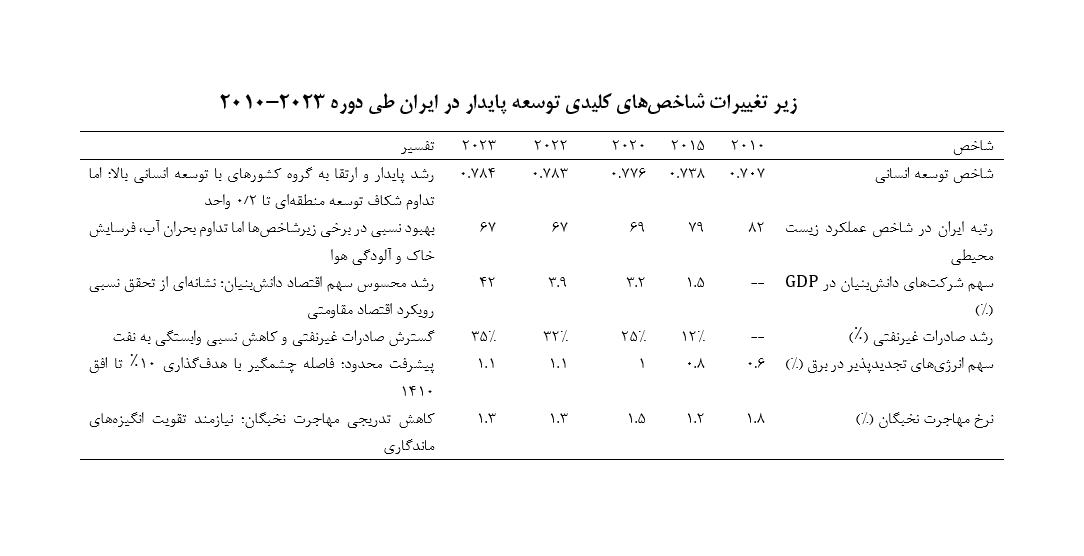
این پژوهش با هدف بازتعریف چارچوب مفهومی توسعه پایدار در جمهوری اسلامی ایران بر مبنای گفتمان و رهنمودهای مقام معظم رهبری و تحلیل پیوند آن با شاخصهای عینی توسعه انجام شده است. مطالعه حاضر کاربردی–توسعهای و با رویکرد ترکیبی (کیفی–کمی) انجام شد. در بخش کیفی، ۵۳ سخنرانی و ۱۲ پیام راهبردی رهبر انقلاب اسلامی در بازه ۱۳۶۸ تا ۱۴۰۲ و اسناد بالادستی مانند بیانیه گام دوم انقلاب و سیاستهای کلی نظام، با روش فراتحلیل و تحلیل مضمون ششمرحلهای براون و کلارک کدگذاری شدند. روایی تحلیل با استفاده از دو کدگذار مستقل و ضریب کاپای کوهن (۰٫۸۲) تضمین گردید. در بخش کمی، شاخصهای توسعه انسانی (HDI)، عملکرد زیستمحیطی (EPI)، سهم شرکتهای دانشبنیان، صادرات غیرنفتی، سهم انرژیهای تجدیدپذیر و نرخ مهاجرت نخبگان در بازه ۲۰۱۰ تا ۲۰۲۳ از منابع معتبر بینالمللی و ملی گردآوری و تحلیل مقایسهای شد. چهار محور بنیادین در گفتمان رهبری شناسایی شد: عدالت اجتماعی و منطقهای (۳۷٪ مضامین)، اقتصاد مقاومتی و استقلال ملی (۲۹٪)، حفاظت از محیط زیست بهعنوان تکلیف شرعی و اخلاقی (۲۱٪) و فرهنگسازی ملی و تقویت سرمایه انسانی جوان (۱۳٪). در دادههای کمی، شاخص توسعه انسانی ایران از ۰٫۷۰۷ (۲۰۱۰) به ۰٫۷۸۳ (۲۰۲۲) ارتقا یافت، سهم اقتصاد دانشبنیان از ۱٫۵٪ به ۴٫۲٪ رسید و صادرات غیرنفتی ۳۵٪ رشد داشت. با این حال، شکاف توسعه منطقهای تا ۰٫۲ واحد پابرجاست، رتبه ایران در EPI در سال ۲۰۲۲ برابر با ۶۷ است و سهم انرژیهای تجدیدپذیر تنها ۱٫۲٪ میباشد. یافتهها نشان میدهد توسعه پایدار در ایران نیازمند بازتعریفی بومی و تمدنی بر پایه عدالت اجتماعی، تابآوری اقتصادی، اخلاق زیستمحیطی و تقویت سرمایه انسانی است. این چارچوب میتواند سیاستگذاری ملی را همسو با ارزشهای انقلاب اسلامی کرده و ارتقای شاخصهای جهانی و حرکت به سوی الگوی ایرانی–اسلامی پیشرفت را تسهیل نماید.
دانلودها
مراجع
Commission on Development. Our Common Future. Oxford: Oxford University Press; 1987.
Assembly UNG. Transforming Our World: The 2030 Agenda for Sustainable Development (SDGs). New York: United Nations, 2015.
Hopwood B, Mellor M, O'Brien G. Sustainable development: Mapping different approaches. Sustainable Development. 2005;13(1):38-52. doi: 10.1002/sd.244.
Sachs JD. The Age of Sustainable Development. New York: Columbia University Press; 2015.
Sen A. Development as Freedom. Oxford: Oxford University Press; 1999.
Sardar Z. Islamic perspectives on sustainability and justice: A civilizational approach. Journal of Islamic Ethics. 2024;9(2):115-38.
Preservation Oot, Publication of the Works of Ayatollah Khamenei. Statements and Decrees of the Supreme Leader Ayatollah Khamenei. 1989.
Iran UNPD. National Human Development Report of Iran. Tehran: UNDP Country Office, 2022.
United Nations Development Programme. Human Development Report 2023: Uncertain Times, Unsettled Lives - Shaping our Future in a Transforming World. New York: UNDP, 2023.
World Bank. Country Economic Memorandum for Iran. Washington, D.C.: The World Bank, 2022.
World Bank. World Development Indicators. 2023.
National Planning and Budget Organization. Annual Reports on Iran's Regional Development. Tehran: Development Research Center; 2023.
Statistical Centre of Iran. Provincial Demographic, Education, and Human Development Indicators. Tehran: Planning and Programs Deputy; 2023.
Agriculture Organization of the United Nations. Land and Water Resources in Iran: Challenges and Opportunities. Rome: FAO, 2021.
IPCC Intergovernmental Panel on Climate Change. Sixth Assessment Report (AR6): Climate Change Impacts and Adaptation. Geneva: IPCC, 2023.
Yale Center for Environmental Law and Policy. 2022 Environmental Performance Index (EPI) Report. New Haven: Yale University, 2022.
Heydari A. Sustainable Development from the Perspective of the Supreme Leader. Tehran: Nikayesh Publishing; 2025.
Mousavi M. Social Justice and Development Sustainability in Iran: An Analysis of Trends and Challenges. Iranian Economic Research Quarterly. 2022;27(3):55-80.
Preservation Oot, Publication of the Works of Ayatollah Khamenei. The Second Step of the Islamic Revolution Statement. Tehran2019.
Ahmadi F. Resistance and Knowledge-Based Economy within the Framework of the Iranian-Islamic Model of Progress. Iranian Economic Research Journal. 2021;15(2):7-25.
Vice-Presidency for Science and Technology. Report on Knowledge-Based Companies and National Innovation. Tehran: Technology Headquarters Secretariat; 2023.
Heydari A, Bakhtar S. Analyzing the regional development of Kurdish border cities of Iran using sustainable urban development indices (study area: Kurdistan province). GeoJournal of Tourism and Geosites. 2018;23(3):797-807. doi: 10.30892/gtg.23315-329.
Naderi S. Environment and Intergenerational Justice in Iran. Quarterly Journal of Public Policy. 2020;11(4):92-115.
Supreme Council of the Cultural Revolution. Comprehensive Scientific and Technological Document of the Islamic Republic of Iran. Tehran: Council Secretariat; 2021.
Brown V, Clarke V. Using thematic analysis in psychology. Qualitative Research in Psychology. 2006;3(2):77-101. doi: 10.1191/1478088706qp063oa.
دانلودها
گاهشمار انتشار
- ارسال
- بازنگری
- پذیرش
شماره
نوع مقاله
مجوز
حق نشر 2025 Ayoub Tayari Dorbash (Author); Akbar Heydari (Corresponding author)

این پروژه تحت مجوز بین المللی Creative Commons Attribution-NonCommercial 4.0 می باشد.