طراحی الگوی حفظ و نگهداشت کارکنان دانشی با رویکرد جانشینپروری در سازمان اوقاف و امور خیریه: پژوهشی کیفی مبتنی بر تحلیل مضمون
کلمات کلیدی:
حفظ و نگهداشت کارکنان, کارکنان دانشی, جانشینپروری, سازمان اوقاف و امور خیریهچکیده
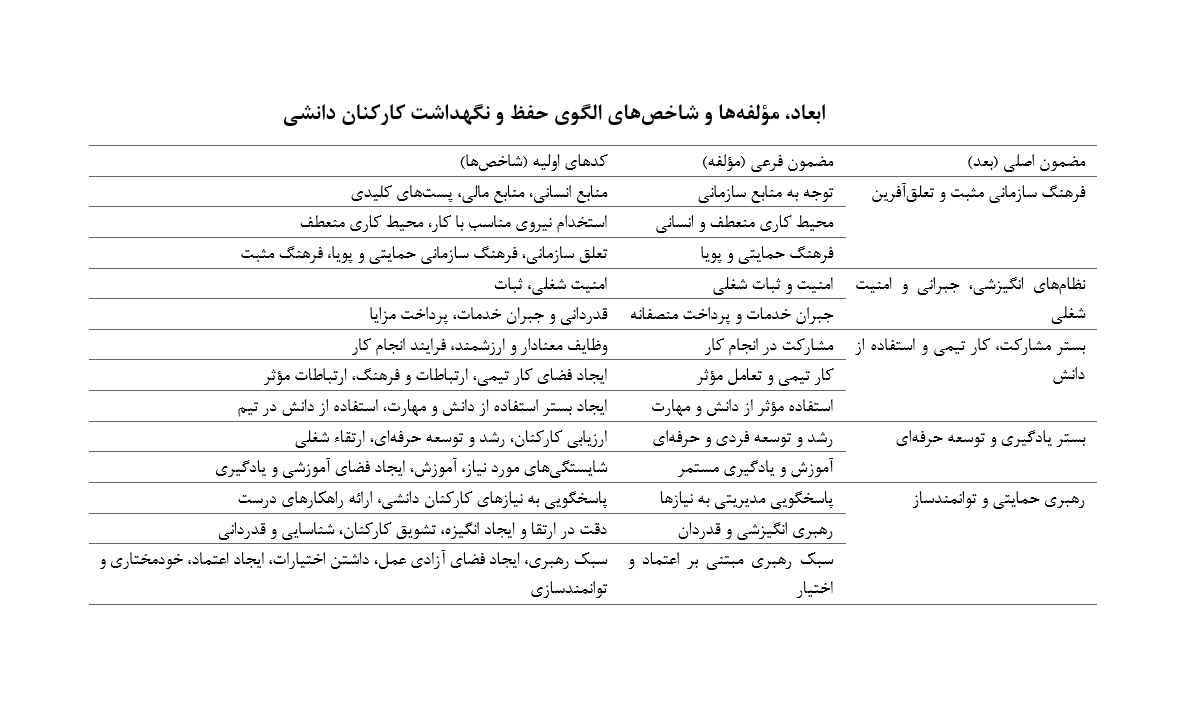
هدف این پژوهش، طراحی الگویی یکپارچه برای حفظ و نگهداشت کارکنان دانشی با تأکید بر پیوند نظاممند آن با فرایند جانشینپروری در سازمان اوقاف و امور خیریه بود. پژوهش از نظر هدف کاربردی و از حیث رویکرد، کیفی و اکتشافی بود. مشارکتکنندگان شامل 12 نفر از خبرگان و مدیران ارشد سازمان اوقاف و امور خیریه با میانگین 23 سال سابقه کاری بودند که با روش نمونهگیری هدفمند و گلولهبرفی تا دستیابی به اشباع نظری انتخاب شدند. دادهها از طریق مصاحبههای عمیق نیمهساختاریافته گردآوری و با روش تحلیل مضمون ششمرحلهای براون و کلارک تحلیل شدند. در فرایند تحلیل، 313 کد اولیه با استفاده از نرمافزار MAXQDA استخراج و پس از بازبینی، تلفیق و مفهومپردازی در قالب مضامین اصلی و فرعی سازماندهی شدند. قابلیت اعتماد یافتهها بر اساس معیارهای گوبا و لینکلن بررسی شد و اعتبار الگو نیز از طریق بازبینی خبرگان و محاسبه توافق بین دو کدگذار، با میزان توافق 85 درصد، تأیید گردید. تحلیل روابط میان مضامین نشان داد که الگوی نگهداشت کارکنان دانشی از پنج بعد بههمپیوسته شامل فرهنگ سازمانی مثبت و تعلقآفرین، نظامهای انگیزشی و جبرانی و امنیت شغلی، بستر مشارکت و کار تیمی و استفاده مؤثر از دانش، بستر یادگیری و توسعه حرفهای، و رهبری حمایتی و توانمندساز تشکیل میشود. در میان این ابعاد، رهبری حمایتی و توانمندساز و یادگیری و توسعه حرفهای دارای نقش مستقیمتر و قویتری در نگهداشت بودند، در حالی که سایر ابعاد بخشی از اثر خود را از طریق این دو سازوکار اعمال میکردند. همچنین، رابطهای دوسویه و تقویتکننده میان جانشینپروری و نگهداشت آشکار شد؛ جانشینپروری با ایجاد مسیر رشد و آینده شغلی، تعهد و ماندگاری را تقویت میکند و ماندگاری کارکنان دانشی نیز انتقال دانش و پرورش جانشینان را امکانپذیر میسازد. نگهداشت پایدار کارکنان دانشی در سازمانهای دولتی نیازمند رویکردی سیستمی و چندبعدی است که در آن جانشینپروری جزء جداییناپذیر سیاستهای نگهداشت محسوب شود و همزمان بر رهبری مبتنی بر اعتماد، توسعه حرفهای، بهکارگیری دانش، تعلق سازمانی و جبران منصفانه تأکید گردد.
دانلودها
مراجع
1. Anos C. Ensuring Leadership Continuity: An Integrative Review of Succession Planning, Leadership Development and Organisational Memory. Edelweiss Applied Science and Technology. 2025;9(5):2869-77. doi: 10.55214/25768484.v9i5.7607.
2. Musale M. The Importance of Succession Planning in Talent Retention: Developing Future Leaders Within the Organization. International Journal on Research and Development – A Management Review. 2025;14(1):146-8.
3. Nurinaya N, Marhumi S. Leadership Strategy Evaluation and Succession Planning in Preparing the Company’s Future Leaders. Advances in Human Resource Management Research. 2025;3(1):1-14. doi: 10.60079/ahrmr.v3i1.405.
4. Hambrick DC, Lee EY. A model of CEO succession planning as a risky investment: Anticipated costs, uncertain results, and contingency conditions. Organization Science. 2025;36(2):677-96. doi: 10.1287/orsc.2023.17781.
5. Gunda VN, Muzira J. Leveraging predictive analytics for workforce planning, succession planning, and organizational development. 2025.
6. Zafar A, Hussain M, Mir SR. Exploring The Impact Of Succession Planning On Digital Marketing Innovation: The Mediating Role of Marketing Adaptability. Management Studies. 2025;5(1):76-86.
7. Jan Ahmadi Gol M, Rezaeifar H, Hakimpour H. Meta-analysis of Factors Affecting Succession Planning Management in Governmental Organizations. Public Management Research. 2023;16(60):191-218.
8. Keikha MA, Keikha H, editors. Investigating the Model and Challenges of Succession Planning in Government Offices. The Third International Conference on Political Science, Management, Economics, and Accounting; 2024; Hamedan.
9. Rajaei Z, Deminejad M, editors. Identifying the challenges of succession planning in Iranian public organizations. National Conference on Interdisciplinary Research in Management and Humanities; 2025.
10. Shahabi M. Presenting a Succession Planning Model in Government Organizations Using Thematic Analysis. Modern Research Approach in Management and Accounting. 2024;30(1):79-97.
11. Vahdat S, Afshari S, Masoodi Asl E, Hesam S. Key Factors Affecting Succession Planning in the Leadership of Public Hospitals in Iran: A Qualitative Study. International Journal of Healthcare Management. 2022;17(1):76-84.
12. Kamali A, Hosseini SM, Alimohammadzadeh K, Khamseh AHS. Talent identification and succession planning strategies for the appointment of nursing unit managers: A systematic review. Journal of Education and Health Promotion. 2024;13(1):485-98. doi: 10.4103/jehp.jehp_2087_23.
13. Kanu A. Health Sector Succession Planning and Management Practices in Sierra Leone: A Situation Analysis to Inform Health System Strengthening. International Journal of Leadership and Governance. 2025;5(4):40-62. doi: 10.47604/ijlg.3501.
14. Mahat R. Advancing women in government roles: Succession planning models. Government Leadership Journal. 2025;29(1):45-59.
15. Sayyahpour H, Farjad Bileh-Savar S. Human resource development through talent management and succession planning in higher education centers. Research Journal of Strategic Studies in Humanities and Islamic Sciences. 2024;5(61):1-29.
16. Keykhoshravi H, Faezi F, Heydarieh SA. Designing a model of effective factors on the implementation of succession planning in universities with a mixed approach. Journal of Sustainable Human Resource Management. 2023;5(8):171-45. doi: 10.22080/shrm.2023.4163.
17. Keerio N, Ahmad AR. Developing Future Leaders in Malaysian Public Universities: Factors Influencing the Execution of Succession Planning. Journal of Applied Research in Higher Education. 2024;16(5):1453-68.
18. Bahramzadeh S, Alavi Y, Feghi N. An Effectiveness Model of Succession Planning with an Emphasis on Fourth-Generation Universities. Studies in Resource Development and Management. 2025;1(9):1-12.
19. Upadhyaya A, Kuknor S. Challenges faced by family owned education institutions in Nepal in implementing effective succession planning strategies. Journal of Applied Research in Higher Education. 2025;17(1):175-89. doi: 10.1108/JARHE-04-2023-0151.
20. Montaghimi B, Ganjavi FA, Sajadi Hezaveh SH. Designing a competency-based succession planning model for sports managers with a qualitative approach. Strategic Studies in Sports and Youth. 2023;22(60):47-60. doi: 10.22034/ssys.2022.1651.2157.
21. Ghorani SF, Asgari N, Javashi Jadid S. Identifying and prioritizing factors affecting the success of succession planning in the defense industry. Air Defense Management. 2025;4(1):119-38.
22. Sadeghi F, Daneshfard K, Kheirandish M, Pilevari N. A succession planning model centered on organizational sustainability. Quantitative Studies in Management. 2023;14(3):78-100.
23. Sadighi Avansar S, editor Examining the relationship between work ethic, learning, and succession planning with job stress and organizational commitment among employees. Proceedings of the 5th National Conference and 2nd International Conference on New Management Patterns in Unstable Conditions; 2023: Tehran.
24. Samuel I, Mohd Isa Y. The Mediating Role of Talent Management in Succession Planning and Private Organization Sustainability: A Conceptual Article. Journal of Current Social and Political. 2024;2(1):22-33.
25. Li Z, Mustapha M, Sheikh Hassan AF, Saidin SF. The Influence of Corporate Governance on Succession Planning and Organizational Performance in Chinese Family Firms. Management Decision. 2025;63(7):2392-411.
دانلودها
گاهشمار انتشار
- ارسال
- بازنگری
- پذیرش
شماره
نوع مقاله
مجوز
حق نشر 2025 Nafiseh Hilo (Author); Mashallah Valikhani Dehaghani (Corresponding author); Somayeh Ghajari (Author)

این پروژه تحت مجوز بین المللی Creative Commons Attribution-NonCommercial 4.0 می باشد.