بررسی تأثیر ارتباطات، مشارکت و انعطافپذیری بر توانمندسازی و ارتقای پاسخگویی از طریق مسئولیتپذیری اجتماعی: مورد مطالعه شعب بانک سپه
کلمات کلیدی:
ارتباطات, مشارکت, انعطافپذیری, توانمندسازی, تعهد سازمانی, شفافیت, مسئولیتپذیری اجتماعی, پاسخگوییچکیده
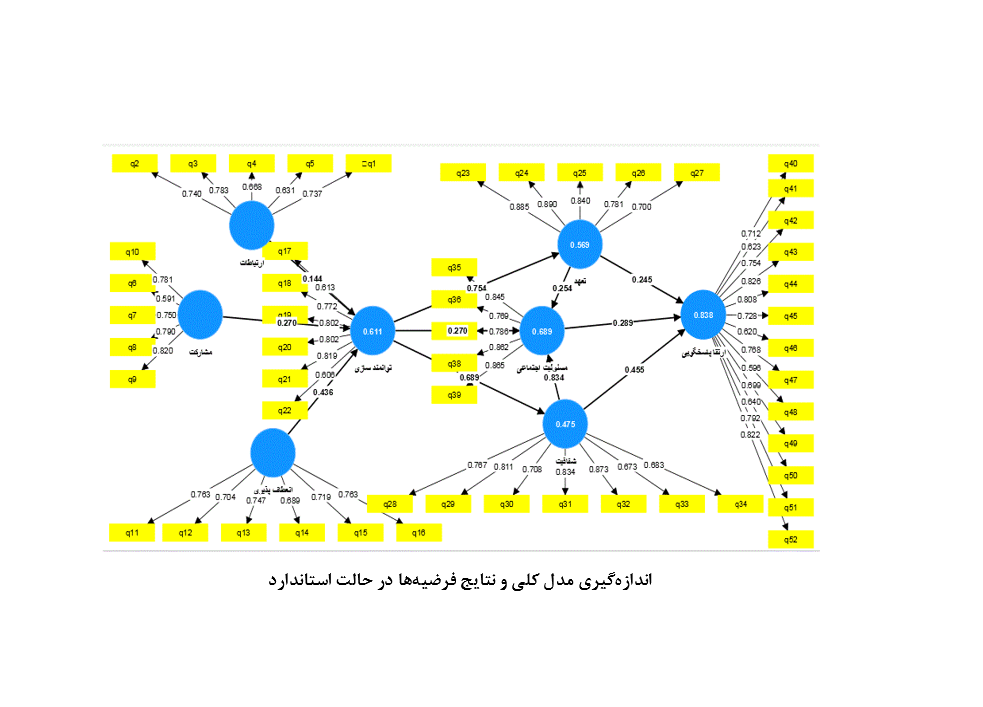
هدف پژوهش حاضر بررسی تأثیر ارتباطات، مشارکت و انعطافپذیری بر توانمندسازی کارکنان و تبیین نقش تعهد، شفافیت و مسئولیتپذیری اجتماعی در ارتقای پاسخگویی در شعب بانک سپه بود. پژوهش حاضر از نظر هدف کاربردی و از نظر روش، توصیفی–تحلیلی بود. جامعه آماری شامل کارکنان شعب بانک سپه بود که 384 نفر با استفاده از فرمول کوکران بهعنوان نمونه انتخاب شدند. دادهها با پرسشنامه محققساخته گردآوری شد. روایی صوری و محتوایی ابزار با نظر خبرگان و روایی سازه با تحلیل عاملی تأییدی بررسی شد و پایایی آن با آلفای کرونباخ و پایایی ترکیبی تأیید گردید. برای تحلیل دادهها از آزمون کولموگروف–اسمیرنوف، تحلیل عاملی تأییدی و مدلسازی معادلات ساختاری با نرمافزار SmartPLS استفاده شد. نتایج مدل ساختاری نشان داد ارتباطات (β=0.144، t=2.605)، مشارکت (β=0.270، t=3.731) و انعطافپذیری (β=0.436، t=5.708) بر توانمندسازی اثر مثبت و معناداری داشتند. توانمندسازی نیز بر تعهد (β=0.754، t=6.201)، مسئولیت اجتماعی (β=0.270، t=3.706) و شفافیت (β=0.689، t=7.208) تأثیر معنادار داشت. همچنین تعهد (β=0.254، t=3.718) و شفافیت (β=0.834، t=7.906) مسئولیت اجتماعی را بهطور معناداری تبیین کردند. در نهایت، تعهد (β=0.245، t=3.235)، مسئولیت اجتماعی (β=0.289، t=3.522) و شفافیت (β=0.455، t=5.162) اثر مثبت و معناداری بر ارتقای پاسخگویی داشتند و تمامی فرضیههای پژوهش تأیید شدند. یافتهها نشان میدهد تقویت ارتباطات، مشارکت و بهویژه انعطافپذیری سازمانی میتواند از طریق افزایش توانمندسازی کارکنان، تعهد و شفافیت را ارتقا دهد و با تقویت مسئولیتپذیری اجتماعی، زمینه بهبود پاسخگویی سازمانی را فراهم سازد. بنابراین، توسعه سازوکارهای توانمندساز و شفاف در مدیریت منابع انسانی میتواند رویکردی مؤثر برای ارتقای پاسخگویی در شعب بانک سپه باشد.
دانلودها
مراجع
1. Heydarfard R, Rezayati A, editors. Employee Empowerment and Its Impact on Human Resource Performance and Organizational Productivity: A Review Study. 20th International Conference on Management and Humanities Research in Iran; 2025; Tehran.
2. Sadeghi H, Karimi M, Ahmadi S. Designing a Human Resource Development Model Based on Empowerment and Individual Development of Employees in State-Owned Banks. Quarterly Journal of Human Resource Management Studies. 2026;18(2):45-74.
3. Amor AM, Xanthopoulou D, Calvo N, Vázquez JPA. Structural Empowerment, Psychological Empowerment, and Work Engagement: A Cross-Country Study. European Management Journal. 2021;39(6):779-89. doi: 10.1016/j.emj.2021.01.005.
4. Cayaban ARR, Valdez GFD, Leocadio ML, Cruz JP, Tuppal CP, Labrague LJ, et al. Structural and Psychological Empowerment and Its Influencing Factors among Nursing Students in Oman. Journal of Professional Nursing. 2022;39(76):83. doi: 10.1016/j.profnurs.2022.01.003.
5. Ibrahim AM. Psychological Empowerment and Organizational Commitment among Employees in the Lodging Industry. Journal of Human Resources in Hospitality & Tourism. 2020:1-19. doi: 10.1080/15332845.2020.1737766.
6. Francis RS, Alagas EN. Hotel Employees' Psychological Empowerment Influence on Their Organizational Citizenship Behavior towards Their Job Performance. IGI Global; 2020. p. 284-304.
7. AlKahtani N, Iqbal S, Sohail M, Sheraz F, Jahan S, Anwar B, et al. Impact of Employee Empowerment on Organizational Commitment through Job Satisfaction in Four and Five Stars Hotel Industry. Management Science Letters. 2021;11(3):813-22. doi: 10.5267/j.msl.2020.10.022.
8. Widodo W, Damayanti R. Vitality of Job Satisfaction in Mediation: The Effect of Reward and Personality on Organizational Commitment. Management Science Letters. 2020;10(9):2131-8. doi: 10.5267/j.msl.2020.1.016.
9. Mira M, Choong Y, Thim C. The Effect of HRM Practices and Employees' Job Satisfaction on Employee Performance. Management Science Letters. 2019;9(6):771-86. doi: 10.5267/j.msl.2019.3.011.
10. Hosseinabadi B, Hossein Yavari A, Ghazvineh M. Factors Affecting the Empowerment of NAJA Employees. Scientific Quarterly of NAJA Supervision and Inspection. 2021;15(57):159-88.
11. Soheili H, Taherpour Kalantari H, Fandiz H. Identifying Individual Factors Affecting the Empowerment of Health Insurance Employees: A Study of the Health Insurance Organization. Human Resource Management Research. 2019;12(2):189-215.
12. Narouei R, Moslemizadeh M. Identifying Factors Affecting the Empowerment of Conscripts: A Study of Conscripts in Zahedan. Scientific Quarterly of Military Service Studies. 2020;3(2 (7)):42-62.
13. Shirazi H. Behavior Change Policy-Making for Citizen Empowerment: A Necessary Approach to Achieving Governmental Macro Goals. State Studies. 2021;7(27):29-57. doi: 10.22054/tssq.2021.63196.1150.
14. Yalpanian B, Nazem F, Karimzadeh S. Identifying Factors Affecting Human Resource Training and Presenting a Model at Islamic Azad University. Jundishapur Education Development Journal. 2021;12(1).
15. Jamali N, Gharib M, Samsar Kermani F, Nik Khah Chamanabad S. Examining Factors Affecting Employee Empowerment with the Aim of Decentralization in Rural Economic Development: A Case Study of the National Iranian Oil Products Distribution Company in Torbat Heydarieh. Rural Development Strategies. 2021;8(3):353-65. doi: 10.22048/rdsj.2021.296871.1966.
16. Abdel-Dayem MA, Brown DA, Haray PN. Empowering Patients and Educating Staff-An Online Solution for the COVID Era and Beyond! Annals of Medicine and Surgery. 2021;65(102238). doi: 10.1016/j.amsu.2021.102238.
17. López-Rodríguez MD, Ruiz-Mallén I, Oteros-Rozas E, March H, Keller R, Lo VB, et al. Delineating Participation in Conservation Governance: Insights from the Sierra de Guadarrama National Park (Spain). Environmental Science & Policy. 2020;114(486):496. doi: 10.1016/j.envsci.2020.09.019.
18. Li Z. The Hidden Cost of Empowerment: How Differentiated Empowering Leadership Influences Knowledge Hiding Among Generation MZ Employees? Sage Open. 2025;15(4). doi: 10.1177/21582440251395533.
19. Kord A, Gorkaz M, Matoufi A, Khozin A, Hassan Maleki A. Providing a model for professional thinking of employees based on dimensions of ambidexterity and psychological empowerment. Journal of Management and Educational Perspective. 2025;6(1):333-50.
20. Font N, Durán IP. The Information Phase of Accountability: The Role of Management Boards in European Union Agencies. International Review of Administrative Sciences. 2020. doi: 10.1177/0020852320946813.
21. Faidati N, Khozin M. The Relevance of Administrative Accountability and Social Accountability and Its Impact on Welfare Improvement: DIY Province Case Study. JIP (Jurnal Ilmu Pemerintahan): Kajian Ilmu Pemerintahan dan Politik Daerah. 2020;5(1):12-9.
22. Tanima FA, Brown J, Dillard J. Critical dialogic accounting and accountability engagement: Exploring the micro politics of microfinance and women’s empowerment through participatory action research. Critical Perspectives on Accounting. 2025;101(2):336-79. doi: 10.1016/j.cpa.2024.102786.
23. Hosseini Rosh SMH, Akati H. The Effect of Managers' Accountability on the Job Satisfaction of Physical Education Teachers in the Sistan Region. Organizational Management and Behavior in Sport Quarterly. 2021;10(4):1-13.
24. Kazemi A, Sameri M, Keyhan J. Relationships among Managerial Skills, Job Attitude, Basic Knowledge and Information, and School Managers' Performance Based on Responsiveness to Environmental Needs: The Mediating Roles of Ethical Commitment and Collective Efficacy. A New Approach in Educational Management. 2021;12(6):35-49.
25. Indarti E. Strengthen Security and Public Order: Accountability Management in Improving the Quality of Law Enforcement. Academic Journal of Interdisciplinary Studies. 2020;9(2):82-. doi: 10.36941/ajis-2020-0025.
26. Wallengren Lynch M, Bengtsson AR, Hollertz K. Applying a 'Signature Pedagogy' in the Teaching of Critical Social Work Theory and Practice. Social Work Education. 2019;38(3):289-301. doi: 10.1080/02615479.2018.1498474.
دانلودها
گاهشمار انتشار
- ارسال
- بازنگری
- پذیرش
شماره
نوع مقاله
مجوز
حق نشر 2025 امیر علاسوندیان لشکری (نویسنده); سیروس تدبیری (نویسنده مسئول); علیرضا رزقی رستمی (نویسنده)

این پروژه تحت مجوز بین المللی Creative Commons Attribution-NonCommercial 4.0 می باشد.