A Conceptual Model of Knowledge Retention in the Nuclear Industry: A Human Capital Management Approach
Keywords:
Data Retention, Nuclear Industry, Human Capital managementAbstract
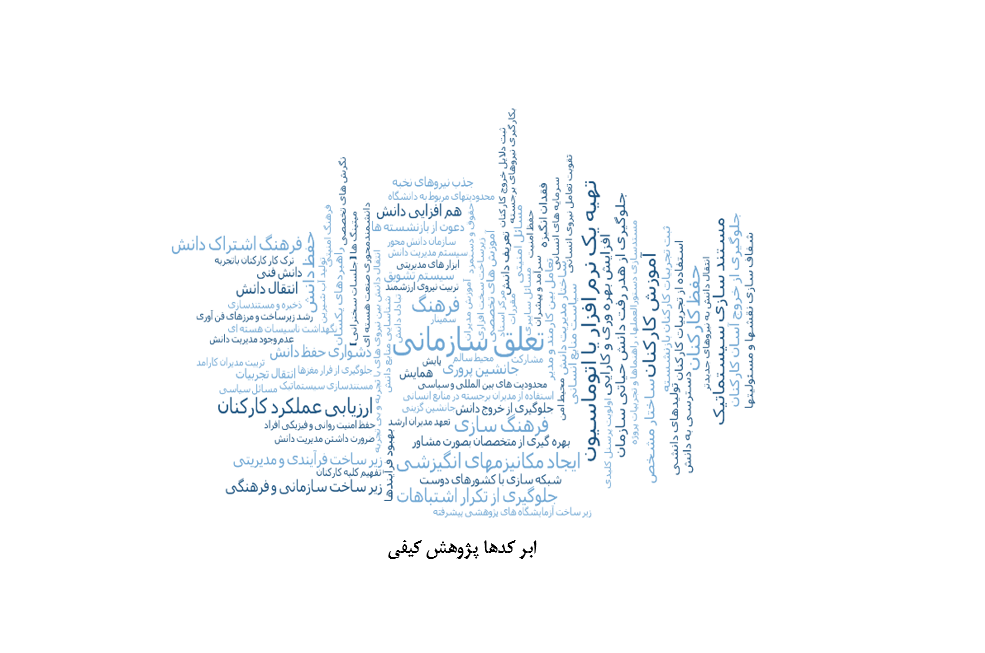
This study aimed to develop a conceptual model of knowledge retention in Iran’s nuclear industry from a human capital management perspective by identifying its causal conditions, central phenomenon, strategies, contextual and intervening conditions, and consequences. This applied-developmental study was conducted within an interpretivist paradigm using a qualitative, exploratory, cross-sectional design and a systematic grounded theory strategy. Participants consisted of experts in knowledge management, human resource management, relevant business fields, and managers associated with Iran’s nuclear industry. Participants were selected through purposive and snowball sampling, and data collection continued until theoretical saturation was achieved with 10 experts. Data were collected through semi-structured interviews lasting approximately 30–45 minutes. The interviews were analyzed according to the Strauss and Corbin grounded theory approach through open, axial, and selective coding using MAXQDA software. Coding reliability was also evaluated through intra-subject agreement among coders, yielding an agreement coefficient of 0.79. Analysis generated 212 open codes and resulted in a paradigmatic model of knowledge retention. The causal conditions comprised systematic knowledge and the deliberate selection and application of knowledge. The central phenomenon consisted of the retention of human and non-human knowledge. The principal strategies involved developing a culture of knowledge retention and preventing knowledge loss, together with promoting participatory and synergistic approaches. Contextual conditions included a system for retaining knowledge-based human resources and a dynamic knowledge-oriented human resource system. Intervening conditions comprised environmental and organizational issues and supervisory and managerial structures. The identified consequences encompassed the development and advancement of efficient, knowledge-based human capital as well as strengthening national authority and improving the status and capabilities of strategic infrastructure industries. Knowledge retention in the nuclear industry is a multidimensional organizational process that extends beyond documentation and knowledge storage. Its effective implementation requires the integration of knowledge management with human capital management through expert retention, succession planning, competency development, incentive systems, experience transfer, participatory mechanisms, and supportive organizational infrastructures. The proposed model provides a systematic framework for reducing knowledge loss, strengthening institutional memory, sustaining critical expertise, and supporting long-term organizational and national capabilities in the nuclear industry.
Downloads
References
1. Levallet N, Chan YE. Organizational Knowledge Retention and Knowledge Loss. Journal of Knowledge Management. 2019;23(1):176-99. doi: 10.1108/JKM-08-2018-0515.
2. Gaghman AA. The Impact of Knowledge Behavioural Factors on Tacit Knowledge Retention: Empirical Study in Oil and Gas Industry. Economies of the Balkan and Eastern European Countries: KnE Social Sciences; 2019. p. 34-53.
3. Sanz R, Hovell J. Knowledge Retention Framework and Maturity Model: Improving an Organization or Team’s Capability to Retain Critical Knowledge. Knowledge Management for Development Journal. 2021;16(1).
4. Aliaga JC, Guevara R. Knowledge Management Between Employee Turnover Intention and Service Quality in IT Outsourcing. Journal of Organizational Computing and Electronic Commerce. 2025. doi: 10.4018/JOEUC.396869.
5. Pillai SR, Iyer DD. Knowledge Retention Strategies in the Face of Workforce Turnover. International Academic Journal of Innovative Research. 2024;11(4):21-6. doi: 10.71086/IAJIR/V11I4/IAJIR1128.
6. Arimany-Serrat N. Protocol for Identifying and Retaining Critical Knowledge in Multigenerational Workforce Contexts. Systems. 2024;12(11):505.
7. García-Pérez A, Cegarra-Navarro JG, Bedford D. Critical Knowledge Retention and Organizational Sustainability: A Human-Centered Perspective. Journal of Knowledge Economy. 2024;15(3):1321-40.
8. Mthunzi L. Effect of Organizational Culture on Knowledge Sharing and Retention Among Public Sector Employees in South Africa. African Journal of Information and Knowledge Management. 2024;3(2):1-10. doi: 10.47604/ajikm.2430.
9. Serenko A. Organizational Culture and Retention of Knowledge. International Journal of Management & Entrepreneurship Research. 2025;6(11):1682.
10. Fattah J, Yesiltas M, Atan T. The Impact of Knowledge Sharing and Participative Decision-Making on Employee Turnover Intention: The Mediating Role of Perceived Organizational Support. SAGE Open. 2022;12(4):1-14. doi: 10.1177/21582440221130294.
11. Zahedi MR, Eshragh M. Examining the Effect of Human Resource Management Performance on the Retention of Knowledge Workers in a Knowledge-Based Company Considering the Mediating Role of Knowledge Management. NAJA Human Resources. 2021;16(64):34-55.
12. Argüello BP, González-Prida V. Integrating Change Management with a Knowledge Management Framework: A Methodological Proposal. Information. 2024;15(7):406. doi: 10.3390/info15070406.
13. Musale M. The Importance of Succession Planning in Talent Retention: Developing Future Leaders Within the Organization. International Journal on Research and Development – A Management Review. 2025;14(1):146-8.
14. Phaladi MP, Ngulube P. Knowledge Retention Practices in South African Public Institutions: Challenges and Strategies. Information. 2024;15(6):218. doi: 10.3390/info15060218.
15. Iftikhar R, Rashid M. Knowledge Loss and Retention in Interorganizational Projects. International Journal of Managing Projects in Business. 2025;18(2):241-64.
16. Muleke V, Jepkoech P, Mutugi TM. Knowledge Retention Practices and Performance of Public Research Institutions in Kenya. Journal of Human Resource & Leadership. 2023;7(1):64-78. doi: 10.53819/81018102t3072.
17. Ibironke OE, Onamusi AB, Ahamze OV, Idowu OC. The Moderating Role of Knowledge Retention in the Relationship Between Innovation Capability and Learning & Growth. Asian Journal of Economics, Business and Accounting. 2025;25(11):28-39. doi: 10.9734/ajeba/2025/v25i112033.
18. Shannaq B. E-Learning Integration and Teaching Strategies to Enhance Knowledge Retention in Higher Education. Emerging Science Journal. 2025;9(2). doi: 10.28991/ESJ-2025-09-02-017.
19. Ansari AN, Ahmad S, Bhutta SM. Mapping the Global Evidence Around the Use of ChatGPT in Higher Education: A Systematic Scoping Review. Education and Information Technologies. 2023. doi: 10.1007/s10639-023-12223-4.
20. Benderoth M, Gebhard P, Keller C, Nakhosteen CB, Schaffer S, Schneeberger T. Socially Interactive Agents for Preserving and Transferring Tacit Knowledge in Organizations. 2025.
21. Mehyar N, Awawdeh M, Omair A, Aldawsari A, Alshudukhi A, Alzeer A. Long-Term Knowledge Retention of Biochemistry Among Medical Students in Riyadh, Saudi Arabia: Cross-Sectional Survey. JMIR Medical Education. 2024;10:e56132. doi: 10.2196/56132.
22. Agbalalah EH, Solorzano R, Rosenzweig J. Human Resources Challenges in the Nuclear Industry (Knowledge Retention and Transfer (KRT)) in the United Kingdom (UK) as Reference. European Journal of Human Resource. 2020;4(1):63-76. doi: 10.47672/ejh.543.
23. Null RT, Delmotte A. The Westinghouse Global Competency Model: A State-of-the-Art Knowledge Management Program. Nuclear Engineering and Design. 2024;419:112953. doi: 10.1016/j.nucengdes.2024.112953.
24. Ariyanto S, Komariah S. Impacts of Award Provision to Improve Nuclear Knowledge Management Program Implementation in a National Nuclear Institution. AIP Conference Proceedings2024. p. 100003.
Downloads
Publication Timeline
Issue
Section
License
Copyright (c) 2025 Mohammadhassan Sadri (Author); Bahram Alishiri (Corresponding author); Mahmood Modiri, Hassan Amiri (Author)

This work is licensed under a Creative Commons Attribution-NonCommercial 4.0 International License.