ارائه الگوی همآفرینی سازمانی بانک صادرات ایران با رویکرد کیفی و کمی
کلمات کلیدی:
فرهنگ هم آفرینی, ساختار سازمانی, فرآیندها و روشها, فناوری و ابزارها, ارزش آفرینیچکیده
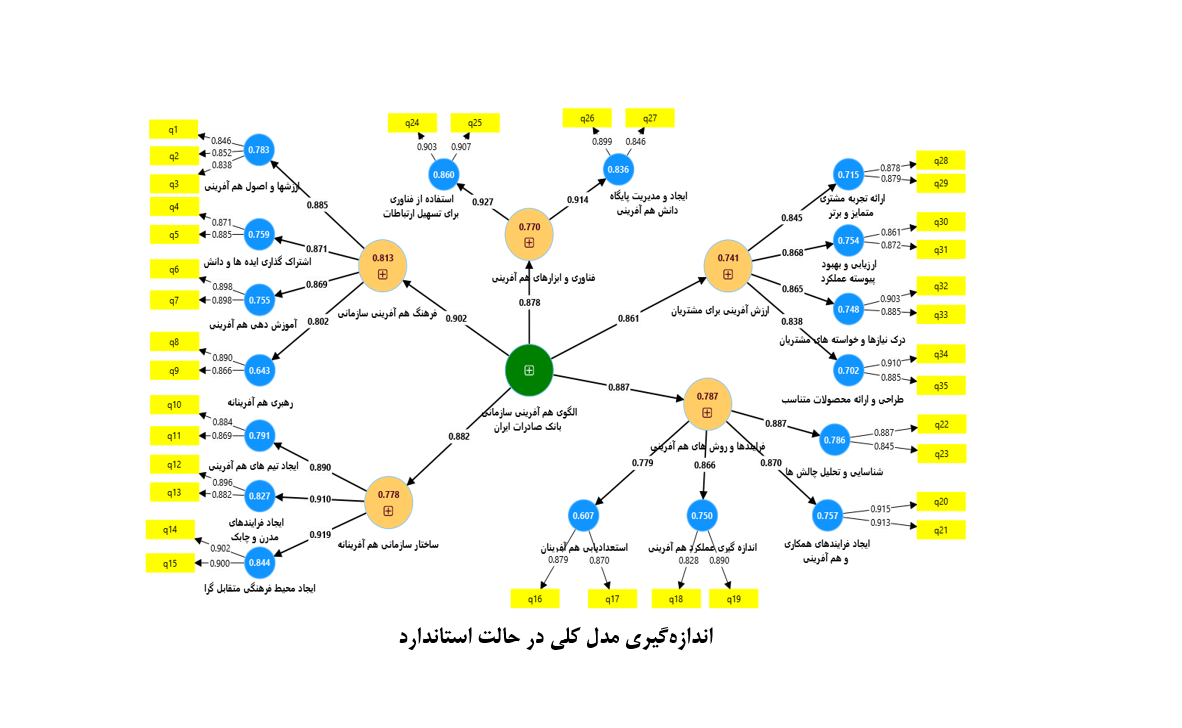
هدف پژوهش حاضر ارائه و اعتبارسنجی الگوی همآفرینی سازمانی در بانک صادرات ایران با استفاده از رویکرد آمیخته اکتشافی و شناسایی ابعاد، مؤلفهها و روابط ساختاری مؤثر بر همآفرینی سازمانی در صنعت بانکداری بود. پژوهش حاضر با روش آمیخته اکتشافی انجام شد و شامل دو بخش کیفی و کمی بود. در بخش کیفی، 15 نفر از نخبگان، مدیران و کارشناسان خبره بانک صادرات ایران با روش نمونهگیری هدفمند انتخاب شدند و دادهها از طریق مصاحبه نیمهساختاریافته گردآوری گردید. تحلیل دادههای کیفی با استفاده از روش تحلیل تماتیک براون و کلارک و نرمافزار MAXQDA انجام شد. در بخش کمی، جامعه آماری شامل کلیه مدیران و کارکنان صف و ستاد بانک صادرات ایران در سالهای 1401-1402 بود که بر اساس فرمول کوکران، 378 نفر به روش نمونهگیری تصادفی خوشهای انتخاب شدند. ابزار گردآوری دادهها پرسشنامه محققساخته مبتنی بر یافتههای کیفی بود. برای تحلیل دادههای کمی از تحلیل عاملی تأییدی و مدلسازی معادلات ساختاری با نرمافزارهای SPSS و Smart PLS استفاده شد. در بخش کیفی، از مجموع 132 کد اولیه، 35 مضمون پایه، 17 مضمون سازماندهنده و 5 مضمون فراگیر شامل فرهنگ همآفرینی سازمانی، ساختار سازمانی همآفرینانه، فرآیندها و روشهای همآفرینی، فناوری و ابزارهای همآفرینی و ارزشآفرینی برای مشتریان استخراج شد. یافتههای بخش کمی نشان داد که تمامی ضرایب مسیر معنادار بوده و مقادیر t برای تمام روابط بیشتر از 1.96 و سطح معناداری کمتر از 0.01 بود؛ بنابراین تمامی فرضیههای پژوهش تأیید شدند. همچنین نتایج رتبهبندی ابعاد نشان داد که فرهنگ همآفرینی سازمانی با ضریب مسیر 0.902 در رتبه نخست، فرآیندها و روشهای همآفرینی با ضریب 0.887 در رتبه دوم، ساختار سازمانی همآفرینانه با ضریب 0.882 در رتبه سوم، فناوری و ابزارهای همآفرینی با ضریب 0.878 در رتبه چهارم و ارزشآفرینی برای مشتریان با ضریب 0.861 در رتبه پنجم قرار گرفتند. شاخص برازش کلی مدل نیز نشاندهنده برازش قوی الگوی پیشنهادی بود. نتایج پژوهش نشان داد که تحقق همآفرینی سازمانی در بانک صادرات ایران مستلزم ایجاد فرهنگ مشارکتی، توسعه ساختارهای چابک، بهبود فرآیندهای همکاری، بهرهگیری از فناوریهای نوین و تمرکز بر ارزشآفرینی برای مشتریان است. همچنین توسعه رهبری همآفرینانه، تسهیل اشتراکگذاری دانش و استفاده از فناوریهای ارتباطی نوین میتواند زمینه ارتقای تعاملات سازمانی و افزایش نوآوری در نظام بانکداری را فراهم سازد. الگوی ارائهشده میتواند به عنوان چارچوبی کاربردی برای توسعه همآفرینی در سایر سازمانهای خدماتی و مالی نیز مورد استفاده قرار گیرد.
دانلودها
مراجع
1. Saha V, Hollebeek LD, Mani V, Goyal P, Clark M. Value co-creation: a metatheory unifying framework and fundamental propositions. Marketing Intelligence & Planning. 2025. doi: 10.1108/MIP-03-2024-0163.
2. Roy SK, Singh G, Hatton C. Customers' motives to co-create in smart services interactions. Electronic Commerce Research. 2023;23:1367-400. doi: 10.1007/s10660-022-09633-w.
3. Zuhri S. Co-Creation Melalui Media Sosial: Kajian Pada Kampanye "Share a Coke" Kasus Coca Cola Di Indonesia. Bisman (Bisnis Dan Manajemen) the Journal of Business and Management. 2025;8(2):401-18. doi: 10.36815/bisman.v8i2.3945.
4. Wang Z, Yang X. Building brand loyalty through value co-creation practices in brand communities: the role of affective commitment and psychological brand ownership. Journal of Research in Interactive Marketing. 2025;19(2):201-20.
5. Malik MI, Ahsan R. Towards innovation, co-creation and customers' satisfaction: A banking sector perspective. Asia Pacific Journal of Innovation and Entrepreneurship. 2019;13(3):311-25. doi: 10.1108/APJIE-01-2019-0001.
6. Abror A, Patrisia D, Engriani Y, Noor NMBM, Omar MW, Hafizh MA, et al. Antecedents of customer value co-creation in Islamic banking: The role of religiosity, perceived value and behavioral factors. Cogent Business & Management. 2023;10(3). doi: 10.1080/23311975.2023.2259577.
7. Wulandari N, Nasution RA. Integrated value co-creation and affective commitment in banking industry. 2019. doi: 10.3846/btp.2019.47.
8. Ferm LEC, Thaichon P. Value co-creation and social media: Investigating antecedents and influencing factors in the U.S. retail banking industry. Journal of Retailing and Consumer Services. 2021;61. doi: 10.1016/j.jretconser.2021.102548.
9. Le HN, Pham TAN, Pham TN. The transformative outcomes of frontline employee adaptability for service value co-creation: A study of the banking sector. International Journal of Bank Marketing. 2022;40(3):401-24. doi: 10.1108/IJBM-03-2021-0093.
10. Taherpour F. Designing and validating a measurement scale for co-creation in the university. Public Management Perspective. 2021(45):135-55.
11. Turunen A, editor Co-creating and validating customer value in Higher Education IT Services using Service Design. EPiC Series in Computing; 2025.
12. Harandi A, Parhizgar MM, Fazel A, Amini MT. A conceptual model of academic value co-creation with emphasis on fourth- and fifth-generation universities using meta-synthesis and fuzzy Delphi approaches. Management of Governmental Organizations. 2021;10(1):103-24.
13. Javashi Jadid S, Taheri Kia F, Jalali M, Tabrizian B. A model of value co-creation with customers in the tourism industry. Innovation Management in Defense Organizations. 2020;3(1):119-46.
14. Hassanzadeh M, Delafrooz N, Gholipour Soleimani A, Shahroudi K. Explaining the model of customer value co-creation behavior in the development of the medical tourism industry in Guilan Province. Urban Tourism. 2021;8(2):141-59.
15. Parvari P. Value co-creation in customer-solution-based business networks in the software industry. Technology Development Management. 2022;10(2):153-80.
16. Oklevik O, Nysveen H, Pedersen PE. Exploring the relationship between co-creation (DART), brand experience strength, and brand satisfaction: A brand engagement perspective. Journal of Marketing Theory and Practice. 2024;32(1):1-24. doi: 10.1080/10696679.2022.2120013.
17. Shaikh S, Gummerum M. A Luxury Consumption Perspective On motivations for Brand Value Co-Creation in Emerging Markets. International Journal of Emerging Markets. 2025. doi: 10.1108/ijoem-10-2023-1637.
18. Rahman Seresht H, Khashaei Varnamkhasti V, Ebrahimi M, Rahimian M. Strategic value co-creation model in the Iranian banking industry: Value creation in a new paradigm. Public Management Research. 2018;11(40):27-52.
19. Rahman Seresht H, Sheikhi N. Value co-creation in Iranian banking: An analysis of value creation elements and relationships. Public Management Research. 2019;12(46):95-122.
20. Kooshki AA, Alizadeh Meshkani F, Feqhi Farahmand N. Validation of the customer value co-creation model in the banking industry: A case study of Bank Mellat. Financial Engineering and Securities Management. 2022.
21. Kooshki AA, Alizadeh Meshkani F, Feqhi Farahmand N. Presenting a model of customer value co-creation to encourage investment in the banking industry from a phenomenological perspective. Investment Knowledge. 2023;12(45):395-418.
22. Shakibi H, Shabgoo Monsef SM, Gholipour Soleimani A. A model of brand value co-creation with customers for regional planning. Geography (Regional Planning). 2023;13(52):339-56.
23. Rahmati M. Presenting a co-creation model in the tourism industry using the qualitative grounded theory method. Tourism Development Planning. 2020;9(33):229-46.
24. Keshavarz Y, Jamshidi D. Service quality evaluation and the mediating role of perceived value and customer satisfaction in customer loyalty. International Journal of Tourism Cities. 2018;4(2):220-44. doi: 10.1108/IJTC-09-2017-0044.

دانلود
چاپ شده
ارسال
بازنگری
پذیرش
شماره
نوع مقاله
مجوز
حق نشر 2025 Fatemeh Askarian Amiri (Author); Asadollah Mehrara (Corresponding author); Seyedeh Shayesteh Varedi (Author)

این پروژه تحت مجوز بین المللی Creative Commons Attribution-NonCommercial 4.0 می باشد.