بازاندیشی فلسفی-تربیتی مفهوم معلم در عصر هوش مصنوعی: واکاوی کیفی اقتدار تربیتی، مراقبت و رابطه آموزشی
کلمات کلیدی:
هوش مصنوعی, معلم, اقتدار تربیتی, مراقبت, رابطه آموزشی, فلسفه تعلیم و تربیت, تحلیل مضمونچکیده
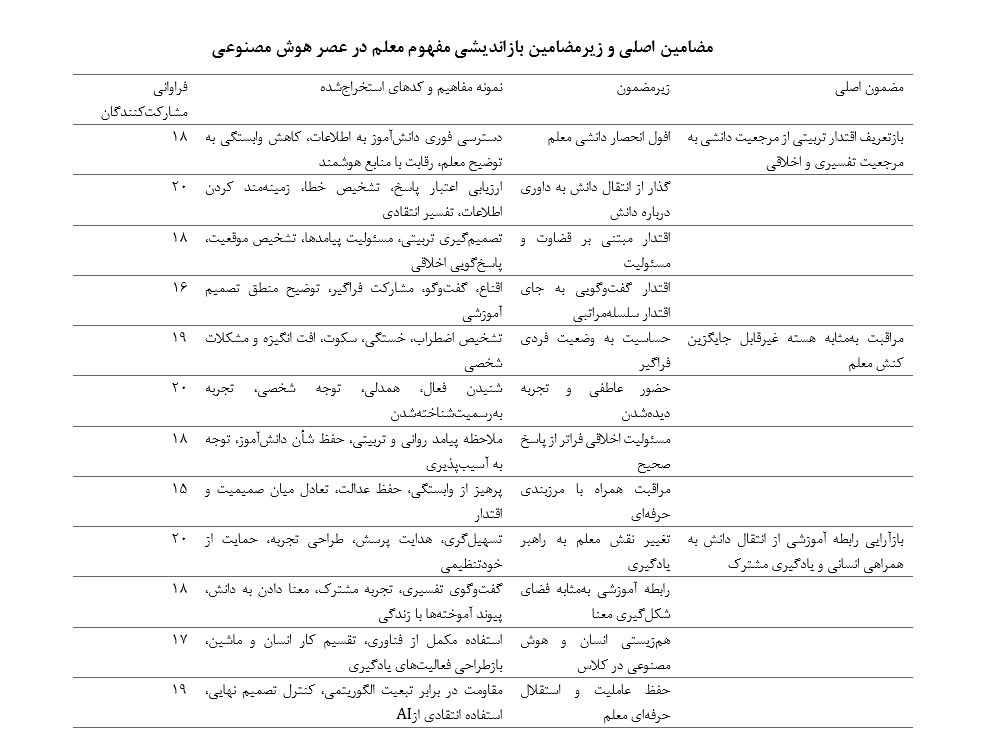
هدف پژوهش حاضر بازاندیشی فلسفی-تربیتی مفهوم معلم در عصر هوش مصنوعی با تمرکز بر چگونگی بازتعریف اقتدار تربیتی، مراقبت و رابطه آموزشی در مواجهه با گسترش فناوریهای هوشمند بود. این پژوهش با رویکرد کیفی و جهتگیری تفسیری و با استفاده از تحلیل مضمون بازتابی انجام شد. مشارکتکنندگان شامل 20 نفر از معلمان، مدیران و معاونان آموزشی، اعضای هیئت علمی حوزه تعلیم و تربیت، مدرسان تربیت معلم و متخصصان فناوری آموزشی و هوش مصنوعی در شهر تهران بودند که با روش نمونهگیری هدفمند و راهبرد حداکثر تنوع انتخاب شدند. دادهها از طریق مصاحبههای نیمهساختاریافته عمیق گردآوری شد و فرایند گردآوری تا دستیابی به اشباع مفهومی ادامه یافت. مصاحبهها پس از ضبط و پیادهسازی کلمهبهکلمه، بهصورت همزمان با گردآوری دادهها تحلیل شدند. کدگذاری باز، مقایسه مستمر، تشکیل خوشههای مفهومی، استخراج زیرمضامین و تدوین مضامین اصلی با استفاده از نرمافزار MAXQDA 2024 انجام گرفت. تحلیل دادهها نشان داد که مفهوم معلم در عصر هوش مصنوعی حول سه تحول بنیادین بازسازی میشود: گذار اقتدار تربیتی از مرجعیت مبتنی بر انحصار دانش به اقتدار تفسیری، انتقادی و اخلاقی؛ برجستهشدن مراقبت بهعنوان هستهای انسانی، رابطهای و غیرقابل تقلیل در کنش معلم؛ و بازآرایی رابطه آموزشی از انتقال یکسویه دانش به هدایت یادگیری، ساخت معنا و همراهی انسانی. همچنین، یافتهها نشان دادند که استفاده مطلوب از هوش مصنوعی مستلزم حفظ عاملیت حرفهای معلم و جلوگیری از واگذاری تصمیمهای حساس تربیتی به الگوریتمهاست. یافتهها نشان میدهند که هوش مصنوعی بیش از آنکه ضرورت وجود معلم را از میان ببرد، زمینه بازتعریف نقش او را فراهم میکند؛ بهگونهای که ارزش متمایز معلم بیش از گذشته در قضاوت اخلاقی، تفسیر موقعیت، مراقبت، مسئولیتپذیری و توانایی شکلدهی به رابطهای انسانی و معنادار با فراگیران قرار میگیرد.
دانلودها
مراجع
1. Wojciechowski A, Korjonen‐Kuusipuro K. How Artificial Intelligence Affects Education? Human Technology. 2023;19(3):302-6. doi: 10.14254/1795-6889.2023.19-3.0.
2. Zhou J, Zhang J, Li H. Exploring the Use of Artificial Intelligence in Teaching Management and Evaluation Based on Citation Space Analysis. Journal of Education and Educational Research. 2023;3(2):42-5. doi: 10.54097/jeer.v3i2.9014.
3. Li WX. The Influence of Artificial Intelligence on the Education System. Lecture Notes in Education Psychology and Public Media. 2024;65(1):137-42. doi: 10.54254/2753-7048/65/20240158.
4. Agostini D, Picasso F. Large Language Models for Sustainable Assessment and Feedback in Higher Education. Intelligenza Artificiale. 2024;18(1):121-38. doi: 10.3233/ia-240033.
5. Abdekhoda M, Dehnad A. Adopting Artificial Intelligence Driven Technology in Medical Education. Interactive Technology and Smart Education. 2024;21(4):535-45. doi: 10.1108/itse-12-2023-0240.
6. Al-Mousa s, Asiri H, Alshammri N. Integration of Artificial Intelligence in STEM Education to Enhance Problem Solving and Critical Thinking Skills. 2026. doi: 10.21203/rs.3.rs-10195882/v1.
7. Luketić D, Diković M. Individualized Teaching and Personalized Learning in Higher Education: Insights and Future Directions From Systematic Mapping Review. Trends in Higher Education. 2026;5(2):45. doi: 10.3390/higheredu5020045.
8. Alammari A. Evaluating Generative AI Integration in Saudi Arabian Education: A Mixed-Methods Study. Peerj Computer Science. 2024;10:e1879. doi: 10.7717/peerj-cs.1879.
9. Nadjiba M, Belmekki A. Striking the Balance of AI Use in EFL Education: Maximizing Benefits, and Minimizing Risks. Atras Journal. 2024;5(3):69-79. doi: 10.70091/atras/ai.4.
10. Shahzad MF, Xu S, An X, Asif M. Are Generative AI Technologies Transforming Education for the 21st Century? Research Trends, Challenges, and Benefits. Sage Open. 2025;15(3). doi: 10.1177/21582440251368594.
11. Tashtoush MA, Wardat Y, AlAli R, Saleh SG. Artificial Intelligence in Education: Mathematics Teachers’ Perspectives, Practices and Challenges. Iraqi Journal for Computer Science and Mathematics. 2024;5(1). doi: 10.52866/ijcsm.2024.05.01.004.
12. Ning Y, Zhang C, Xu B, Zhou Y, Wijaya TT. Teachers’ AI-TPACK: Exploring the Relationship Between Knowledge Elements. Sustainability. 2024;16(3):978. doi: 10.3390/su16030978.
13. Erol M, Canbeldek M, Erol A, Çolak FG. Exploring the Relationship Between Teachers' AI Attitudes, AI Self‐Efficacy, and AI Technological Pedagogical Content Knowledge. European Journal of Education. 2025;60(4). doi: 10.1111/ejed.70332.
14. Guo L. Is Generative Artificial Intelligence Literacy Important? A Study on the Factors Influencing Teacher’s Professional Flourishing. Frontiers in Psychology. 2026;17. doi: 10.3389/fpsyg.2026.1768712.
15. Koh J, Cowling M, Jha M, Sim KN. The Human Teacher, the AI Teacher and the AIed-Teacher Relationship. Journal of Higher Education Theory and Practice. 2023;23(17). doi: 10.33423/jhetp.v23i17.6543.
16. Gupta P, Sreelatha C, Latha AA, Raj S, Singh A. Navigating the Future of Education: The Impact of Artificial Intelligence on Teacher-Student Dynamics. Eatp. 2024:6006-13. doi: 10.53555/kuey.v30i4.2332.
17. Lai T, Xie C, Ruan M, Wang Z, Lu H, Fu S. Influence of Artificial Intelligence in Education on Adolescents’ Social Adaptability: The Mediatory Role of Social Support. Plos One. 2023;18(3):e0283170. doi: 10.1371/journal.pone.0283170.
18. Fikri Y, Rhalma M. Artificial Intelligence (AI) in Early Childhood Education (ECE): Do Effects and Interactions Matter? International Journal of Religion. 2024;5(11):7536-45. doi: 10.61707/y74fv875.
19. Altınay Z, Altınay F, Dağlı G, Shadiev R, Othman A. Factors Influencing AI Learning Motivation and Personalisation Among Pre-Service Teachers in Higher Education. Mier Journal of Educational Studies Trends & Practices. 2024:462-81. doi: 10.52634/mier/2024/v14/i2/2714.
20. Ishak I, Halimah M, Ungku Kairunnisa BTUMN. Lecturers’ Experiences in Human Expertise and Generative AI in Developing Communicative Speaking Materials for English Foreign Language (EFL). 2026. doi: 10.21203/rs.3.rs-10648030/v1.
21. Rütti-Joy O, Winder G, Biedermann H. Teacher Educator Professionalism in the Age of AI: Navigating the New Landscape of Quality Education. 2024. doi: 10.5772/intechopen.1005030.
22. Turós M, Tari IP, Szőke-Milinte E, Rubovszky R, Soltész-Várhelyi K, Zsódi V, et al. Beyond Utility: The Impact of Religiosity and Calling on AI Adoption in Education. Religions. 2025;16(8):1069. doi: 10.3390/rel16081069.
23. Osman Z, Alwi NH, Khan BNA, Jodi KHM, Ismail MN. Deciphering Academicians' Usage of Artificial Intelligence Among Academicians in Higher Education Institutions. International Journal of Academic Research in Business and Social Sciences. 2023;13(10). doi: 10.6007/ijarbss/v13-i10/18983.
24. Younas M, Menhas R, Noor U. The Role of Digital Transformation and English Language Technological Self‐Efficacy in the Era of Artificial Intelligence. European Journal of Education. 2026;61(1). doi: 10.1111/ejed.70536.
25. Huo X, Siau K. Generative Artificial Intelligence in Business Higher Education. Journal of Global Information Management. 2024;32(1):1-21. doi: 10.4018/jgim.364093.
26. Pande S, Moon JS, Haque MF. Education in the Era of Artificial Intelligence: An Evidence From Dhaka International University (Diu). Bangladesh Journal of Multidisciplinary Scientific Research. 2024;9(1):7-14. doi: 10.46281/bjmsr.v9i1.2186.
27. Easouh FYJ, Oweis TE, Makahleh HA. A Bibliometric Lens on the Future: How AI Continues to Transform Education Institutions. Human Systems Management. 2024;43(6):825-44. doi: 10.3233/hsm-240005.
28. Altınay Z, Altınay F, Sharma RC, Dağlı G, Shadiev R, Yıkıcı B, et al. Capacity Building for Student Teachers in Learning, Teaching Artificial Intelligence for Quality of Education. Societies. 2024;14(8):148. doi: 10.3390/soc14080148.
29. Felizarte M, Camaso SM, Napuar JG, Padrones S, Oficiar JRG, Molina J. Social Media and Ai Integration Into Teaching and Learning Experience. Studies in Technology and Education. 2024;3(1):12-25. doi: 10.55687/ste.v2i2.63.
30. Zha H, Li W, Wang W, Jian X. The Paradox of AI Empowerment in Primary School Physical Education: Why Technology May Hinder, Not Help, Teaching Efficiency. Behavioral Sciences. 2025;15(2):240. doi: 10.3390/bs15020240.
31. Waleed M, Eman, Bashir F, Nasim I. Artificial Intelligence Revolution: Shaping the Future of Millennials. Pakistan Journal of Humanities and Social Sciences. 2023;11(4). doi: 10.52131/pjhss.2023.1104.0689.
32. Arruda EP, Arruda DEP. Artificial Intelligence for SDG 4 of the 2030 Agenda: Transforming Education to Achieve Quality, Equality, and Inclusion. Sustainable Economies. 2024;2(2):34. doi: 10.62617/se.v2i2.34.
33. Lišnić B, Zaharija G, Mladenović S. Integration of Artificial Intelligence in K-12: Analysis of a Three-Year Pilot Study. Ai. 2025;6(3):49. doi: 10.3390/ai6030049.
دانلودها
گاهشمار انتشار
- ارسال
- بازنگری
- پذیرش
شماره
نوع مقاله
مجوز
حق نشر 2025 Masumeh Bayat (Corresponding author)

این پروژه تحت مجوز بین المللی Creative Commons Attribution-NonCommercial 4.0 می باشد.