ارائه الگوی مطلوب تربیت شهروند مجازی مبتنی بر سند تحول بنیادین آموزش و پرورش و اسناد بالادستی با رویکرد دادهبنیاد
DOI:
https://doi.org/10.61838/jsied.397کلمات کلیدی:
تربیت شهروند مجازی, سند تحول بنیادین, برنامه درسی ملّی, سند توسعه برنامه هفتم دولتچکیده
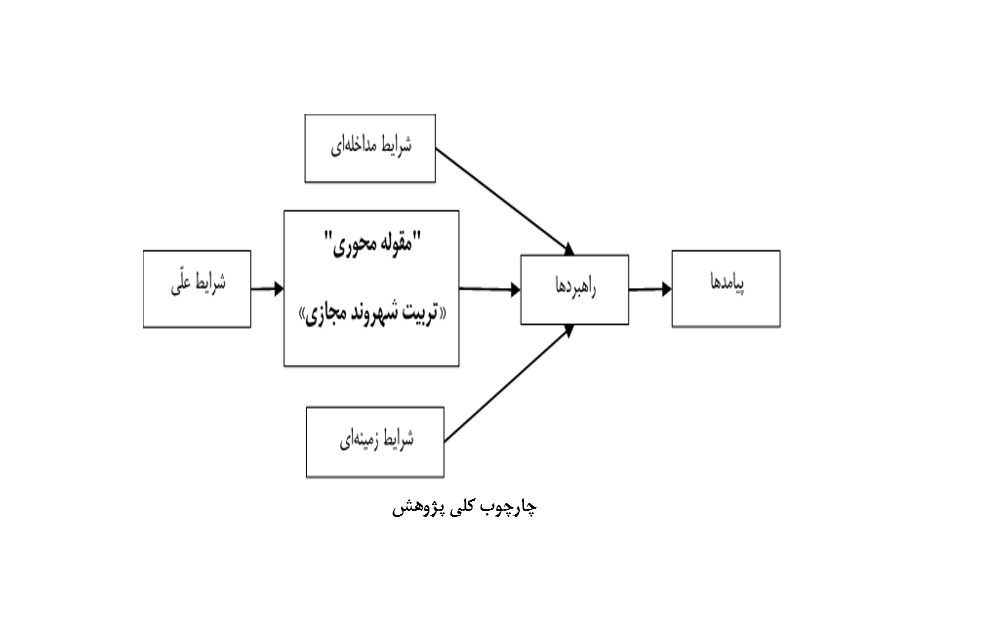
این پژوهش با هدف ارائه الگوی مطلوب تربیت شهروند مجازی مبتنی بر سند تحول بنیادین آموزش و پرورش و اسناد بالادستی انجام شده است. این مطالعه یک پژوهش کیفی با ماهیت کاربردی است که با رویکرد نظریه دادهبنیاد به انجام رسیده است. دادهها از طریق تحلیل محتوای سه سند اصلی شامل سند تحول بنیادین، برنامه درسی ملّی و سند توسعه برنامه هفتم دولت استخراج شد. تحلیل دادهها طی سه مرحله کدگذاری باز، محوری و انتخابی انجام گرفت. همچنین برای اعتبارسنجی مؤلفههای استخراجشده، از تکنیک دلفی و نمونهگیری هدفمند استفاده و با ۲۰ نفر از خبرگان علمی و اجرایی آموزش و پرورش مصاحبه نیمهساختاریافته انجام شد. در نهایت مجموعهای از مؤلفهها در قالب عوامل علّی، زمینهای، مداخلهای، راهبردها و پیامدهای تربیت شهروند مجازی شناسایی شد. تحلیل محتوا منجر به شناسایی ۹۲ شاخص اولیه شد که پس از ادغام موارد مشابه، ۷۵ شاخص نهایی استخراج گردید. این شاخصها در قالب پنج بُعد اصلی شامل عوامل علّی، زمینهای، مداخلهای، راهبردهای تربیتی و پیامدها طبقهبندی شدند. اجرای سه دور تکنیک دلفی نشان داد که میان خبرگان درخصوص اهمیت و اولویتبندی مؤلفهها اجماع قابلقبولی وجود دارد (ضریب کندال در دور سوم برای ابعاد مختلف بین ۰/۷۴۱ تا ۰/۸۰۳ گزارش شد). در نهایت مدل ساختاری تربیت شهروند مجازی تدوین شد که ارتباط میان مؤلفههای محوری و ابعاد کلیدی تربیت شهروندی مجازی را تبیین میکند. پژوهش حاضر نشان داد که اسناد بالادستی نظام آموزشی بهطور ضمنی و مستقیم ظرفیت بالایی برای تبیین سازوکارهای تربیت شهروند مجازی دارند و ترکیب تحلیل اسنادی با نظر خبرگان میتواند به الگویی جامع، هماهنگ و مبتنی بر نیازهای واقعی نظام آموزشی منجر شود. تحقق این الگو مستلزم توجه به عوامل چندبعدی از جمله زیرساختهای فناورانه، خودآگاهی دانشآموزان، مدیریت مدرسه، قوانین مجازی و راهبردهای مسئولیتپذیری اجتماعی است.
دانلودها
مراجع
Webster J. Sociotechnical Imaginaries in a Postdigital World: Teachers' Perceptions of Digital Citizenship Education. Postdigit Sci Education. 2025. doi: 10.1007/s42438-025-00557-w.
Lomachinska I, Dobrodum O, Ishchuk O, Patlaichuk O, Stupak O, Shnitser M, et al. Digital Citizenship and Knowledge Management in Education: Strategic Pathways to Sustainable Development. European Journal of Sustainable Development. 2025;14(2):747. doi: 10.14207/ejsd.2025.v14n2p747.
Hosseini Al-Madani SA. The Relationship Between Using Virtual Networks and Mental Health and Isolationism Among Female Secondary School Students. Sociology of Education. 2019(11):32-40.
Zamani Dashti M. The Rate of Social Network Use and its Relationship with Parent-Child Conflict and Tendency towards High-Risk Behaviors among First-Level Secondary School Students in Shahrekord County: Islamic Azad University, Khomein Branch; 2017.
Badakhshan Taraghi E, Soleimanpour M, Fazli R. Meta-Synthesis of Factors for Quality Improvement of Education in Multi-Grade Primary Classrooms. Scientific-Research Quarterly of Education. 2023;39(2):161-84.
Haqiri Limoudehi R, Abdollahi M, Habibi S. Presenting an E-Learning Implementation Model with an Omnichannel Approach in Second-Level Secondary Schools. Research and Innovation in Education and Development. 2024;4(5):139-56. doi: 10.61838/jsied.4.5.8.
Najafi F. Investigating the Effectiveness of Self-Care Education in Virtual Space for Students on Dimensions of Health (Physical, Psychological, and Social): Payame Noor University: Zarrin Shahr Branch; 2024.
Gholami A, Pirhadi M. Challenges of Reputation Restoration in Virtual Space. Scientific-Research Bimonthly of Religion and Communication. 2017;24(2):15-28.
Taheri Mobarakeh M, Salami M, Hashemian MR, Norouzi A. The Impact of Social Networks on the Mental Health of Library Users at Al-Zahra Educational-Medical Center of Isfahan University of Medical Sciences in 2015. Health Management. 2016;19(66):71-80.
Javahəri SA, editor Computer and Virtual (Cyber) Crimes and Solutions for Detecting These Crimes with an Approach to Digital Currency. The First International Conference on Law, Management, Educational Sciences, Psychology, and Educational Planning Management; 2023; Tehran.
Razeghipour Y, Hashemi SA, Ranjbar M, Gholtash A. Presenting a Desirable Model for E-Citizen Education with Attention to the Philosophical Foundations of Citizenship Education. Islamic Lifestyle with a Focus on Health. 2021;5(2):152-66.
Farhadi E, Kasraei MS, Tavasoli Roknabadi M. Citizenship Education in the Fundamental Transformation Document of the Education System of the Islamic Republic of Iran. Political Sociology of the Islamic Revolution. 2023;4(2):211-31.
Razeghipour Y, Hashemi A, Ranjbar M, Gholtash A. Explaining the Principles and Philosophical Foundations of E-Citizen Education. Political Sociology Monthly. 2022;5(10):2223-39.
Hosseini SM, Fathi Vajargah K, Haghani M, Arefi M, Rezaeizadeh M. The Status of Virtual Citizen Education in the Official Curricula of the Primary School Period of Iran's Educational System. Educational Sciences. 2021;28(1):229-52.
Garaei Garavand Y, Asmandareh H, Garaei Garavand P. Analysis of Challenges and Obstacles to Digital Citizen Education and Training in the Educational System (A Qualitative Study). Journal of New Advances in Behavioral Sciences. 2022;7(55):237-46.
Cheraghi Kazerouni R, Alborzi M, Khoshbakht F. Developing an Educational Package for Citizenship Education in the Field of Social Relations for Primary School Students. National Studies Quarterly. 2023;24(2):57-74.
Zarimoghadam Z, Davoodi H, Ghaffari K, Jamilian HR. The Effectiveness of Psychological Self-Care Education on Mental Health and Academic Engagement of Second-Level Secondary School Students. Arak University of Medical Sciences Journal. 2021;24(1):150-67. doi: 10.32598/jams.24.1.6155.1.
Hatami J, Shahabi SS, Talaei E, Sajjadi SM. Designing and Validating a Desirable Curriculum Model for Digital Citizenship Education with an Integrated Approach in the Secondary School Period. Management and Planning in Educational Systems. 2023;16(2):89-112.
Hosseinzadeh R, Ali Asgari M, Abbasi E, Ghaderi M. Designing an E-Citizen Education Curriculum for the Primary School Period. Research in Curriculum Planning. 2024;20(2):1-23.
Abbasi K. Internet Fear: A Virtual Whirlpool, A Look at the Negative Aspects of Using Virtual Space. Roshd School Counselor Education. 2023;18(65):17-21.
Shariari H, Rahbar S. Digital Citizen and its Relations with the State in the Digital Age (With a Look at Objective Examples). Political and International Approaches. 2023;14(4):229-53.
Davoodian OL, Panahian M, Sattari A. Comparative Comparison of Citizenship Education Components in Virtual and Real Space with a Look at Opportunities and Threats. New Educational Thoughts. 2020;16(4):183-216.
Esfandiari M, Imankhan N. Analysis of Bank Customers' Behavior: A Grounded Theory Approach. Economic Modeling Quarterly. 2019;13(1):93-114.
Hamedi Nasab S, Bakhshi Parikhani S. Designing a Model for Digital Citizen Components in Birjand County. Technology Growth. 2021;17(68). doi: 10.52547/jstpi.20903.17.68.34.
Radmehr A. Analysis of Challenges and Opportunities in E-Citizen Education in the Primary School Period (A Phenomenological Study). Technology and Knowledge Research in Education. 2021;1(1):45-53.
Cheraghian Dehkordi M. The Effectiveness of Self-Care Education in Virtual Space on Religious Orientation and Acceptance of Social Norms in Female First-Level Secondary School Students in District 2 of Shahrekord: Islamic Azad University, Borujen Branch; 2024.
Salari B. Investigating the Relationship Between Virtual Education and Learning E-Citizen Concepts, E-Ethics, and E-Health Among Male Fourth-Grade Primary School Students in District Four of Mashhad. Journal of Psychology and Educational Sciences Studies. 2022;5(47):1-37.
دانلودها
گاهشمار انتشار
- ارسال
- بازنگری
- پذیرش
شماره
نوع مقاله
مجوز
حق نشر 2025 Ali Saffari Mohammadabadi, Mehdi Mahmoudi, MohammadReza Sarmadi, Mehran Farajollahi (Author)

این پروژه تحت مجوز بین المللی Creative Commons Attribution-NonCommercial 4.0 می باشد.