تعیین مؤلفههای کالبدی محیط یادگیری انعطافپذیر مؤثر بر ارتقای یادگیری مشارکتی در آتلیههای معماری از دیدگاه صاحبنظران
کلمات کلیدی:
محیط یادگیری انعطاف پذیر, یادگیری مشارکتی, آتلیه معماری, آموزش معماری.چکیده
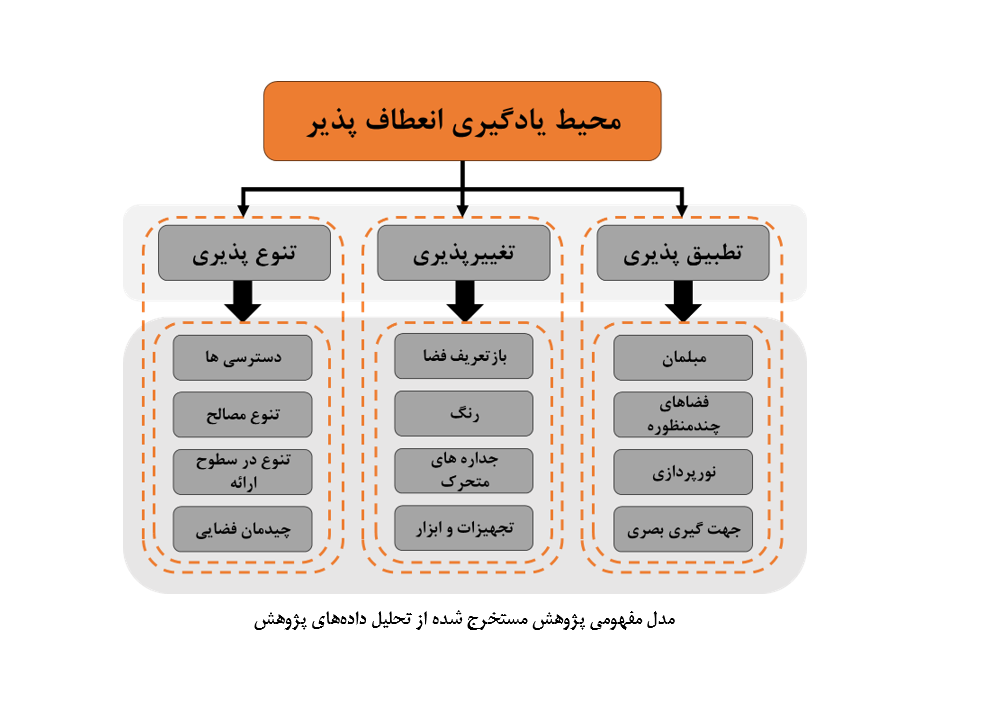
هدف پژوهش حاضر تعیین مؤلفههای کالبدی محیط یادگیری انعطافپذیر مؤثر بر ارتقای یادگیری مشارکتی در آتلیههای معماری بود. این پژوهش با رویکرد کیفی و روش نظریه زمینهای انجام شد. دادهها از طریق مصاحبههای نیمهساختاریافته با 20 نفر از استادان معماری دانشگاههای آزاد اسلامی که تجربه تدریس در آتلیههای طراحی با ویژگیهای کالبدی متفاوت داشتند، گردآوری شد. مصاحبهها تا دستیابی به اشباع نظری ادامه یافت و دادهها بهصورت دستی و از طریق کدگذاری باز و محوری تحلیل شدند. نتایج تحلیل نشان داد که مؤلفههای کالبدی محیط یادگیری انعطافپذیر در سه بعد اصلی تغییرپذیری، تطبیقپذیری و تنوعپذیری قابل تبییناند. تغییرپذیری شامل بازتعریف فضا، رنگ، جدارههای متحرک، تجهیزات و ابزار بود. تطبیقپذیری شامل مبلمان، فضاهای چندمنظوره، نورپردازی و جهتگیری بصری بود. تنوعپذیری نیز شامل دسترسیها، تنوع مصالح، تنوع در سطوح ارائه و چیدمان فضایی بود. این مؤلفهها از دیدگاه صاحبنظران موجب تقویت تعامل، کار گروهی، ارائه ایده، نقد جمعی و مشارکت فعال دانشجویان در آتلیههای معماری میشوند. یافتهها نشان میدهد که ارتقای یادگیری مشارکتی در آتلیههای معماری وابسته به طراحی فضاهایی است که قابلیت تغییر، انطباق و تنوع فضایی داشته باشند. بنابراین، توجه به مؤلفههای کالبدی محیط یادگیری انعطافپذیر میتواند مبنایی کاربردی برای بازطراحی آتلیههای معماری و بهبود کیفیت آموزش طراحی باشد.
دانلودها
مراجع
1. Kordestani H, Shahi S, Beiramipour A. Identifying Strategies for Making the Physical Space of Schools Learner-Oriented from Principals' Perspectives: Girls' Elementary Schools in District Two of Ahvaz. Applied Educational Leadership. 2025;6(2):45-66.
2. Yesil LB, Aras IS. The significance of flexible learning spaces and student-centred pedagogies in school settings: A comparative case study. International Education Journal: Comparative Perspectives. 2024;23(1):1-24.
3. Karvan F. Predicting Students' Self-Regulation in Architectural Design Studios Based on Problem-Solving Styles and Motivational Beliefs. Soffeh. 2024;34(3):23-38.
4. Rahnama H, Farahza N. Components and Variables Affecting Collaborative Learning in Architecture: A Review and Analysis of Findings and Identification of Gaps. Scientific Journal of Architectural Thought. 2023;7(14):35-58.
5. Johnson DW, Johnson RT, Maruyama G, Nelson D, Skon L. Effects of cooperative, competitive, and individualistic goal structures on achievement: A meta-analysis. Psychological Bulletin. 2024;89:47-62.
6. Lee WWS, Yang M. Effective collaborative learning from Chinese students' perspective: A qualitative study in a teacher-training course. Teaching in Higher Education. 2023;28(2):221-37.
7. Ghoreishi B, Jafari P, Bagheri M, Ghourchian N. Identifying the Dimensions and Components of Collaborative Learning in Elementary Schools of Bandar Abbas. Jundishapur Education Development Journal. 2021;12(0):27-38.
8. Zare Jafar M, Yousefi Tazkari A, Yousefi Tazkarali M, Ranjbar Kermani M, Yaghoubi M. Evaluating the Efficiency of the Participatory Method in Architectural Design Education: A Case Study of Architectural Design III at Islamic Azad University. Memar Shahr. 2023;2(6):40-64.
9. Karvan F. The Effect of Group-Based Concept Map Training on Increasing Creativity in Design and Problem-Solving Skills among Architecture Students. Soffeh. 2022;32(97):43-56.
10. Saghafi M, Mozaffar F, Mousavi SM. Investigating the Effect of Direct Professor-Student Participation Teaching Method on the Learning Process in Introduction to Architectural Design I. Scientific Journal of Iranian Restoration and Architecture. 2015;5(10):79-90.
11. Dinarvand A, Nadimi H, Alaei A. Educating Architecture Beginners Using a Collaborative Peer Learning Approach. Soffeh. 2017;27(4):5-18.
12. Lal Bakhsh E, Ghobadian V, Azizi S. A Model of Architectural Design Education Based on Collaborative and Interactive Thinking in Iran. Educational Technology. 2019;13(3):649-59.
13. Lal Bakhsh E, Ghobadian V, Azizi S. Presenting a Model for Collaborative Education in Architectural Design in Iranian Faculties. A New Approach in Educational Management. 2020;11(42):317-38.
14. Rodriguez C, Hudson R, Niblock C. Collaborative learning in architectural education: Benefits of combining conventional studio, virtual design studio and live projects. British Journal of Educational Technology. 2018;49(3):337-53.
15. Nazarpour MT, Heidari A, Sarmadi SM. Analysis and Investigation of the Architectural Configuration of Educational Spaces in Iranian-Islamic Schools: A Comparative Study of Public and Educational Spaces in Iranian-Islamic Schools and Contemporary Layout Models. Education Quarterly. 2021;37(2):147-76.
16. Loon M. Flexible Learning: A Literature Review 2016-2021. Advance HE, 2021.
17. Espineda-Villanueva J. Exploring flexible learning experiences. International Journal of Multidisciplinary: Applied Business and Education Research. 2024;5(12):4932-44.
18. Mahmoudi MM. Designing Educational Spaces with a Flexibility Approach. Tehran: University of Tehran Press; 2011.
19. Pressman A. Designing Relationships: The Art of Collaboration in Architecture. Tehran: Fekr-e No Publications; 2020.
20. Esmaeili A, Shahcheraghi A, Habib F. Explaining a Conceptual Model of the Effect of Flexible Architecture on Students' Social Behavior in Yards and Corridors of Elementary Schools. Scientific Journal of Architectural Thought. 2021;5(10):138-49.
21. Kariippanon KE, Cliff DP, Lancaster SJ, Okely AD, Parrish AM. Flexible learning spaces facilitate interaction, collaboration and behavioural engagement in secondary school. PLOS ONE. 2019;14(10):e0223607.
22. Shakeri M, Arghiani M, Mahvash M. The Effect of University Environment Quality on Promoting Participation in the Learning Process: Case Study of University of Bojnord. Armanshahr Architecture and Urban Development. 2021;14(37):65-77.
23. Mousavi SM, Akbarzadeh Z. Determining Physical Components Affecting the Promotion of Teamwork in Architectural Studios: A Case Study of Architecture Classrooms at the University of Mazandaran. Scientific Journal of Architectural Thought. 2021;5(9):250-62.
24. Zarneshani Asl T. Examining the Policy-Making of Architectural Components with an Approach to Improving the Quality of Educational Space. Urban and Regional Policy-Making. 2022;1(2):38-51.
25. Zandieh M, Hesari P, Zandieh A. Flexibility Methods in Updating School Architecture and Educational Approaches: A Review Article. Educational Technology. 2020;15(1):181-90.
26. Mahouti Rad P, Mousavi MH. Investigating the Effect of Open Space in School Educational Environments and Its Impact on Students. Shabak. 2019;5(7):71-8.
27. Zandi Mohab A, Dejdar O, Talisachi G. Explaining a Model for Collaborative Education in Introductory Architectural Design Studios: Action Research in Introduction to Design Studio III. Iranian Architecture and Urban Planning. 2024;15(1):127-40.
28. Soleimani Alamouti M, Talebian E, Dejdar O. The Role of Students' Collective Participation in the Architectural Design Studio Process. Architecture Studies. 2020;3(15).
29. Al-Rahmi WM, Zeki A. A model of using social media for collaborative learning to enhance learners' performance on learning. Journal of King Saud University - Computer and Information Sciences. 2016;29:526-35.
30. Noorani S. Learners' Frequent Pattern Discovering in a Dynamic Collaborative Learning Environment Designed Based on Game Theory. Technology of Education Journal. 2020:1-15.
31. Strauss A, Corbin J. Basics of Qualitative Research: Techniques and Procedures for Developing Grounded Theory. 3 ed: SAGE Publications; 2013.

دانلود
چاپ شده
ارسال
بازنگری
پذیرش
شماره
نوع مقاله
مجوز
حق نشر 2025 Roya Karimi (Author); Maryam Shabak (Corresponding author); Nima Norouzi (Author)

این پروژه تحت مجوز بین المللی Creative Commons Attribution-NonCommercial 4.0 می باشد.