Examining the Role of School Rules and Regulations and Their Consequences on the Professional Competencies of Pre-service Teachers
DOI:
https://doi.org/10.61838/jsied.253Keywords:
Practicum, Hidden Curriculum, School Rules and Regulations, Professional Competencies, Pre-service TeacherAbstract
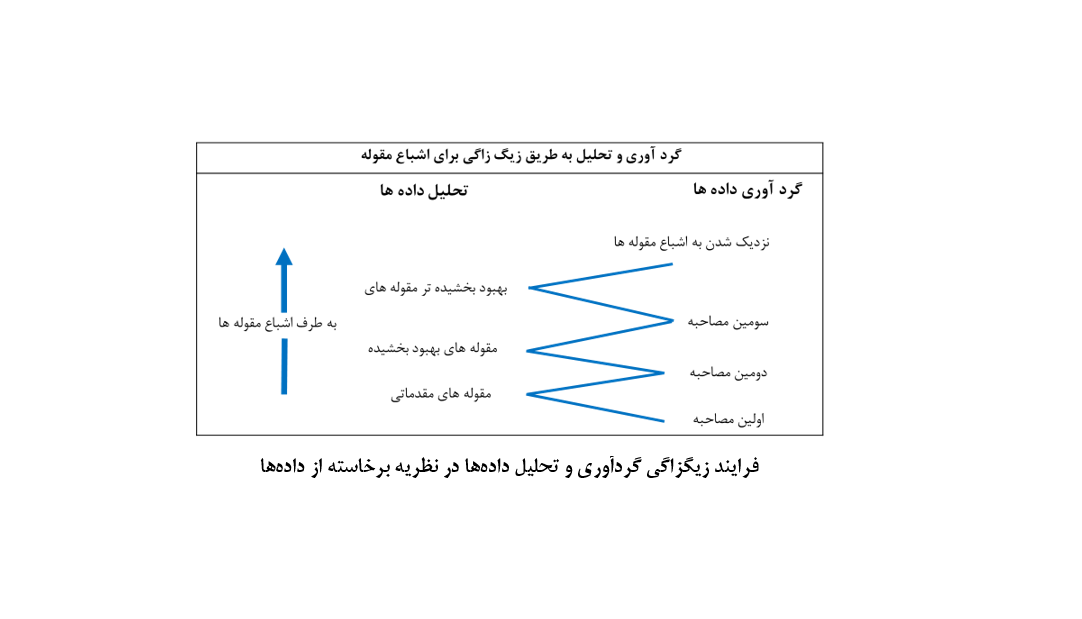
This study aimed to identify and explain the consequences of adherence and non-adherence to school rules and regulations on the development of professional competencies among pre-service teachers. This applied research employed a qualitative grounded theory design. The participants were pre-service primary education teachers in semesters five to eight across four Iranian provinces (Kohgiluyeh and Boyer-Ahmad, Fars, Chaharmahal and Bakhtiari, and Isfahan). Data were collected through the analysis of 120 selected practicum reports and 24 semi-structured interviews until theoretical saturation was reached. Data analysis followed open, axial, and selective coding, and member checking and theoretical triangulation were used to enhance trustworthiness. Adherence to school rules and regulations fostered four major professional competencies: managerial, ethical, disciplinary, and social. Conversely, non-adherence generated four parallel categories of non-competence. Key factors included the presence or absence of classroom management skills, stability and fairness of rules, respect for students’ dignity, constructive parent-school communication, and culturally responsive engagement. Non-adherence was linked to inconsistency, bias, disorder, and authoritarian practices. Structured and context-sensitive adherence to school rules and regulations is fundamental to shaping teachers’ professional identity and equipping them with managerial, ethical, disciplinary, and social strengths. Conversely, disregarding such regulations hinders professional growth and fosters ineffective and counterproductive behaviors.
Downloads
References
1. Safi A. One hundred years of teacher training in Iran: opportunities, threats and future prospects. Education Quarterly. 2018(138):84-106.
2. Namdari PM. Designing a Quality Assurance Model for the Teaching Process and Preparation of Student Teachers at Farhangian University: University of Tehran, Faculty of Psychology and Educational Sciences; 2018.
3. Bilali O, Tarusha F. Factors Influencing the Appearance of Teaching Anxiety to Student Teachers. European Journal of Social Sciences Education and Research. 2015;2(2):90-4. doi: 10.26417/ejser.v3i2.p90-94.
4. Bakhtiari A, Karimi S. Karvarzi dar Tarbiat-e Mo'allem (Internship in Teacher Education). Tehran: Farhangian University; 2021.
5. Aref Nejad S, Emamalipour S. Identifying the disadvantages of the internship curriculum of Farhangian University. Internship studies in teacher training. 2019.
6. Abuzandah S. The hidden curriculum. AJEMATES. 2021;2(2):22-5. doi: 10.5897/AJEMATES2021.0021.
7. Bassett BS. A Field Guide to Grad School: Uncovering the Hidden Curriculum. Harvard Educational Review. 2021;91(1):138-41. doi: 10.17763/1943-5045-91.1.138.
8. Heim J, Cuskley C, Woods R, Barber J, Donnelly H, Hu R, et al. A flexible model for exposing and mitigating the hidden curriculum in the transition to higher education. Open Scholarship of Teaching and Learning. 2024;3(2). doi: 10.56230/osotl.69.
9. Kamal Khani S, editor The Role of the Hidden Curriculum in Schools. International Conference on Psychology, Educational Sciences, and Lifestyle; 2021.
10. Fuad AFN, Basyirah R, Khuluqo I. The Hidden Curriculum in Islamic Education: Developing Critical Thinking and Moderate Attitudes among Students. Fikroh: Jurnal Pemikiran Dan Pendidikan Islam. 2024;17(1):51-66. doi: 10.37812/fikroh.v17i1.1401.
11. Emami A. Tarbiat-e Nazm va Enzebat dar Koudakan (Education of Order and Discipline in Children). Tehran: Payam-e Noor Publications; 2019.
12. Hamal S. Rules beyond the rules: an ethnographic study of informal institutions in the community school. Journal of Education and Research. 2022;12(1):138-9. doi: 10.51474/jer.v12i1.598.
13. Murni RK, Ali M, Murcahyanto H. Dampak Kebijakan Tata Tertib Sekolah Terhadap Perilaku Siswa. Journal Of Administration and Educational Management (ALIGNMENT). 2024;7(1):340-53. doi: 10.31539/alignment.v7i1.8907.
14. Wanda W, Ahmad S, Fitriani Y. Implementation of school rules to improve the teachers and student discipline. JPGI (Jurnal Penelitian Guru Indonesia). 2021;6(3):650-5. doi: 10.29210/021103jpgi0005.
15. Kesawan P, Nur K, Rosmidar R. Keterampilan Mengelola Kelas. Jurnal Pendidikan Dan Kebudayaan. 2024;2(1):307-15. doi: 10.62383/edukasi.v2i1.1040.
16. Lekli L, Fetahu E. Dismantling the concept of classroom management, elaboration of practices leading to T-S (teacher-student) success. Multidisciplinary Science Journal. 2024. doi: 10.31893/multiscience.2024101.
17. Popović J, Djordjević I, Popović R. A review of students' free time activities and the role of the school in promoting an healthy lifestyle and participation in various types of elective sports and outdoor activities. Acta technica. 2025:263-8. doi: 10.5937/ATAVPA25263P.
18. Wang MT, Del Toro J, Scanlon CL, Huguley JP. The spillover effect of school suspensions on adolescents' classroom climate perceptions and academic achievement. Journal of School Psychology. 2024. doi: 10.1016/j.jsp.2024.101295.
19. Xiang-hui M. Equity in Education: How Classroom Practices Can Promote Social Justice. Journal of Education and Educational Policy Studies. 2024;2(1):12-7. doi: 10.54254/3049-7248/2/2024009.
20. Naibaho D, Gracelia E, Sitorus F. Pentingnya Guru dalam Menguasai Substansi Materi Pembelajaran. Jurnal Pendidikan Dan Kebudayaan. 2023;3(3). doi: 10.55606/jurdikbud.v3i3.2635.
21. Manalu S, Napitupulu B. Penerapan peraturan dan prosedur kelas sebagai upaya mengembangkan sikap disiplin siswa kelas ix dalam pembelajaran. Kairos. 2024;4(1):57-76. doi: 10.19166/kairos.v4i1.7901.
22. Fitri AH, Syawaluddin S. Pengaruh Tata Tertib Sekolah terhadap Kedisiplinan Siswa Kelas VIII di SMP Negeri 1 Kota Solok. YASIN. 2023;3(1):97-105. doi: 10.58578/yasin.v3i1.847.
23. Ialuna F, Civitillo S, Jugert P. Culturally responsive teaching, teacher-student relationship and school belongingness: A multi-informant study in ethnically diverse classrooms. Learning, Culture and Social Interaction. 2024;47:100839. doi: 10.1016/j.lcsi.2024.100839.
24. Afrila DS, Fitria N, Amalia D, Imrayani NP, Safitri D. Perbandingan Tingkat Kedisiplinan Siswa terhadap Tata Tertib Sekolah dalam Meningkatkan Mutu Di SMAN 1 Muaro Jambi dan SMAN 1 Kota Jambi. Jurnal Ilmiah Dikdaya. 2023;13(2):399-407. doi: 10.33087/dikdaya.v13i2.507.
25. Urquiola U, Motus R. Analysis of school rules and regulation implementation: Basis for policy enhancement program. Deleted Journal. 2024;5(1):159-66. doi: 10.53378/iarr.924.118.
26. Hafezi Nejad M. Kelidha-ye Tadris (Keys to Teaching): Ta'ali Publishing; 2021.
27. Rubel A, Jones KM. Student privacy in learning analytics: An information ethics perspective. The information society. 2016;32(2):143-59. doi: 10.1080/01972243.2016.1130502.
28. Ahmed Y, Taha MH, Alneel S, Gaffar AM. Evaluation of the learning environment and the perceived weakness of the curriculum: student perspective. International Journal of Research in Medical Sciences. 2018;7(1):165. doi: 10.18203/2320-6012.ijrms20185374.
29. Peterson DA, Biederman LA, Andersen D, Ditonto TM, Roe K. Mitigating gender bias in student evaluations of teaching. PloS one. 2019;14(5):e0216241. doi: 10.1371/journal.pone.0216241.
30. Aelterman N, Vansteenkiste M, Haerens L. Correlates of students' internalization and defiance of classroom rules: A self‐determination theory perspective. British journal of educational psychology. 2019;89(1):22-40. doi: 10.1111/bjep.12213.
31. Überwimmer M, Hurch D, Feichtinger G. Actions Against the Lack of Highly Skilled Workers in the Regions of Upper Austria. Marketing. 2020;5(2). doi: 10.18775/jibrm.1849-8558.2015.52.3001.
32. Rostami S. The Relationship between the Hidden Curriculum and Student Self-Discipline. Quarterly Journal of New Approach in Educational Sciences. 2020. doi: 10.22034/NAES.2021.266912.1093.
33. Zhang X, Admiraal W, Saab N. Teachers' motivation to participate in continuous professional development: relationship with factors at the personal and school level. Journal of education for teaching. 2021;47(5):714-31. doi: 10.1080/02607476.2021.1942804.
34. Namdari Pejman M. Analyzing Internship in the Corona Situation: Inferring Post-Corona Policies. Theory and Practice in Teacher Education. 2022;10(17):17-1. doi: 10.48310/itt.2024.3564.
35. Sharifi E, Farhangi S, Tahmasbi M, Mehrbakhsh Z. Investigating the Existence of the Factor of Order in School and Its Impact on the Quality of Student Learning. Psychological and Educational Sciences Studies. 2023(46).
36. Raouf A. Philosophy of professional training for teachers. Journal of Effective Schools (Research, Education and Information). 2010(9):44-50.
Downloads
Publication Timeline
Issue
Section
License
Copyright (c) 2026 Mehran Azizi Mahmoodabad, Mohsen Khosravi, Zeynab Gharibi Bidestani (Author)

This work is licensed under a Creative Commons Attribution-NonCommercial 4.0 International License.