تأثیر آموزش درس هدیههای آسمانی با رویکرد هوش موفق بر انگیزه تحصیلی و یادگیری پایدار دانشآموزان دختر
کلمات کلیدی:
هوش موفق, هدیه های آسمانی, انگیزه تحصیلی, پایداری یادگیریچکیده
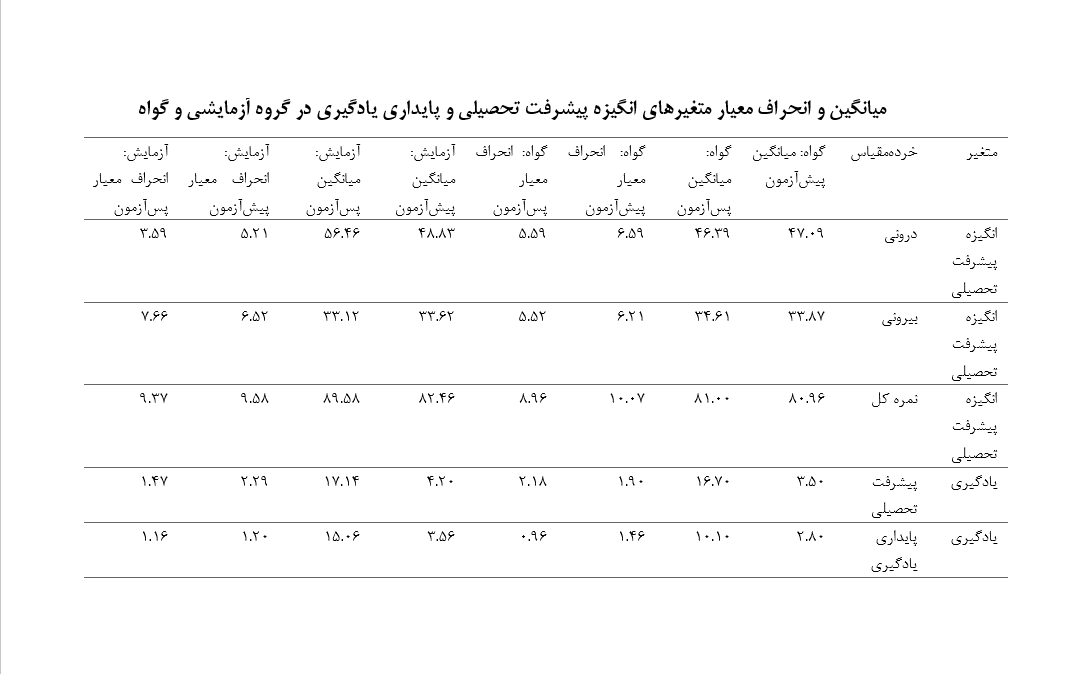
هدف پژوهش حاضر بررسی تأثیر آموزش درس هدیههای آسمانی با رویکرد هوش موفق بر انگیزه تحصیلی و یادگیری پایدار دانشآموزان دختر پایه پنجم ابتدایی در مقایسه با روشهای سنتی تدریس بود. این پژوهش با روش نیمهآزمایشی و طرح پیشآزمون–پسآزمون با گروه گواه انجام شد. جامعه آماری شامل دانشآموزان دختر پایه پنجم ابتدایی مدارس ناحیه 4 شهر اهواز بود که از میان آنها دو کلاس بهصورت تصادفی انتخاب و در دو گروه آزمایش و گواه جایدهی شدند. در گروه آزمایش، آموزش درس هدیههای آسمانی بر اساس رویکرد هوش موفق و در گروه گواه، آموزش با روش سنتی انجام شد. ابزار گردآوری دادهها شامل پرسشنامه انگیزه تحصیلی والرند و همکاران (1992) و آزمونهای معلمساخته جهت سنجش پیشرفت تحصیلی و پایداری یادگیری بود. دادهها با استفاده از تحلیل کوواریانس چندمتغیری و تکمتغیری تحلیل شدند. نتایج تحلیل کوواریانس چندمتغیری نشان داد بین گروههای آزمایش و گواه حداقل در یکی از متغیرهای وابسته تفاوت معنادار وجود دارد (000/0=P، 32/7 =F). یافتههای تحلیل کوواریانس تکمتغیری نشان داد آموزش مبتنی بر هوش موفق اگرچه موجب افزایش انگیزه تحصیلی دانشآموزان شد، اما این تفاوت در مقایسه با روش سنتی معنادار نبود (15/0=P). در مقابل، نتایج نشان داد رویکرد هوش موفق تأثیر معناداری بر پایداری یادگیری دانشآموزان داشت و عملکرد گروه آزمایش در این متغیر بهطور معناداری بالاتر از گروه گواه بود (004/0=P). یافتههای پژوهش نشان داد آموزش درس هدیههای آسمانی با رویکرد هوش موفق میتواند زمینه یادگیری عمیقتر و پایدارتر را در دانشآموزان فراهم کند. هرچند این رویکرد در مقایسه با روش سنتی تفاوت معناداری در انگیزه تحصیلی ایجاد نکرد، اما توانست موجب ارتقای پایداری یادگیری شود. بر این اساس، بهرهگیری از رویکرد هوش موفق در فرایند تدریس میتواند به بهبود کیفیت آموزش، مشارکت فعال دانشآموزان و توسعه توانشهای تحلیلی، خلاق و عملی آنان کمک کند.
دانلودها
مراجع
1. Snow RE, Kyllonen PC, Marshalek B. The Topography Ability and Learning Correlation. In: Sternberg RJ, editor. Advances in the Psychology of Human Intelligence. 2nd ed. Hillsdale, NJ: Erlbaum; 1984. p. 47-104.
2. Sternberg RJ. What Is Intelligence, Really? The Futile Search for a Holy Grail. Journal of Intelligence. 2024. doi: 10.1016/j.intell.2024.10191.
3. Sternberg RJ. The Theory of Successful Intelligence. Review of General Psychology. 1997;3:292-316.
4. Sternberg RJ. The Theory of Successful Intelligence. Revista Interamericana de Psicologia / Interamerican Journal of Psychology. 2005;39(2):189-202.
5. Sternberg RJ. Successful Intelligence: A Model for Testing Intelligence beyond IQ Tests. European Journal of Education and Psychology. 2015;8:76-84.
6. Sternberg RJ. Raising the Achievement of All Students: Teaching for Successful Intelligence. Educational Psychology Review. 2002;14(4):383-93.
7. Sternberg RJ. College Admissions for the 21st Century. Cambridge, MA: Harvard University Press; 2010. 224 p.
8. Sternberg RJ, Grigorenko E. Successful Intelligence in the Classroom. Theory into Practice. 2004;43(4):274-80.
9. Sternberg RJ, Grigorenko EL. Teaching for Successful Intelligence: To Increase Student Learning and Achievement: Corwin Press, A Sage Publications Company; 2007.
10. Sternberg RJ. Adaptive Intelligence: Intelligence Is Not a Personal Trait but Rather a Person × Task × Situation Interaction. Journal of Intelligence. 2021;9(4):58. doi: 10.3390/jintelligence9040058.
11. Yu Y, Xu Y, Wu Y. Developing Successful Intelligence in Global Academia: A Triarchic Framework for EAP Pedagogy. Journal of Intelligence. 2025;13(11):134. doi: 10.3390/jintelligence13110134.
12. Santrock. Educational Psychology. Saeedi S, Iraq M, Daneshfar, editors. Tehran: Rasa Publications; 2014.
13. Steinmayr R, Spinath B. The Importance of Motivation as a Predictor of School Achievement. Learning and Individual Differences. 2009;19:80-90.
14. Ghasemi Ahari A. The Relationship between Religious Attitude and Academic Achievement Motivation among Students of Allameh Tabataba'i University. Tehran: Allameh Tabataba'i University; 2009.
15. Babaei A, Maktabi G. The Effect of Successful Intelligence Training on Academic Achievement Motivation and Teacher Self-Efficacy among Student Teachers at Farhangian University. Psychological Methods and Models. 2017;8(30).
16. Hojjati M. The Effectiveness of Successful-Intelligence-Based Intervention on Academic Motivation of Students. Regional Journal Article. 2023.
17. Hashemi B, Ghazanfari A, Sharifi T, Ahmadi R. The Effectiveness of Successful Intelligence Components Training on Academic Achievement Motivation of Female Students. Educational Psychology Studies. 2019;16(36):189-203.
18. Sharbafzade A, Abedi A. Impact of the Program of Training Successful Intelligence on the Intrinsic and Extrinsic Educational Motivation of the High School Female Students of Isfahan. International Journal of Basic Sciences & Applied Research. 2014;3(10):741-6.
19. Sharbaf Zadeh A, Abedi A, Yousefi Z, Aghababaei S. The Effect of Successful Intelligence Training Program on Academic Motivation and Academic Engagement Female High School Students. International Journal of Psychological Studies. 2014;6(3):425-40.
20. Saw KNN, Han B. Effectiveness of Successful Intelligence Training Program: A Meta-Analysis. PsyCh Journal. 2021;10(10):323-39. doi: 10.1002/pchj.443.
21. Ghobadi L, Habibi Kaleybar R, Farid A, Mesrabadi J. The Effect of Training Successful Intelligence Components on Creativity and Academic Performance of Elementary School Students. Journal of Innovation and Creativity in Human Sciences. 2021;11(1):45-66.
22. Nazari A, Saadipour E, Ebrahimi Ghavam S, Asadzadeh Dehraei H. Designing and Validating Sternberg Successful Intelligence Training Package and Its Effectiveness on Academic Vitality of Students. Journal of Educational Psychology Studies. 2023;20(51):138-51. doi: 10.22111/JEPS.2023.44995.5338.
23. Mohkamkar A, Shaterian F, Nikookar A. The Effectiveness of Successful-Intelligence-Based Training on Emotional Self-Awareness and Academic Engagement of Upper Secondary Students. Journal of Sociology of Education. 2024;10(1):305-13.
24. Stemler S, Sternberg RJ, Grigorenko EL, Jarvin L, Sharpes DK. Using the Theory of Successful Intelligence as a Framework for Developing Assessments in AP Physics. Contemporary Educational Psychology. 2009;34:195-209.
25. Grigorenko EL, Jarvin L, Sternberg RJ. School-Based Tests of the Triarchic Theory of Intelligence: Three Settings, Three Samples, Three Syllabi. Contemporary Educational Psychology. 2002;27:167-208.
26. Al-Sharawy SAM. Using a Successful Intelligence-Based Program for Developing English Writing Skills among Preparatory Students. Natural Science Publishing / Educational Research. 2024.
27. Li C, Yan J, Ma X, Chen X, Liu Z. Assessment of Gifted Students for Identification Purposes: New Techniques for a New Millennium. Journal of Intelligence. 2022;4(4):120. doi: 10.3390/jintelligence10040120.
28. Nazerieh A, Bayanfar F, editors. Predicting Academic Achievement Motivation Based on Critical Thinking with the Mediating Role of Successful Intelligence. Proceedings of the First National Scientific Student Conference on Psychology; 2021; Ardabil.

دانلود
چاپ شده
ارسال
بازنگری
پذیرش
شماره
نوع مقاله
مجوز
حق نشر 2026 Ali Babaei (Corresponding author)

این پروژه تحت مجوز بین المللی Creative Commons Attribution-NonCommercial 4.0 می باشد.