شناسایی شاخصهای اصلی سیاستگذاری عمومی در سند تحول بنیادین آموزش و پرورش
کلمات کلیدی:
سیاستگذاری عمومی, سند تحول بنیادین آموزش و پرورش, سیاستگذاری آموزشی, فراترکیب, مشارکت ذینفعان, ارزیابی سیاستچکیده
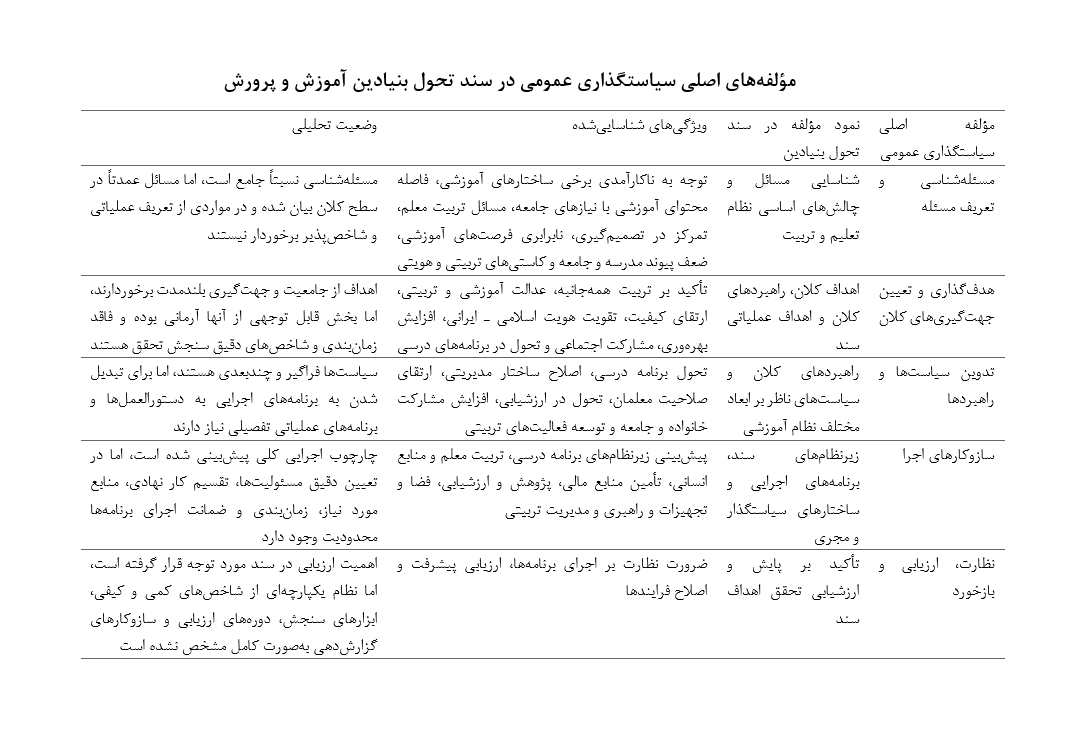
پژوهش حاضر با هدف شناسایی و تبیین شاخصهای اصلی سیاستگذاری عمومی در سند تحول بنیادین آموزش و پرورش انجام شد. این پژوهش از نظر هدف بنیادی ـ کاربردی و از نظر ماهیت کیفی و اکتشافی بود و در چارچوب پارادایم تفسیری انجام شد. راهبرد پژوهش فراترکیب کیفی بود و دادهها از طریق مطالعه اسناد، منابع علمی و پژوهشهای مرتبط با سیاستگذاری عمومی، سیاستگذاری آموزشی و سند تحول بنیادین آموزش و پرورش گردآوری شدند. فرایند تحلیل بر اساس منطق هفتمرحلهای فراترکیب شامل طرح سؤال پژوهش، مرور جامع ادبیات، انتخاب متون مرتبط، استخراج دادهها، تحلیل و تلفیق یافتهها، کنترل کیفیت و ارائه نتایج انجام گرفت. مفاهیم استخراجشده بر اساس شباهت معنایی ادغام و در قالب مقولهها و شاخصهای اصلی سازماندهی شدند و سپس میزان بازتاب آنها در اهداف، راهبردها، سازوکارهای اجرایی و نظام ارزیابی سند بررسی شد. نتایج نشان داد که ساختار سیاستگذاری عمومی در سند تحول بنیادین حول پنج مؤلفه اصلی مسئلهشناسی، هدفگذاری، تدوین سیاستها و راهبردها، سازوکارهای اجرا و نظارت و ارزیابی سازمان یافته است. در سطح تفصیلیتر، شاخصهای اصلی شناساییشده شامل هدفمندی، مسئلهمحوری، جامعیت و چندبعدی بودن، مشارکت ذینفعان، تمرکززدایی، هماهنگی نهادی، عدالت آموزشی و تربیتی، کارآمدی و اثربخشی، تأمین و تخصیص منابع، توسعه منابع انسانی، پاسخگویی، شفافیت، قابلیت اجرا، نظارت و ارزیابی، بازخورد و اصلاح سیاست، انعطافپذیری، مدرسهمحوری و سیاستگذاری مبتنی بر شواهد بود. یافتهها همچنین نشان داد که قوت اصلی سند در جامعیت اهداف و جهتگیریهای کلان است، در حالی که مهمترین ضعف آن به محدودیت در عملیاتیسازی، تعیین دقیق مسئولیتها، زمانبندی، تخصیص منابع و تعریف شاخصهای سنجشپذیر مربوط میشود. سند تحول بنیادین آموزش و پرورش از ظرفیت مفهومی و راهبردی قابل توجهی در زمینه سیاستگذاری عمومی برخوردار است، اما اثربخشی آن مستلزم ایجاد پیوند منسجمتر میان اهداف، ابزارهای سیاستی، بازیگران، منابع، مسئولیتهای اجرایی، شاخصهای عملکرد، نظام ارزیابی و سازوکارهای بازخورد است.
دانلودها
مراجع
1. Abdollahnejad N, editor The Fundamental Education Reform Document and Its Challenges. Fourth National Scientific and Research Conference on Psychology and Educational Sciences; 2019.
2. Bakhtiari M, Dehghani M. A Review of Studies Related to the Fundamental Reform Document of Education in Iran: A Meta-Synthesis Study. Educational Sciences from the Perspective of Islam. 2022;10(19):5-47.
3. Navidkia A, Va'ezi R, Ghorbanizadeh V. An examination of the implementation of the Fundamental Reform Document of Education. Public Policy in Management (Public Administration Mission). 2021;12(43):13–30.
4. Navid Adham M, Ragheb F. Designing a Model for Implementing the Fundamental Reform Document of Education. Culture in Islamic University. 2020;10(1):67-84.
5. Alipour K, Ahmad Beigi F, Ansarian F, Izadi M. Identifying and Evaluating Spiritual Education Components Based on the Fundamental Education Reform Document. Sociology of Education. 2025;10(2):419-29.
6. Sohbatloo A. Comparison of religious education components in the Fundamental Reform Document of Education with the views of Avicenna. Research in Islamic Education Issues. 2024;32(63):61-90.
7. Fattahi M. Modeling Islamic Education Based on the Fundamental Reform Document; An Operational Model in Tehran Secondary Schools. Journal of Islamic Transformation and Education. 2022;18(4):57-78.
8. Shokoohi Amirabadi L, Delavar A, Abbasi Sarouk L, Koushki S. Content Analysis of the Fundamental Reform Document of Education Based on Creativity and Happiness. Innovation and Creativity in the Humanities. 2018.
9. Entezari M, Sharifi A. Identifying the Indicators of Top Schools in the Fundamental Reform Document of Education. Journal of Educational Development in Jundishapur. 2021;12:339-51.
10. Khosravi S, Gorgich M, Sanchuli S. The Position of Efficient School from the Perspective of the Fundamental Reform Document with an Approach to the School in the 1404 Vision Horizon. Modern Advances in Psychology, Educational Sciences and Education. 2022;5(52).
11. Sobhani M, Sharifi A, Shahrakipour H. Investigating the Outcomes of the Standard School with an Approach Based on the Fundamental Reform Document. Sociology of Education. 2022;7(2):289-98.
12. Sharaf J, Ghoorchian NG, Nami K, Sabahi Zadeh M. Providing Mechanisms for Establishing an Efficient School in the Educational System Based on the General Policies and the Fundamental Reform Document. Strategic and Macro Policies. 2024;12(47):452-82.
13. Dibaei Saaber M, Najafi H, editors. Analysis of the Fundamental Reform Document of Education Regarding the Importance Attributed to Teacher Competency Components. The Second National Conference on Teacher Training; 2016; Isfahan.
14. Zahabion L, Saedian N, Keshtiarai N. Validating the talent management model of elementary school teachers in the formal and public education system of Iran based on the fundamental reform document of education in the Islamic Republic of Iran. Applied Issues in Islamic Education. 2021;6(1):73-98. doi: 10.52547/qaiie.6.1.73.
15. Hajizadehanari H. Conceptual model of Farhangiān University based on the fundamental reform document of education. Research in Teacher Education (RTE). 2022;5(3):145-15.
16. Jalali Soltan Ahmadi K, Taleb Z, Hashemi S. A Competency-Based Evaluation Model Based on the Fundamental Reform Document in SAMA Secondary Schools: A Qualitative Study. Journal of Educational Development in Jundishapur. 2021;12(Special Issue):154-65.
17. Salehi Omran E, Ein Khah F. Content Analysis of the Fundamental Reform Document of Education Regarding Attention to Vocational Training and Skill Development. Educational and School Studies. 2023;12(2):7-37.
18. Bezi A, Fakoori H, Bayani AA, Saemi H. Design and Validation of an Environmental Education Curriculum Model for Higher Education Based on the "Aker" Approach. Iranian Journal of Educational Sociology. 2024;7(1):79-90. doi: 10.61838/kman.ijes.7.1.8.
19. Mohadesi E, Hosseinaei A, Ghaffari K. Designing an Integrated Educational Package on Successful Academic Identity and Future Outlook Based on the Fundamental Reform Document of Education. Journal of Foresight and Health Governance. 2025;2(3):1-12.
20. Hashemi-Nekou S, Ahmadi H, Mohabi A. Designing and validating a model of factors affecting education based on happiness and vitality according to the Fundamental Reform Document. Islamic Lifestyle with a Health Focus. 2019;3(3):98-106.
21. Taheri M, Jalili Z, Abbaspour A, Gandamkar R. Exploring the Barriers to Implementing the Fundamental Reform Document from the Perspective of School Principals. Educational Management and Planning in Educational Systems. 2024;17(1):123-48.
22. Nabi M, Mirsepasi A, Zamani Moghadam M. General policies of the Fundamental Reform Document in creating change in the education system and pathology of the current situation. Strategic and Macro Policies. 2024;12(46):364-91.
دانلودها
گاهشمار انتشار
- ارسال
- بازنگری
- پذیرش
شماره
نوع مقاله
مجوز
حق نشر 2025 Reza Soltaninezhad (Author); Hojjatollah Darvish Pour (Corresponding author); Mohammad Tohidfam, Ahmad Bakhshayesh Ardestani (Author)

این پروژه تحت مجوز بین المللی Creative Commons Attribution-NonCommercial 4.0 می باشد.